


Some links on this page may be affiliate links, which means we may earn a small commission at no extra cost to you. These help us continue creating helpful travel content for our readers.
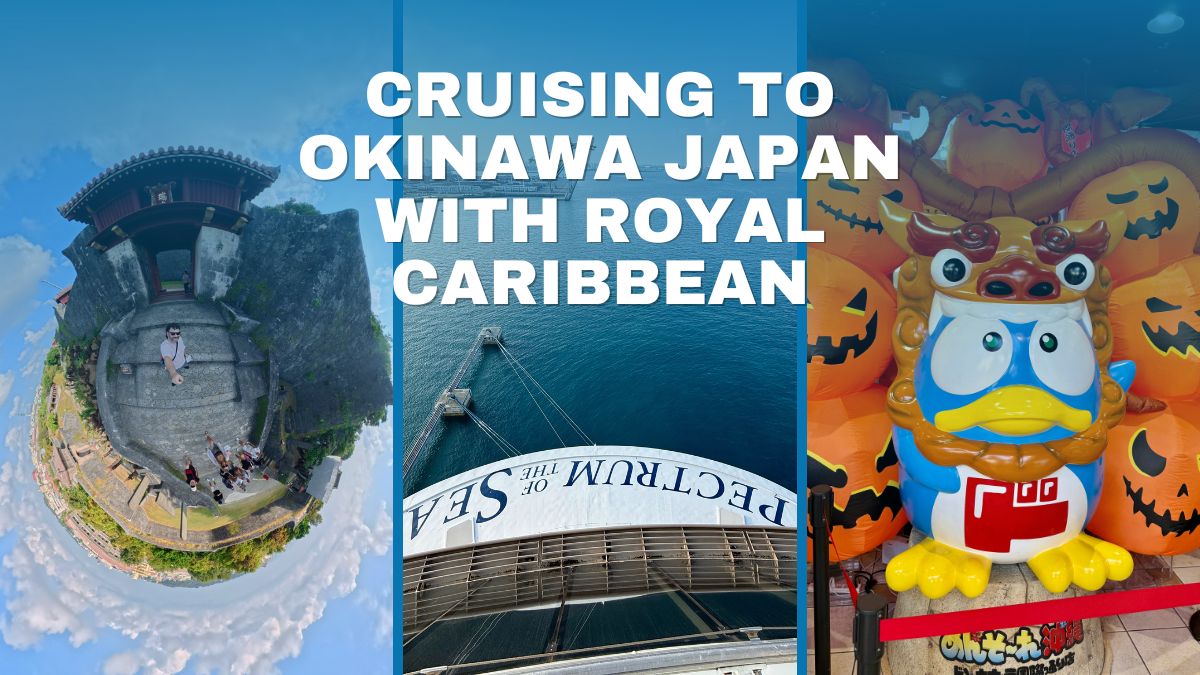
Cruising to Okinawa Japan with Royal Caribbean: A Day of Culture, History and Bucket-List Moments

Our third day on board Spectrum of the Seas was the moment I’d secretly been waiting for. After two extraordinary days exploring Shanghai and settling into ship life, today was the day we would finally set foot in Japan, a country I’ve adored from afar for most of my life.
For anyone who doesn’t know, I am a long-standing Japanophile: I grew up on anime, Japanese video games, and even spent years studying the language in night classes. But because I wanted my “first trip to Japan” to be perfect, I’ve always overthought it, imagining a once-in-a-lifetime mega-itinerary spanning Tokyo, Kyoto, Osaka, Sapporo, Okinawa, and beyond.
Of course, when perfection becomes the goal, planning becomes impossible.
So arriving in Japan by cruise, gently and without any pressure to “do it all,” turned out to be the perfect way for me to finally begin the journey I’ve dreamed about for years.
And there was no better introduction than Okinawa.
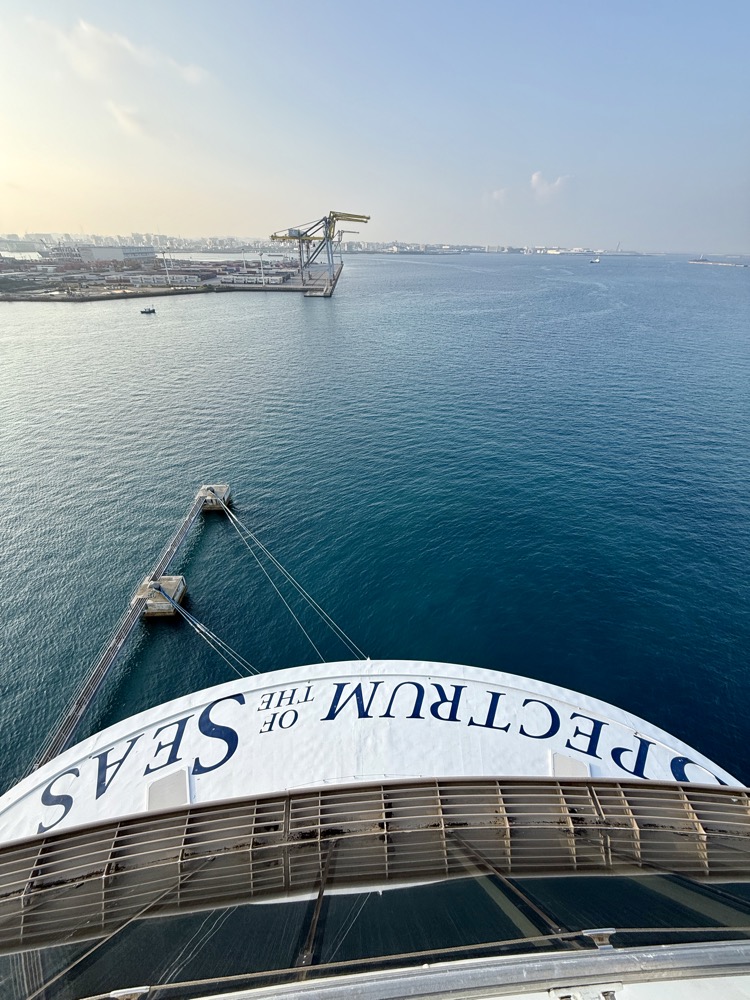

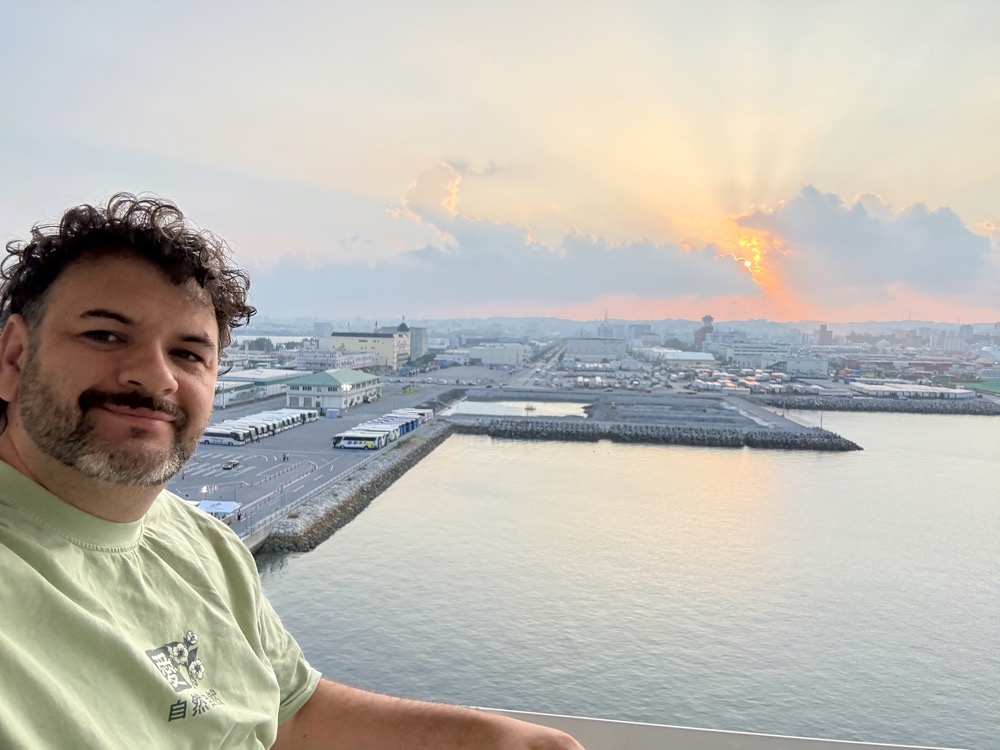
Arriving in Okinawa: Smooth Immigration and First Impressions
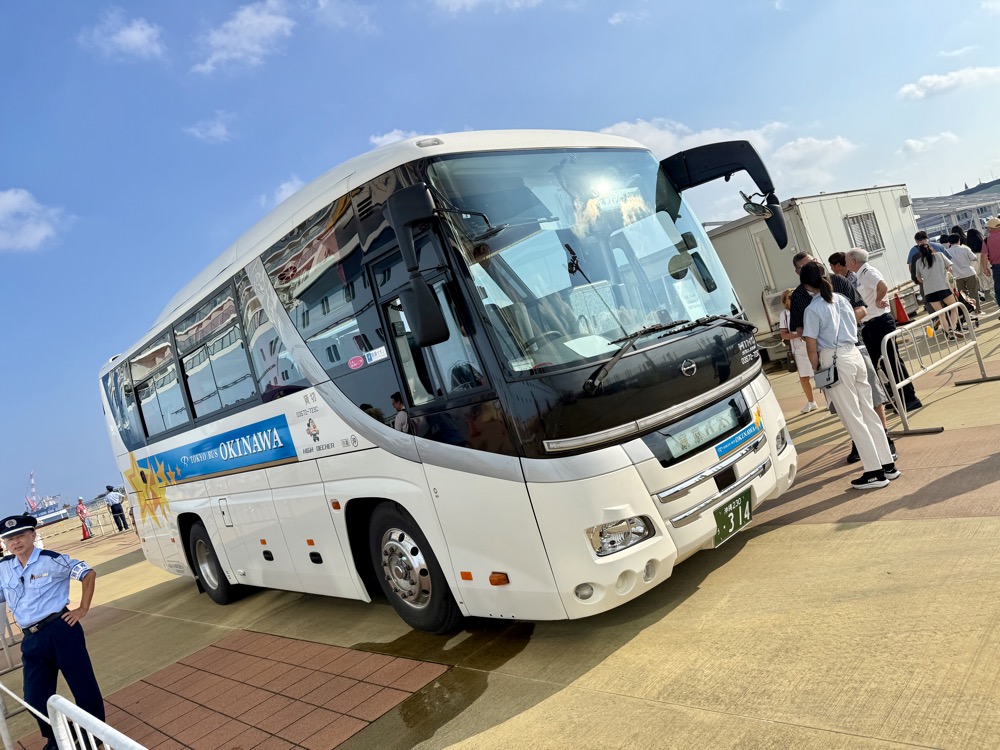
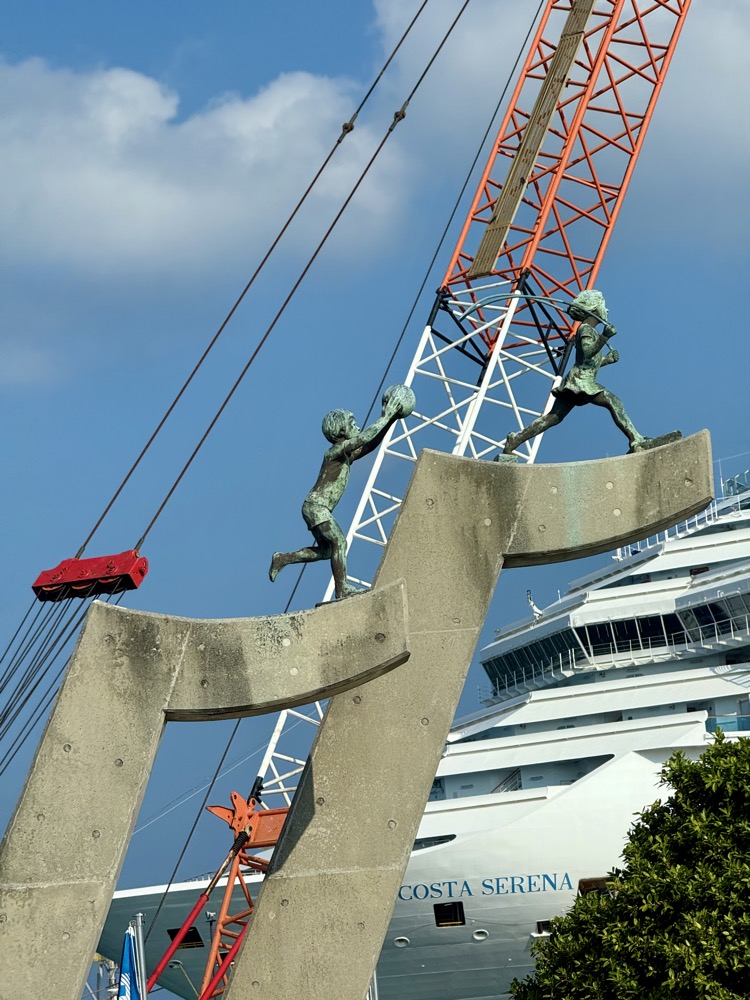
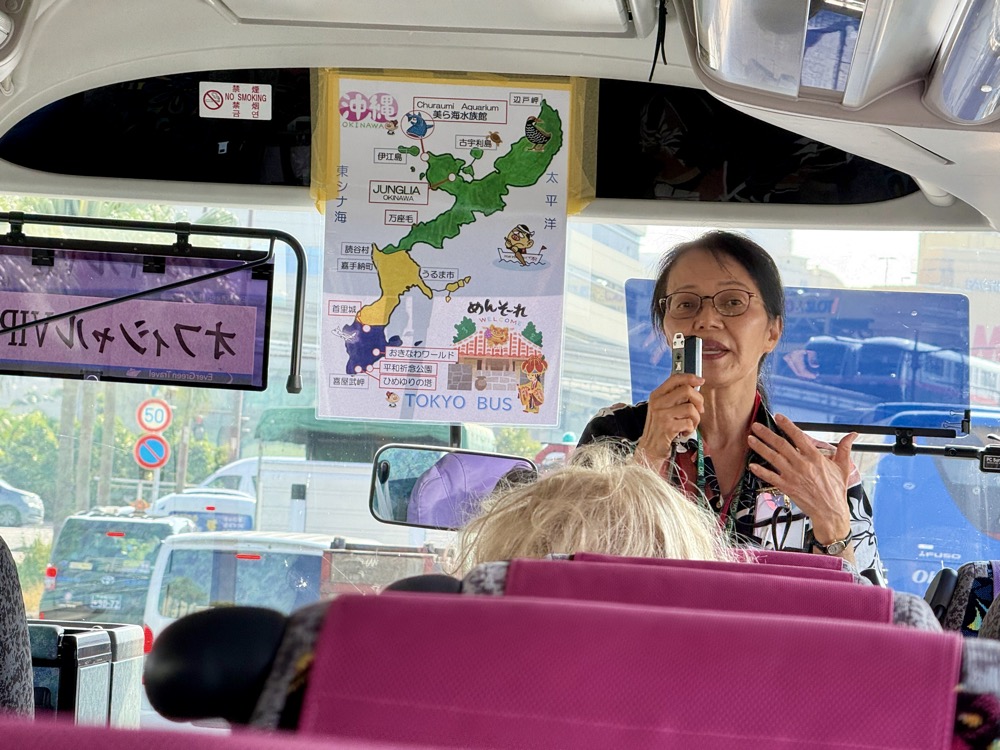
At the pier, we met our two guides for the day, who would be hosting us throughout our time in Okinawa:
- Sakura, a professional guide from Fukuoka who regularly escorts VIP visitors across Japan
- Sui, an Okinawan native with an incredible depth of knowledge about the island’s culture and history
Between them, they brought Okinawa to life in a way no guidebook ever could.
Sui, in particular, spoke openly about Okinawa’s complex and often painful past. Originally known as the Ryukyu Kingdom, Okinawa was once an independent empire with its own language, trade networks, and diplomatic ties, especially with China. Its identity was shaped by hundreds of years of unique cultural development before being absorbed into Japan in the late 19th century.
She explained how the island was devastated during the Second World War, becoming one of the front-line battle zones between Japanese forces and the invading Americans, something we would understand more deeply at our first stop later that morning.
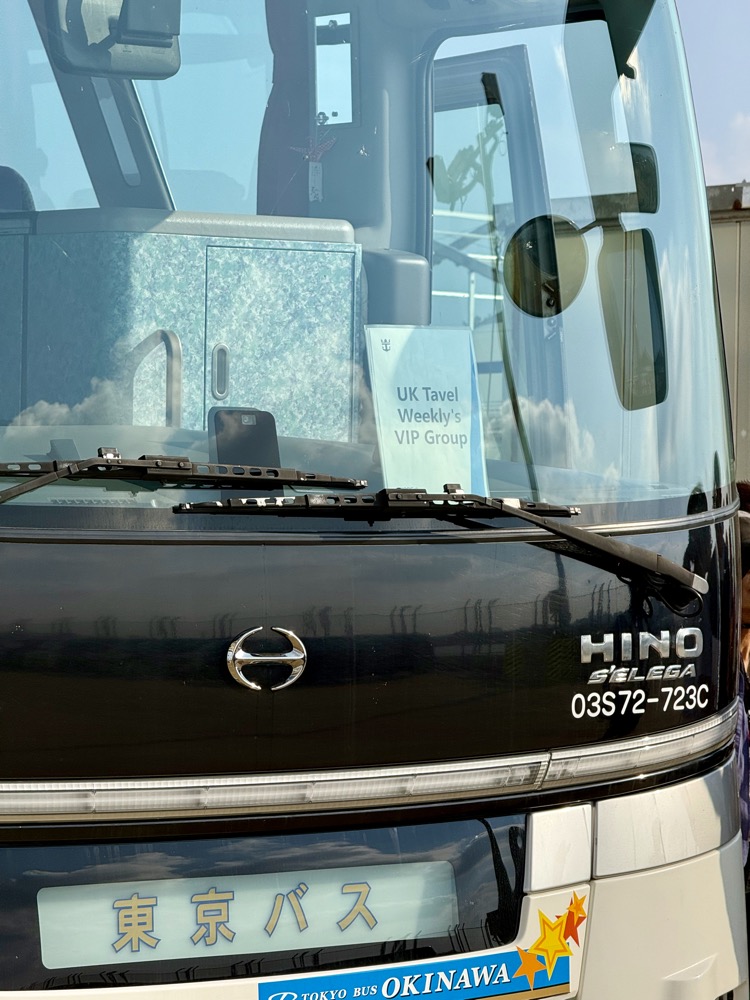
After the war, Okinawa entered a long period of American occupation, which reshaped everything from the economy to the road systems and even the currency. When the island was eventually returned to Japan in the 1970s, yet another transition took place, bringing new changes as Okinawa adapted again to the wider Japanese framework.
What struck me most was how personal this history is for the people who live here.
Sui shared her own experiences and her family’s stories, memories of a childhood shaped by these shifting political landscapes, and what it meant for Okinawan culture, identity, and everyday life.
It’s easy to forget just how rich, layered and resilient Okinawa’s history is. Hearing it directly from someone who lived through those transitions brought everything into sharp focus, and it gave such meaningful context to the sites we visited throughout the day.

Stop One: The Japanese Naval Underground Headquarters
Our first destination was the Japanese Naval Underground Headquarters, a site that took me entirely by surprise. I already knew about the American occupation of Okinawa. Still, I hadn’t fully appreciated the Okinawan perspective of the conflict: how frightening it must have been to face invasion by a foreign force, mainly when mainland Japanese propaganda at the time painted a terrifying picture of what would happen if the Americans captured them.
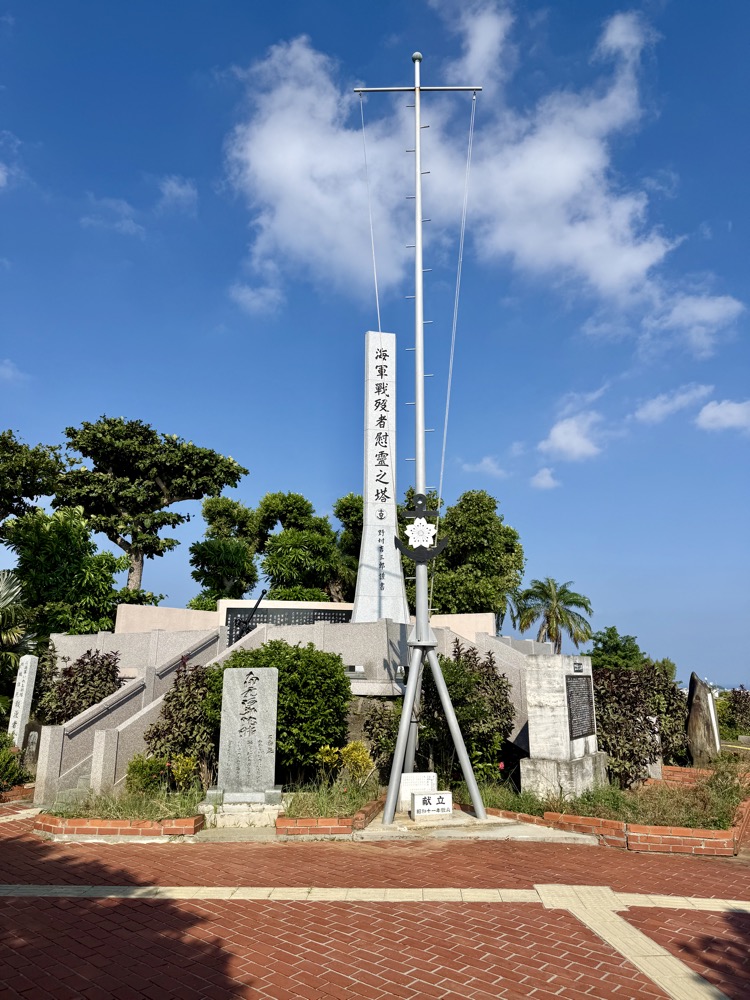
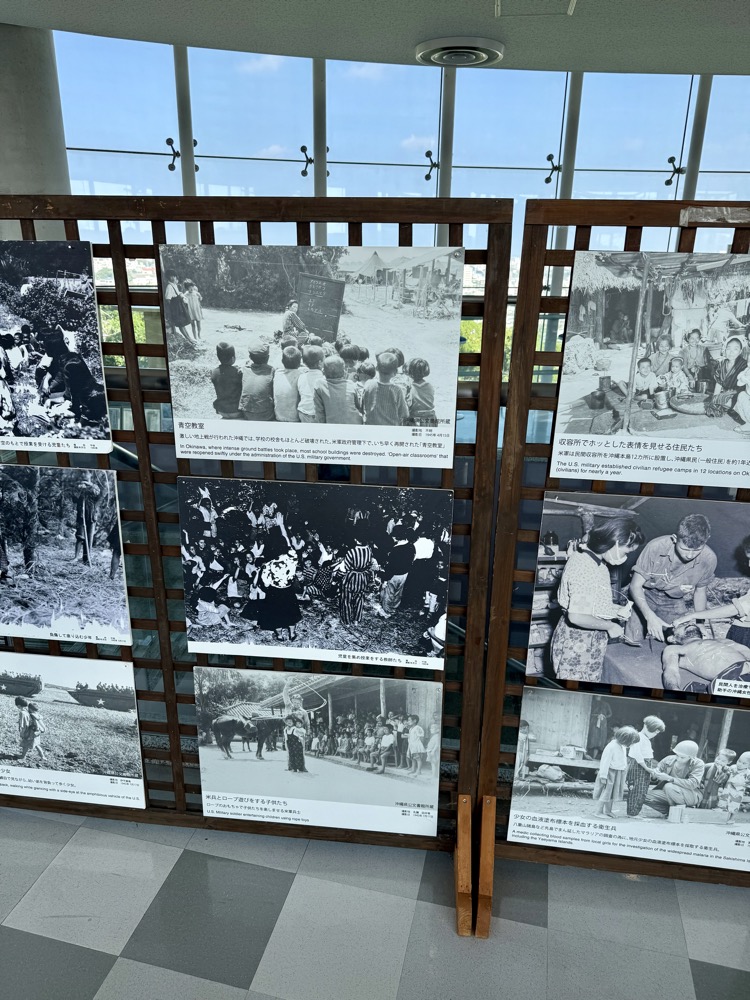
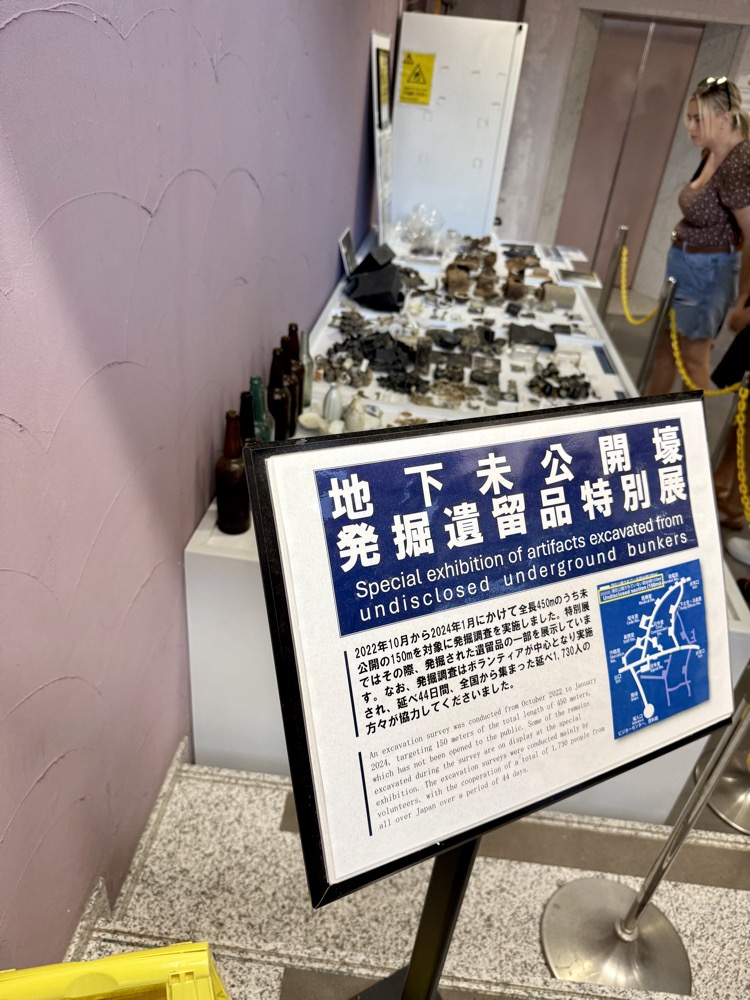
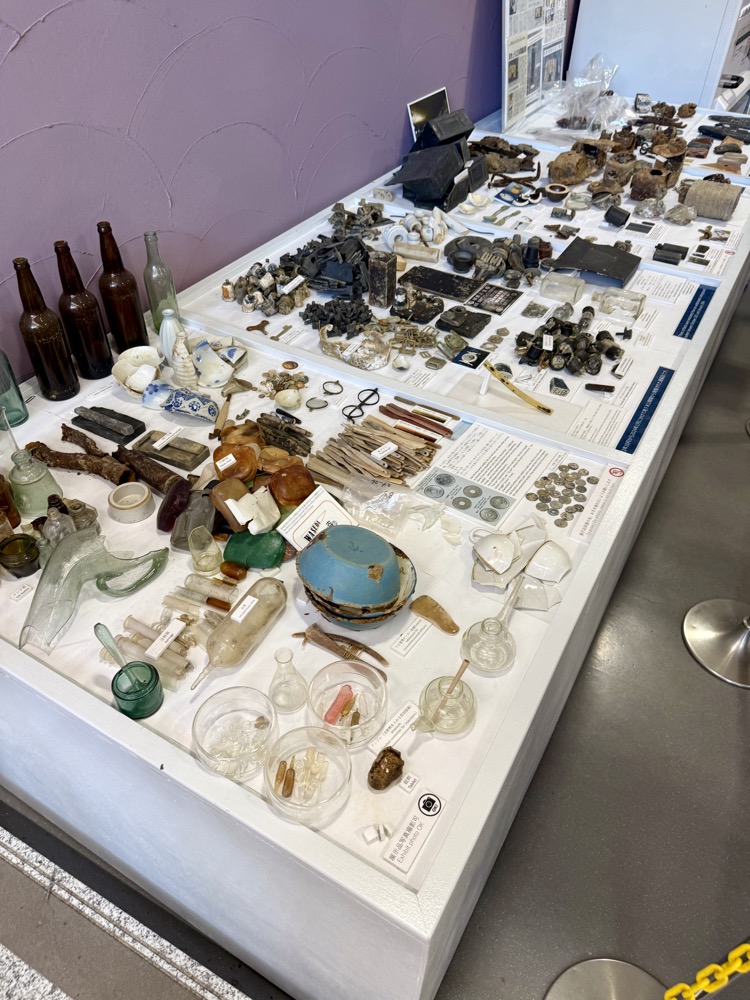
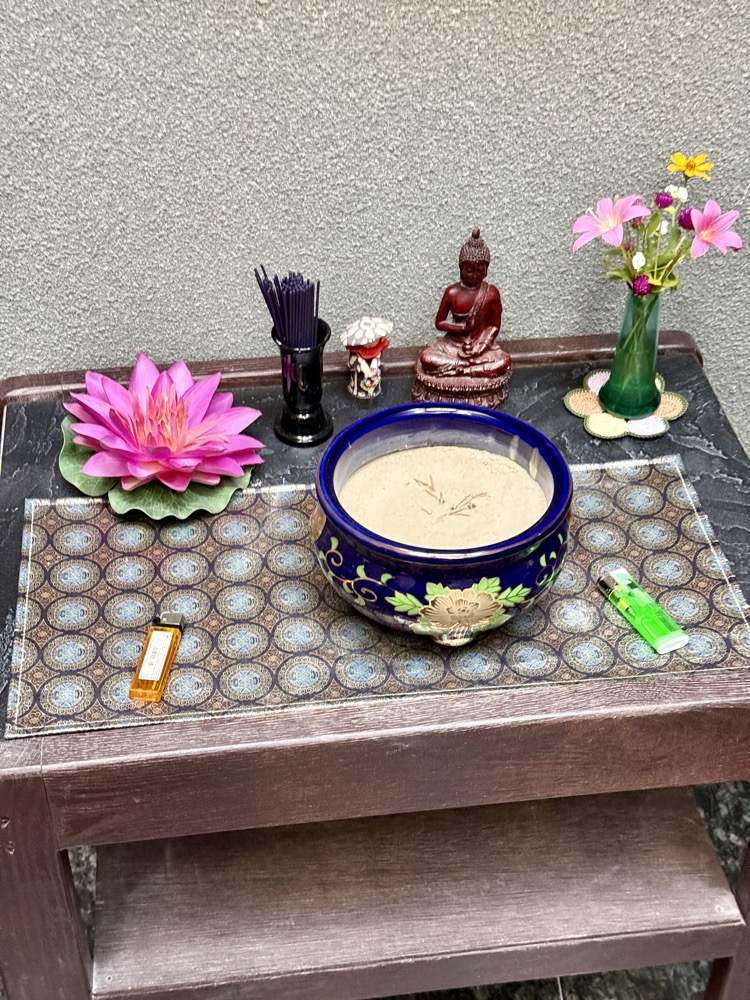
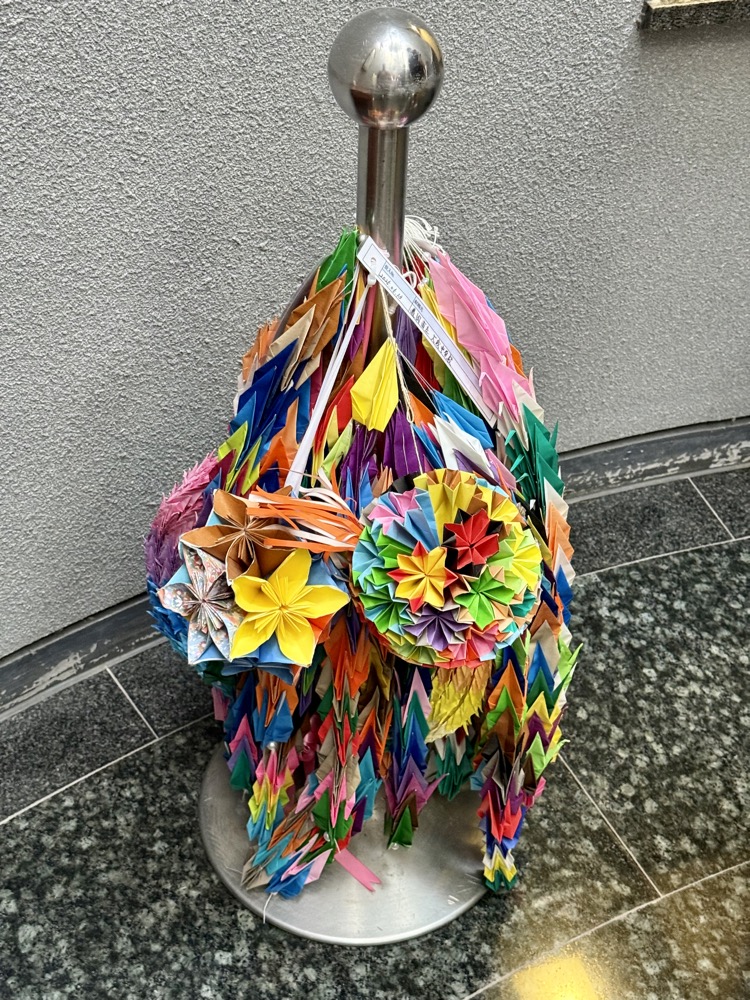
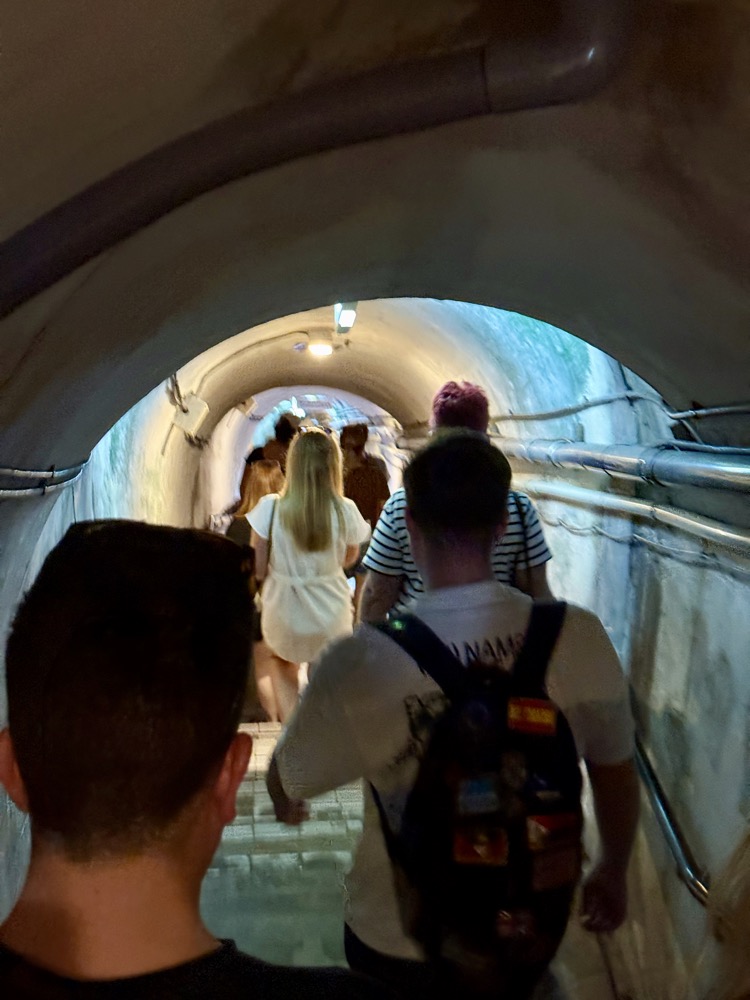
This stop was the moment Okinawa’s layered, painful wartime history shifted from something abstract to something deeply human.
You begin at a small welcome centre, with memorials dedicated to the families who lost loved ones during the Battle of Okinawa. There’s also a compact museum displaying artefacts recovered from the site, personal belongings, tools, and fragments of communication equipment that once supported Japan’s final line of defence.
But the heart of the visit lies underground.
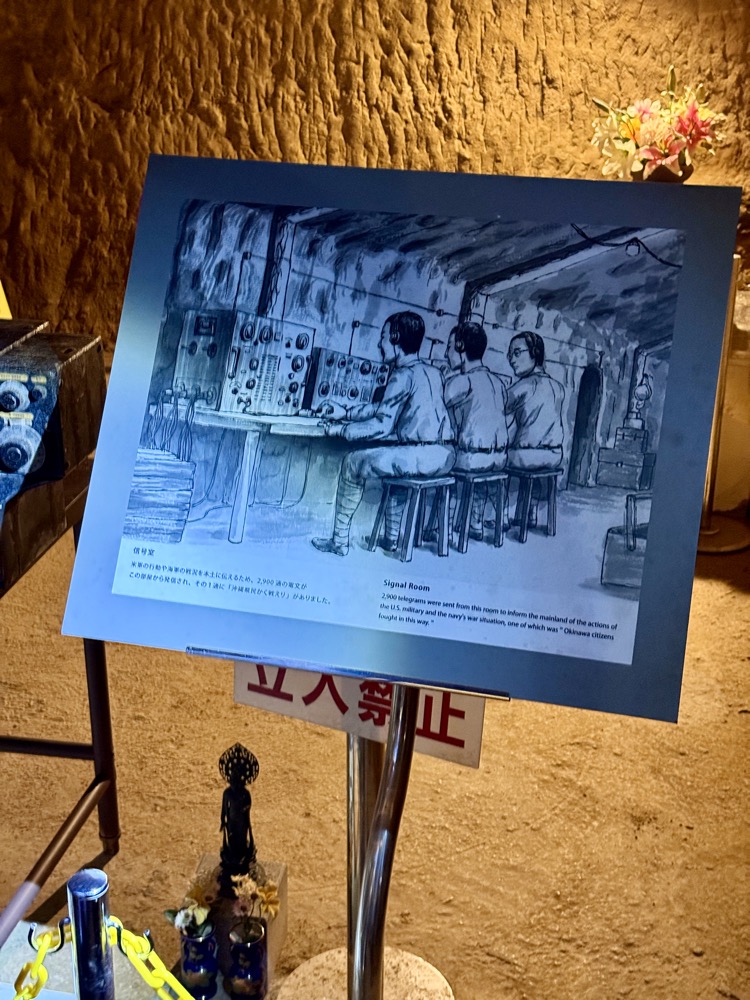
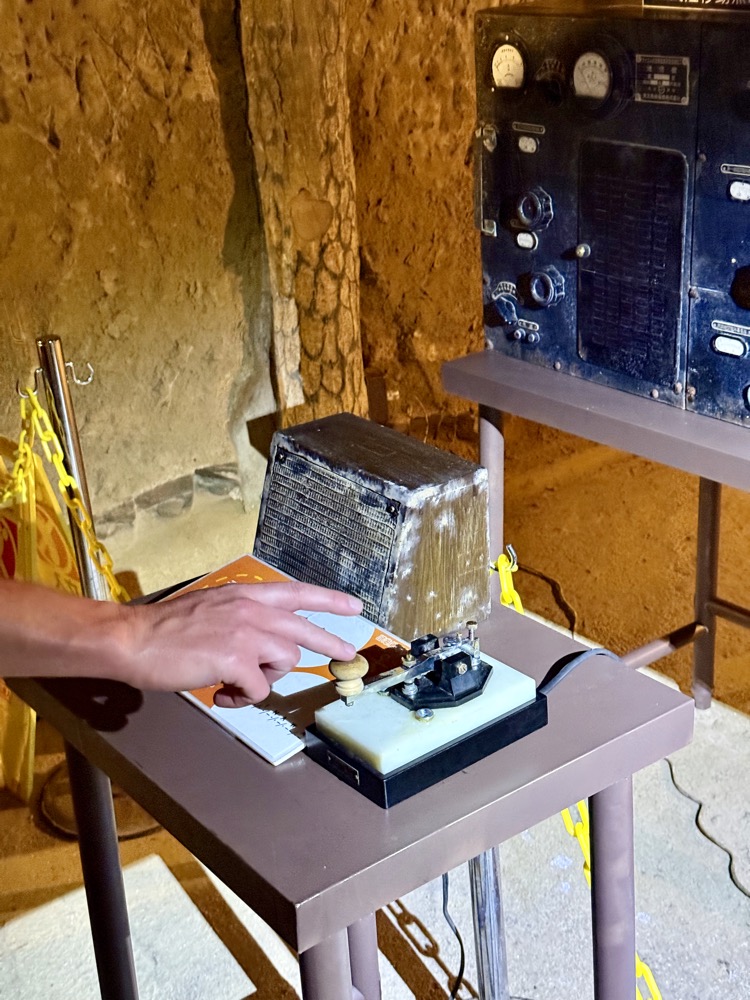
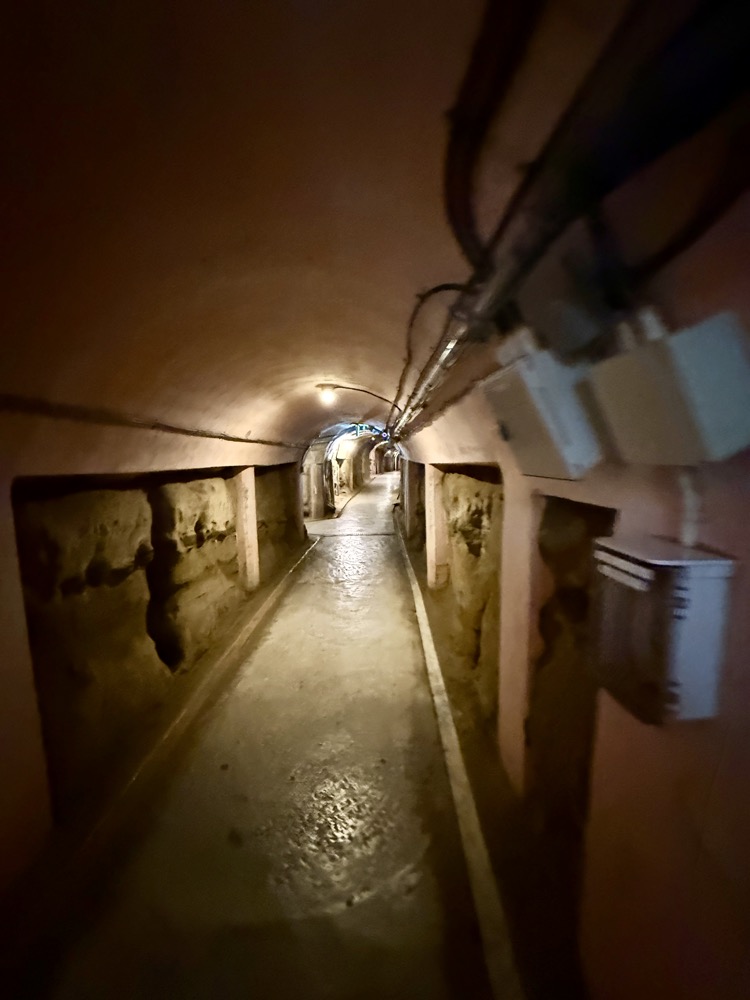
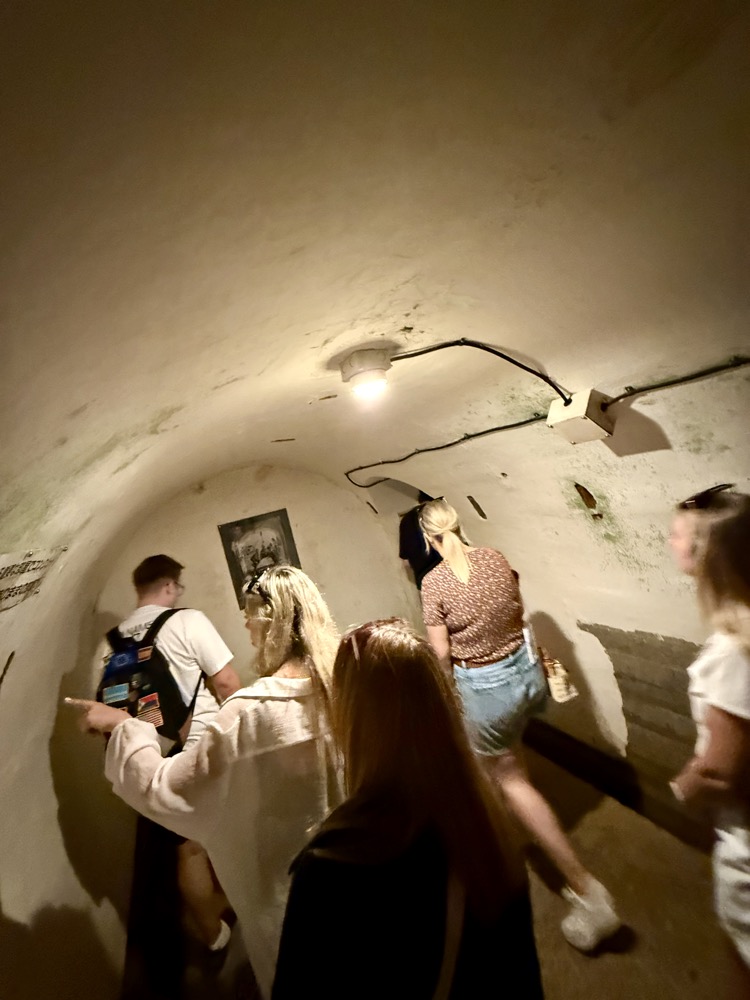
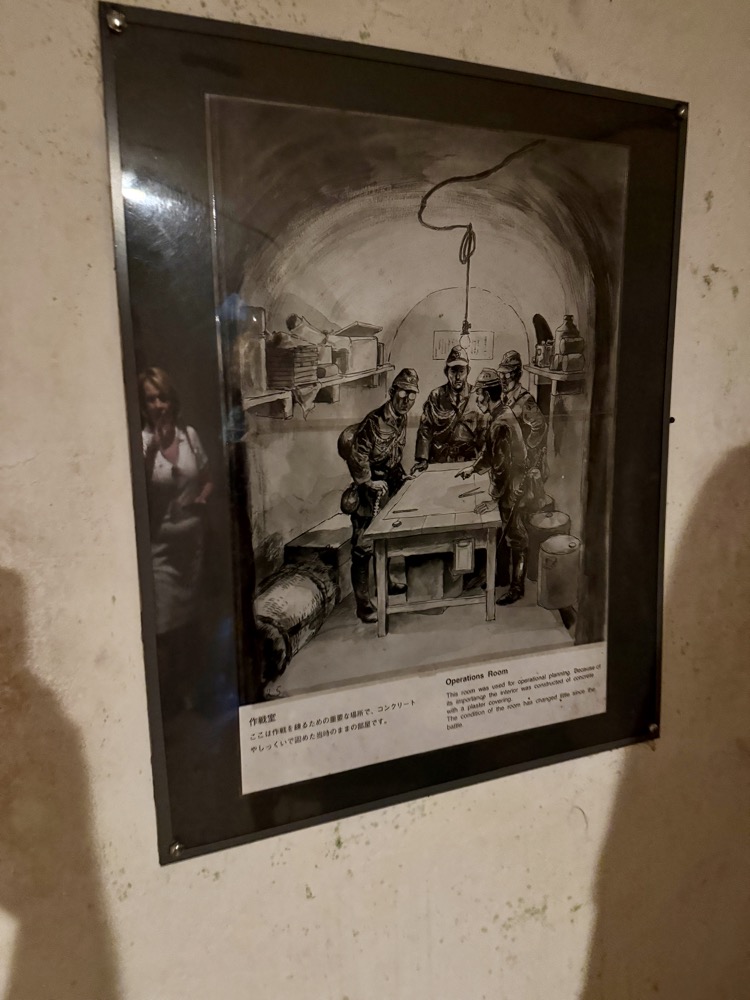
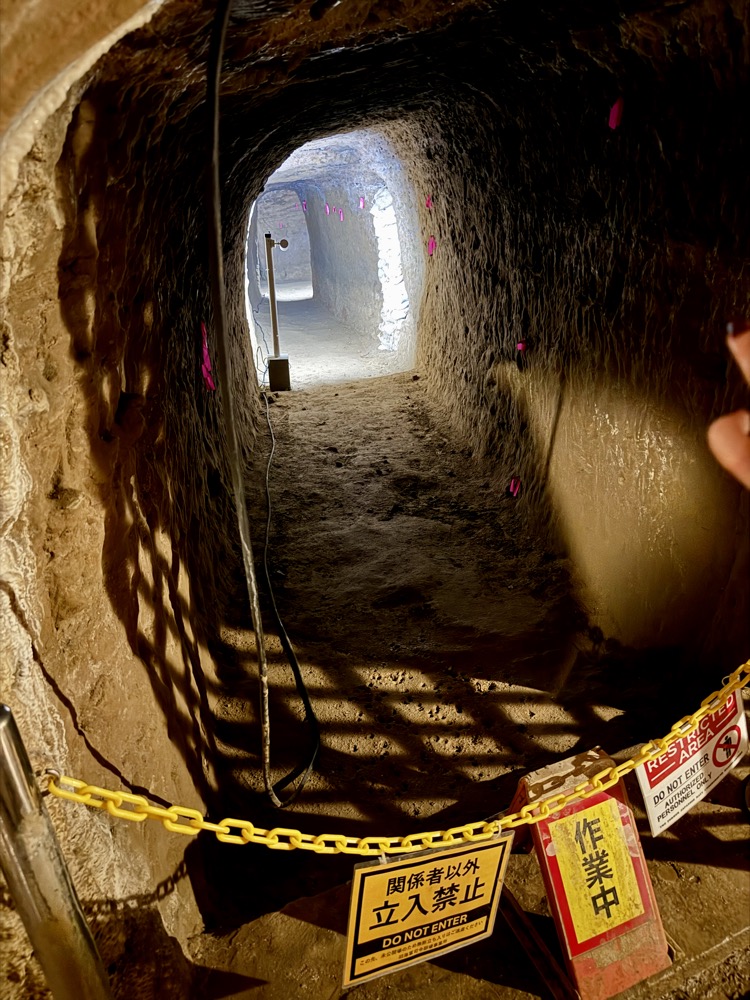
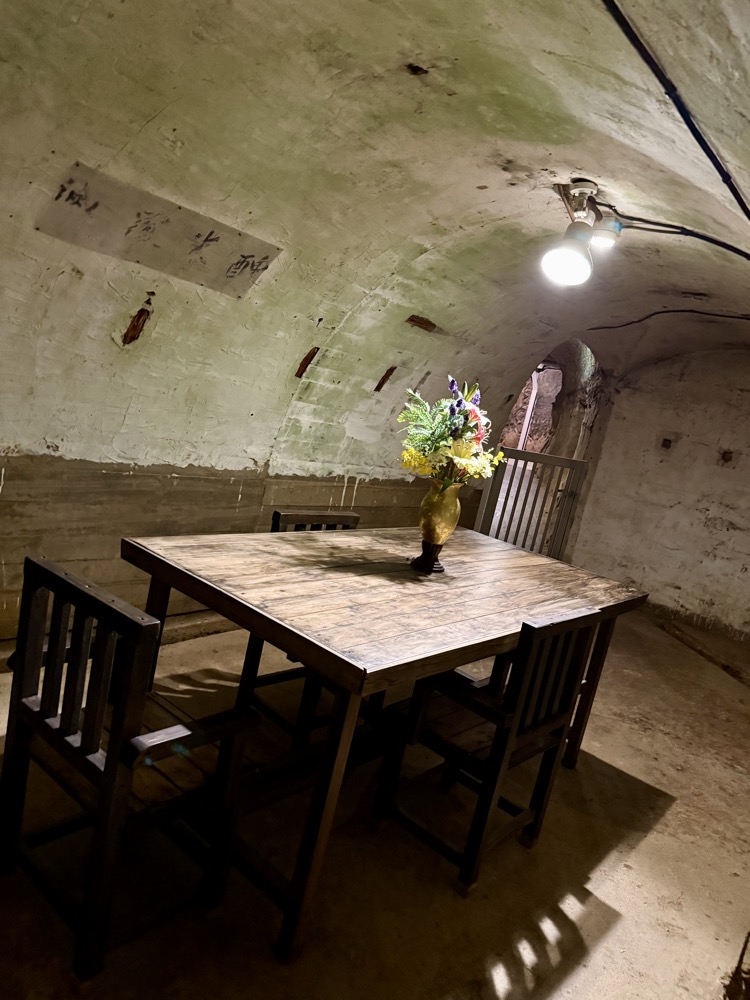
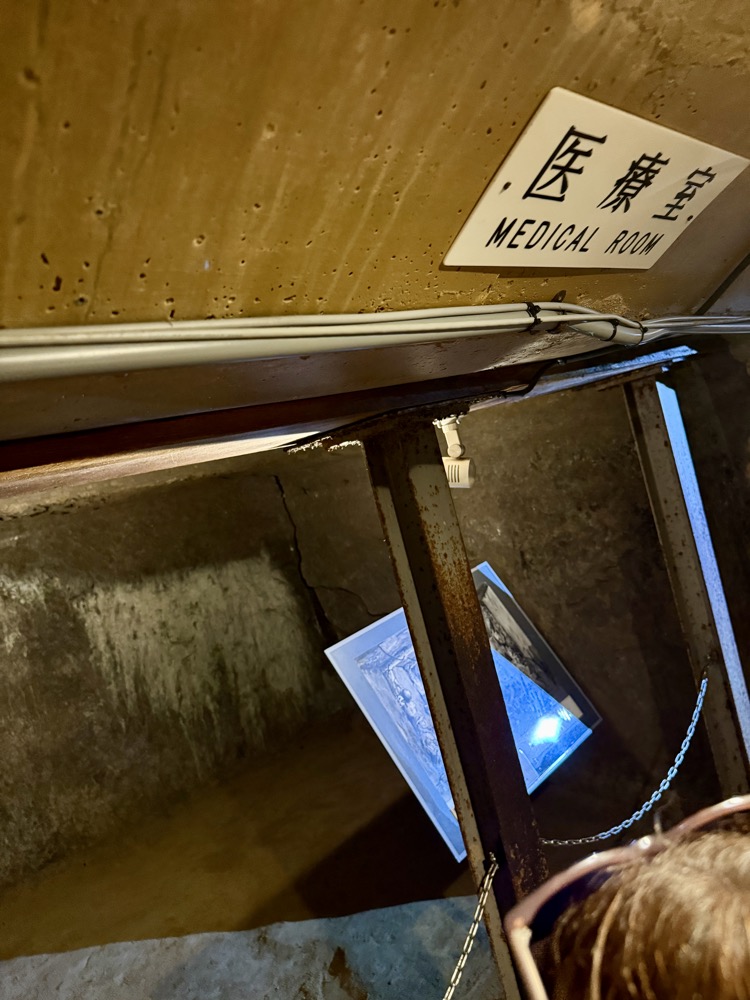
The base comprises a network of hand-dug tunnels that served as the strategic headquarters of the Imperial Japanese Navy during the war. These tunnels sheltered officers, communication teams, and living quarters, all carved directly into the limestone under unthinkable circumstances.
Inside the tunnels, you can still clearly see:
- Shrapnel scars on the walls, where officers detonated grenades to take their own lives rather than surrender
- Uneven stone floors, worn smooth by thousands of hurried footsteps
- Narrow, oppressive corridors, where soldiers would have huddled together for days
- A heavy, stifling atmosphere, with very little natural ventilation even today
It’s sobering, emotional and impossible to forget.
Sui explained how Okinawa’s identity is deeply intertwined with resilience, from its time as the independent Ryukyu Kingdom, through the devastation of the Second World War, to the post-war American occupation and eventual reunification with Japan. Standing in those tunnels, hearing her perspective, that resilience felt incredibly real.
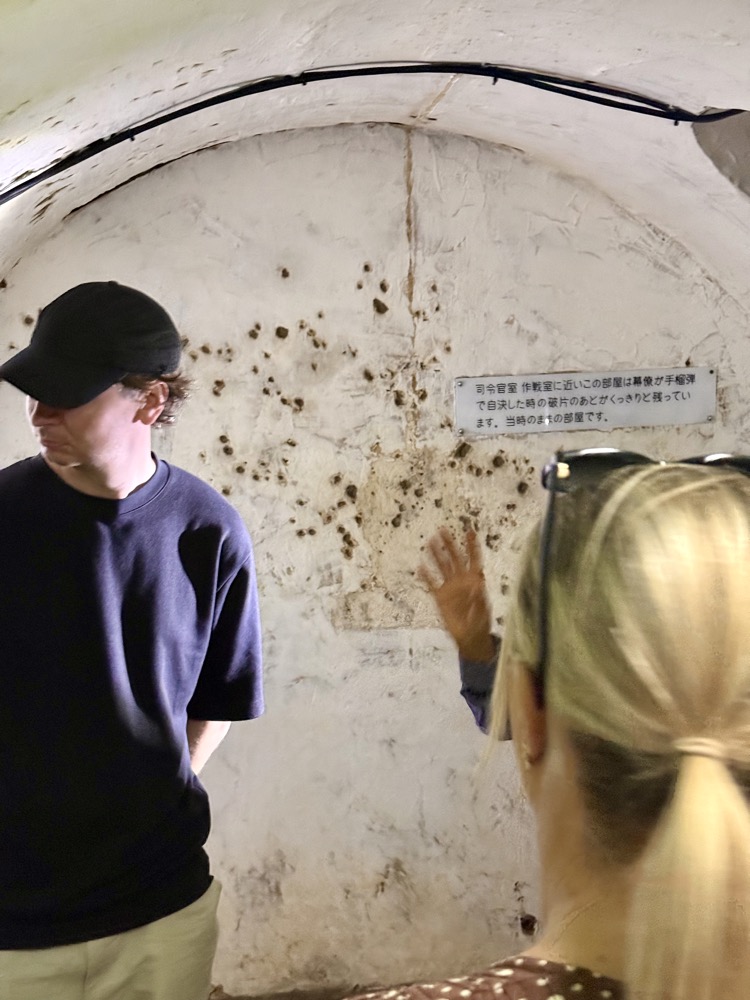
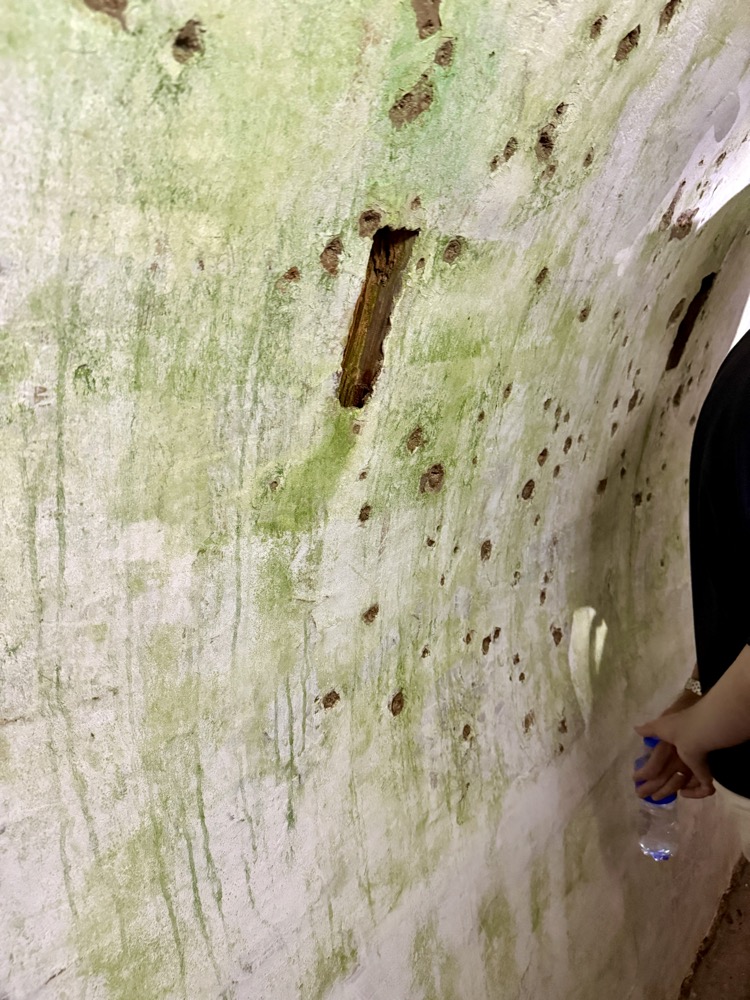
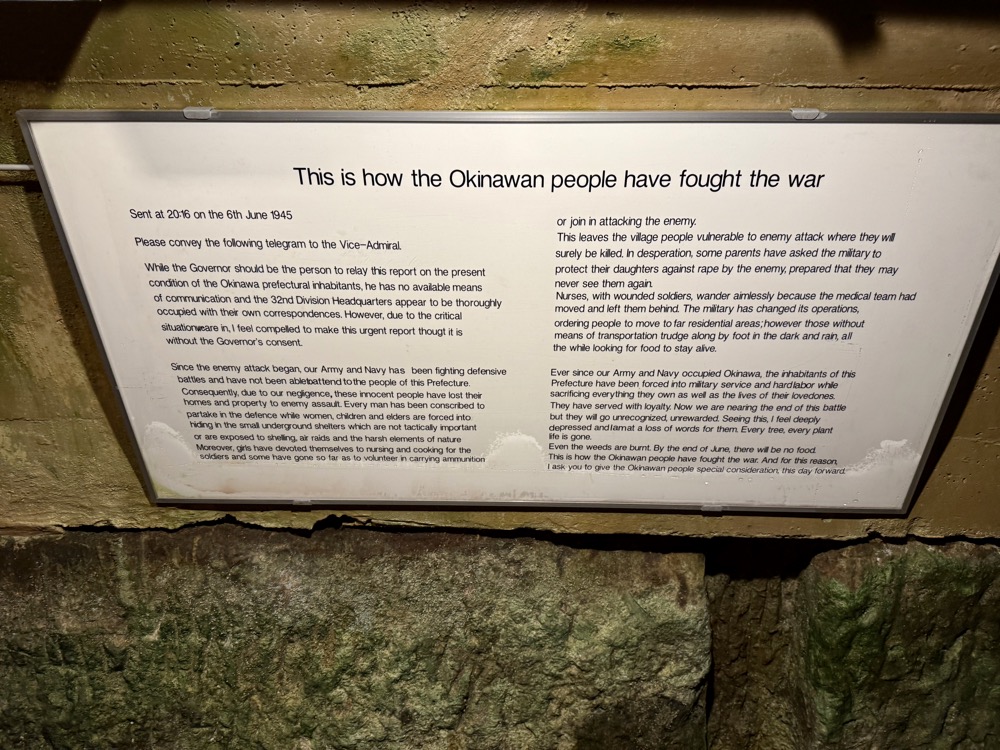
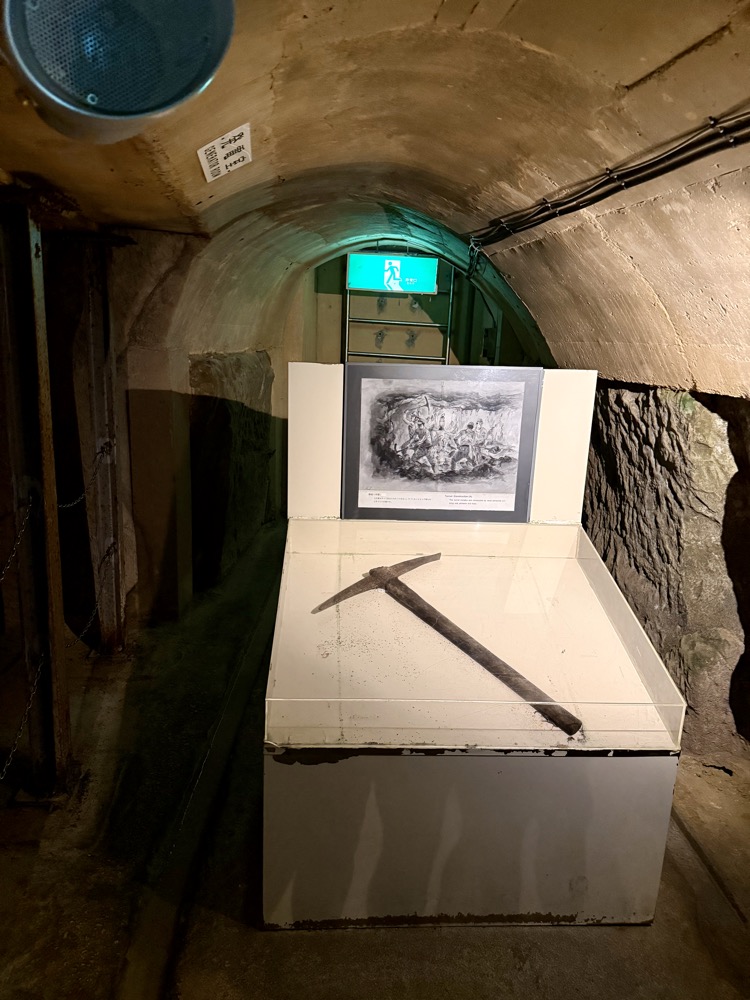
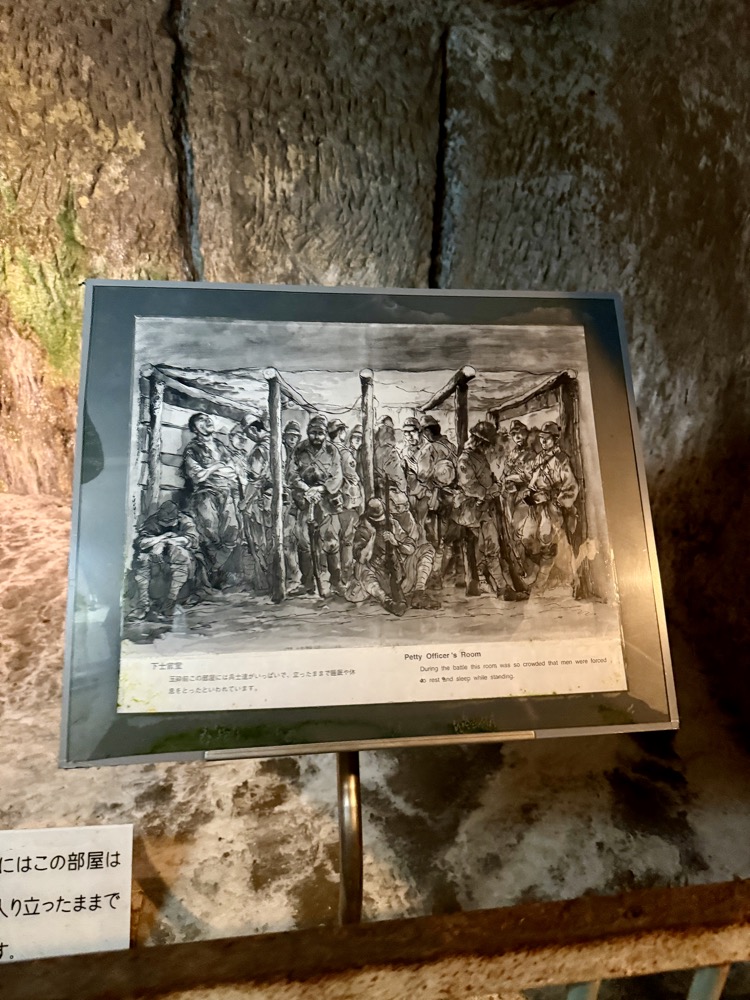
And while Japan may have been Britain’s enemy during the war, it is impossible not to feel sympathy for those who lived and died here. The propaganda spread across Okinawa convinced soldiers and civilians alike that capture would bring horrors beyond imagination, making their choices in those final days tragically understandable.
Visiting this base, especially after learning about wartime history in Shanghai earlier in our trip, brought home just how global the Second World War truly was. We often think of it primarily as a European conflict, but its reach across Asia, including places like Okinawa, was vast and devastating.
Stop 2: Okinawa World & the Gyokusendō Cave
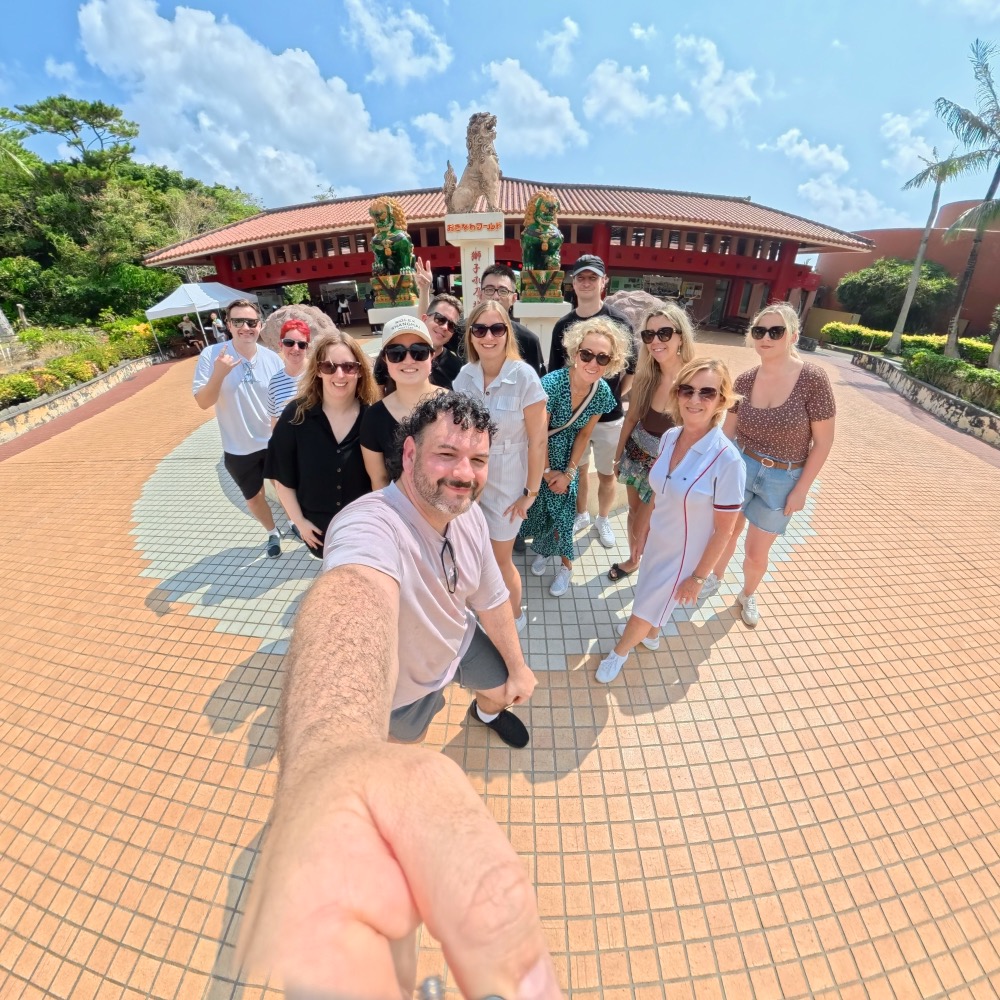
From the heavy stillness of the war tunnels, we moved into an almost otherworldly natural wonder: Gyokusendō Cave at Okinawa World.
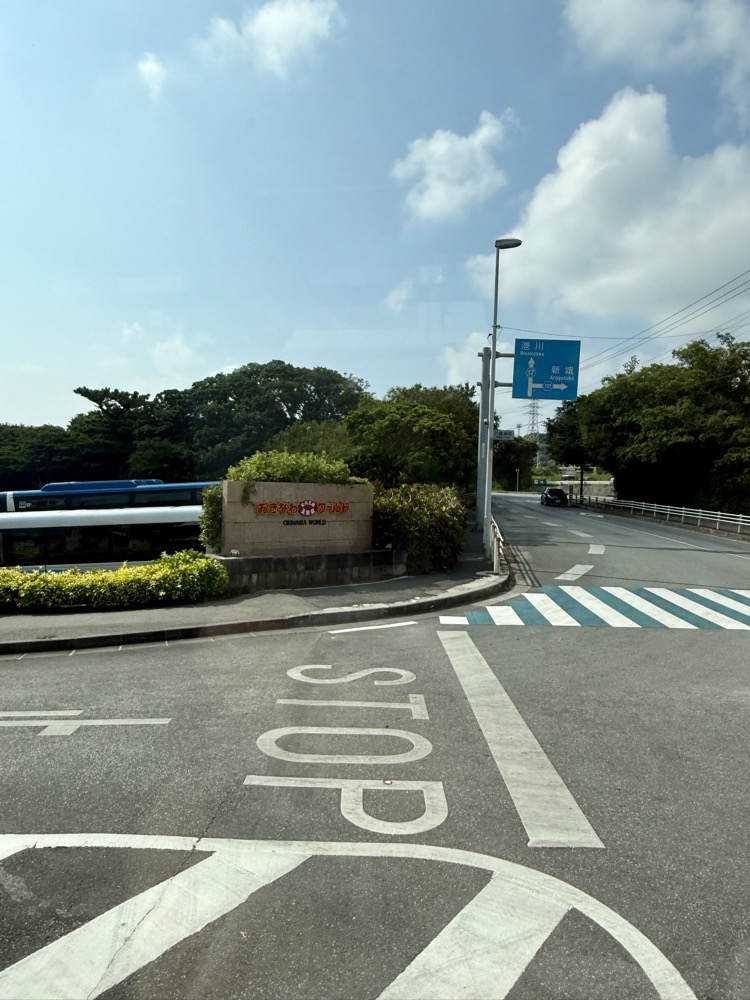
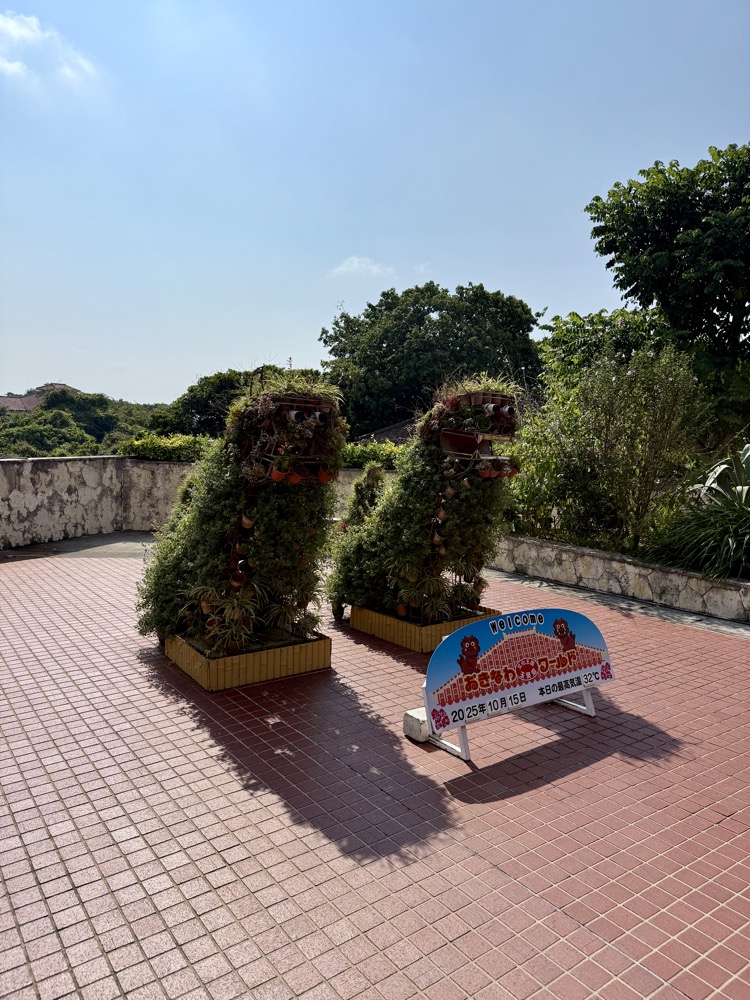
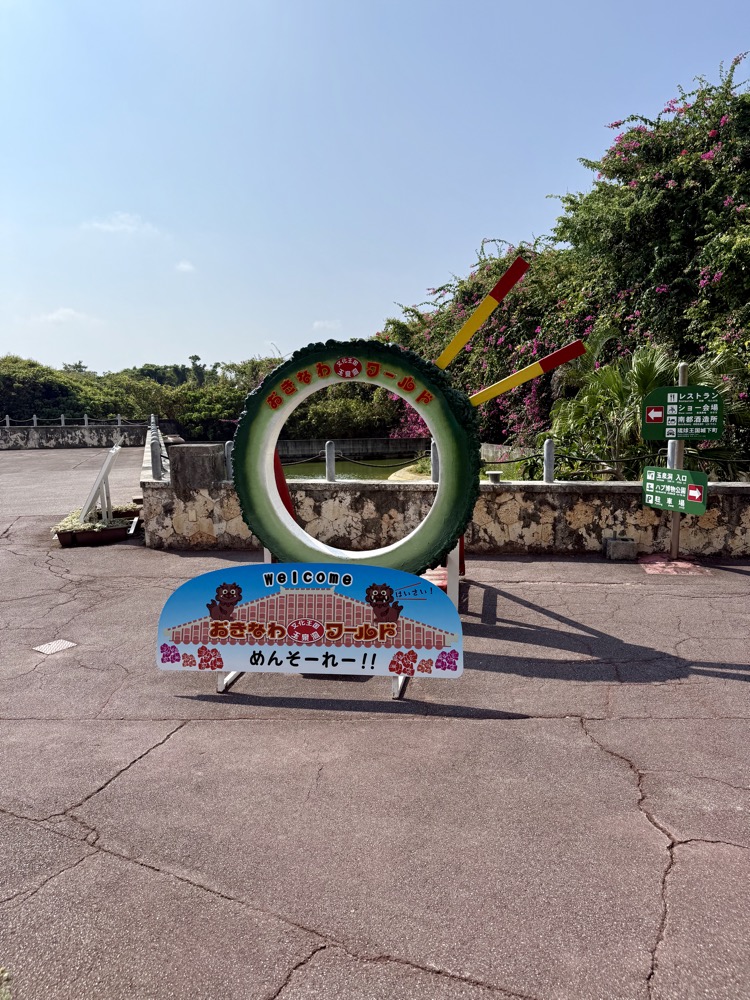
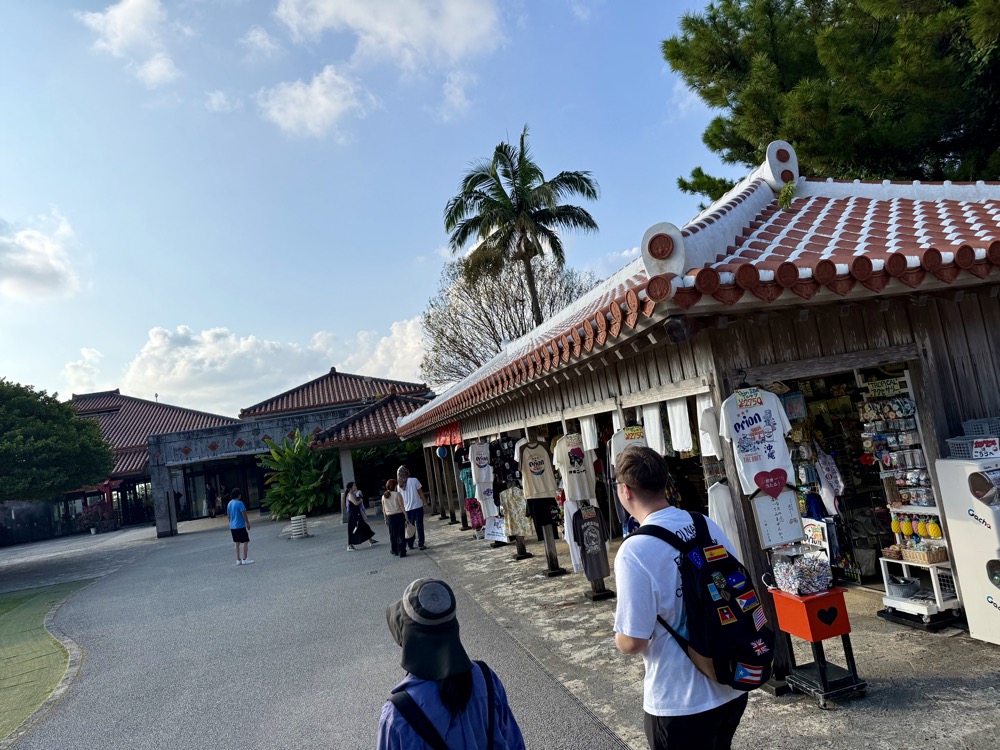
Okinawa World is one of the island’s most popular cultural attractions, but calling it a “theme park” would be selling it short. It’s more of a living cultural village, a place where you can experience the natural environment, artistry, performance and traditions that make Okinawa so distinct from mainland Japan.
It’s divided into three main areas, each offering something completely different, and we were lucky enough to experience two of them.
Traditional Eisa Drum Performance
Our visit began with a lively Eisa drum show, a traditional Okinawan performance blending drums, dance, chanting, and sheer energy. Eisa is deeply embedded in Okinawan identity, often performed during festivals and celebrations, and it was lovely to see how proudly it’s still practised today.
Photography wasn’t permitted, so I have nothing to show you, but perhaps that made it even more special. What I can tell you is the atmosphere was brilliant. The tent was buzzing, school children were in the audience experiencing a slice of their island’s heritage, and the performers filled the space with rhythm and colour.
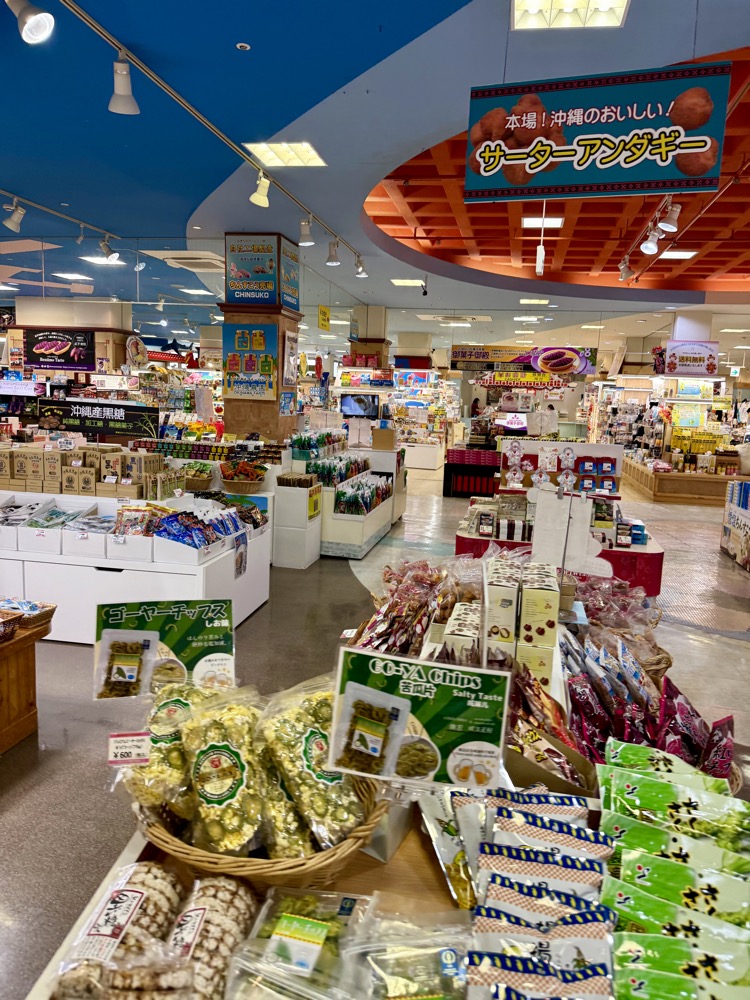
We did sneak out a little before the end, thanks to the heat and humidity, which were quite intense under the covered tent, plus something had caught our eye earlier… we walked past the gift shop on the way in, and wanted some time to get some Japanese snacks and momentos, but more on that towards the end.
Crafts, Culture & the Traditional Village
Just outside the show area lies the Traditional Village, a collection of workshops and craft studios celebrating Ryukyu artistry. Okinawa World is a hub for craftsmanship, and you can explore:
- Glass-blowing studios
- Pottery workshops
- Traditional dyeing and textiles
- Heritage architecture and restored houses
We didn’t have a huge amount of time to explore, but even walking through the village offers a lovely glimpse into how proudly Okinawa preserves its cultural roots. If you enjoy heritage, craft, and hands-on cultural experiences, you could easily spend a full afternoon here.
Gyokusendō Cave
After a bit of browsing and a few purchases, it was time to head underground once again, though this cave was of a very different nature from the war tunnels.
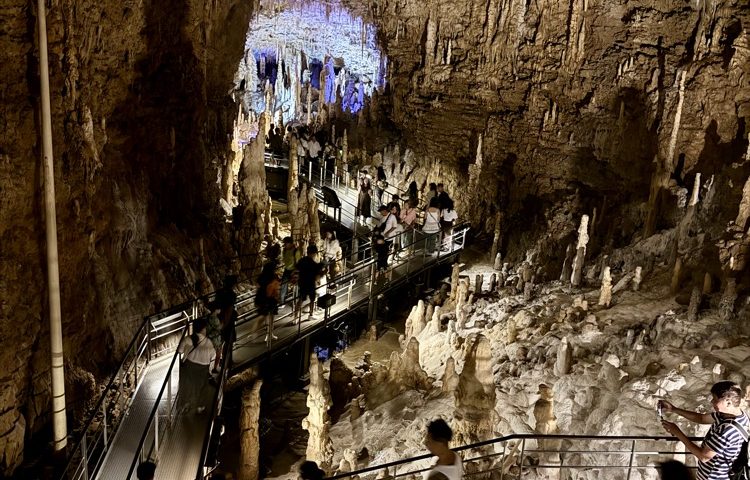

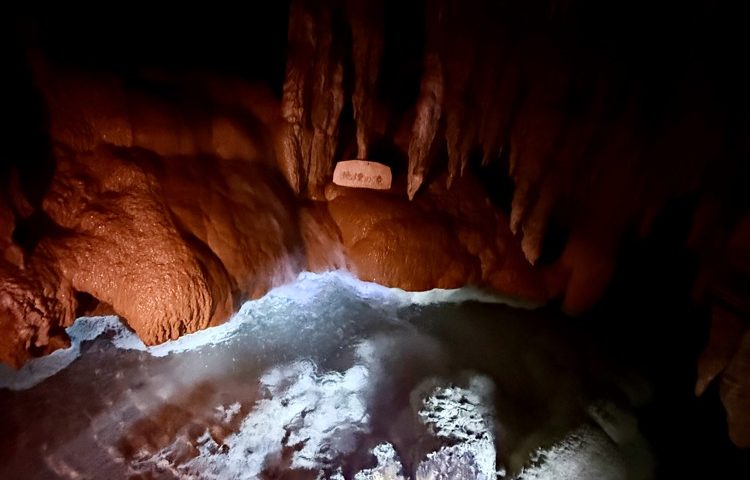
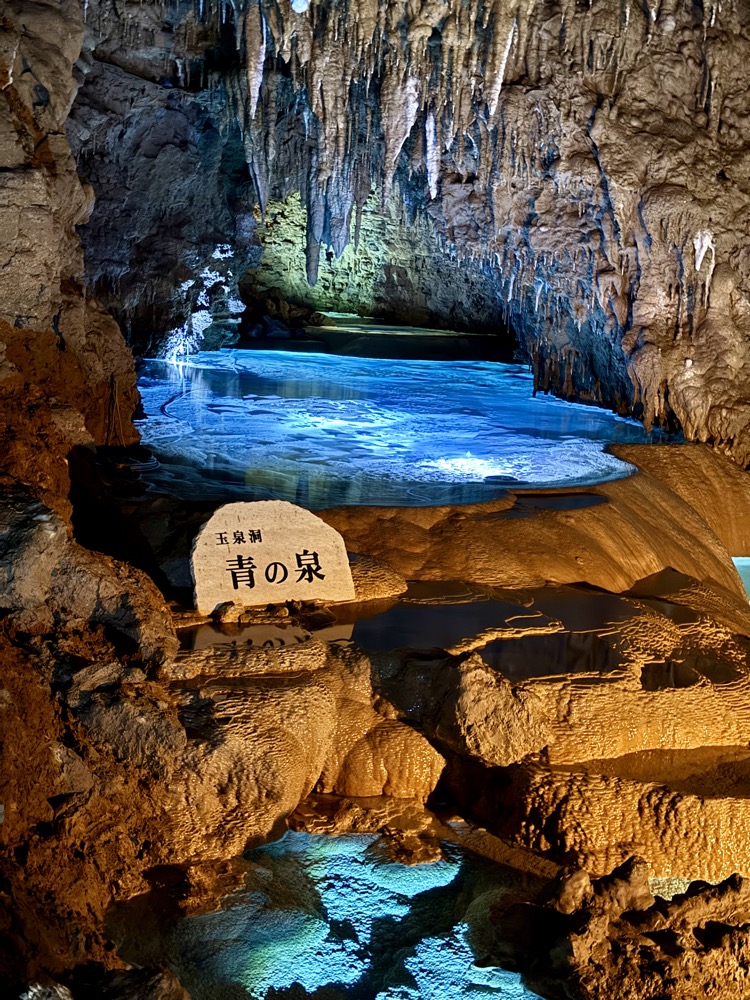
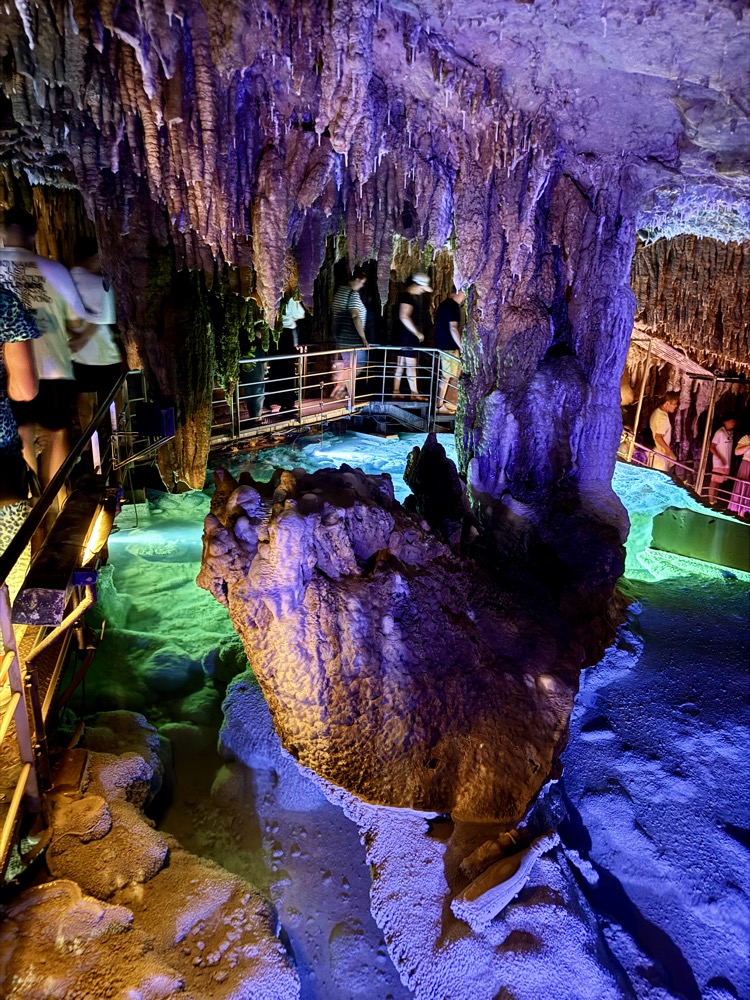
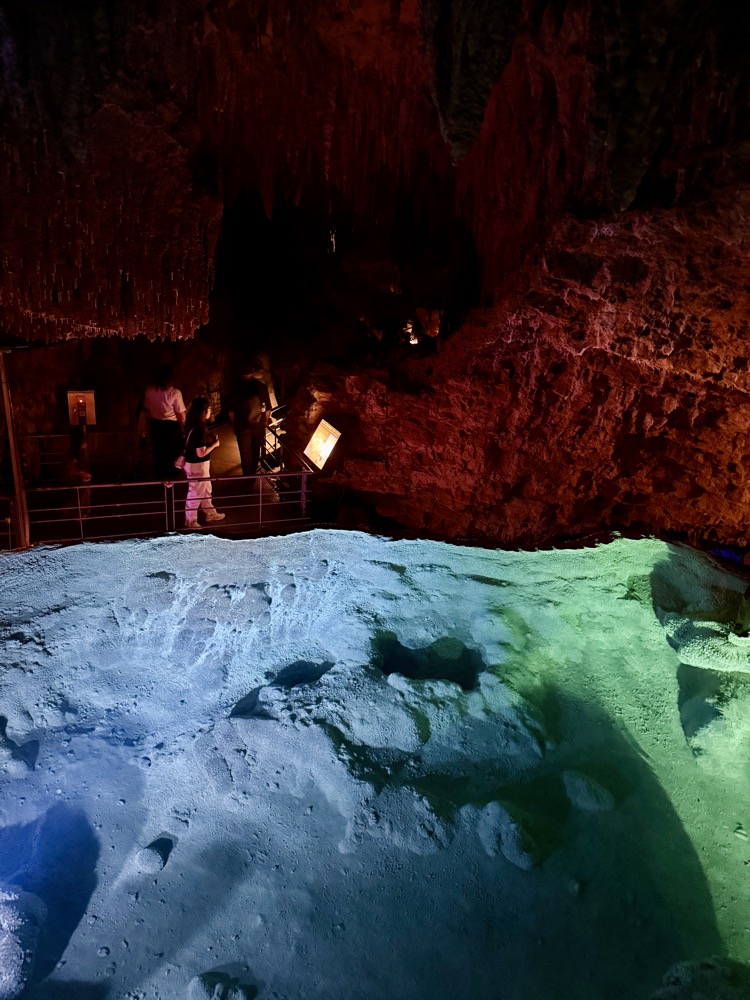
Gyokusendō Cave is one of Japan’s largest limestone cave systems, stretching for more than five kilometres, with around 850 metres open to visitors. Unlike the man-made tunnels we saw this morning, this is entirely natural and truly breathtaking.
Inside, you’ll find:
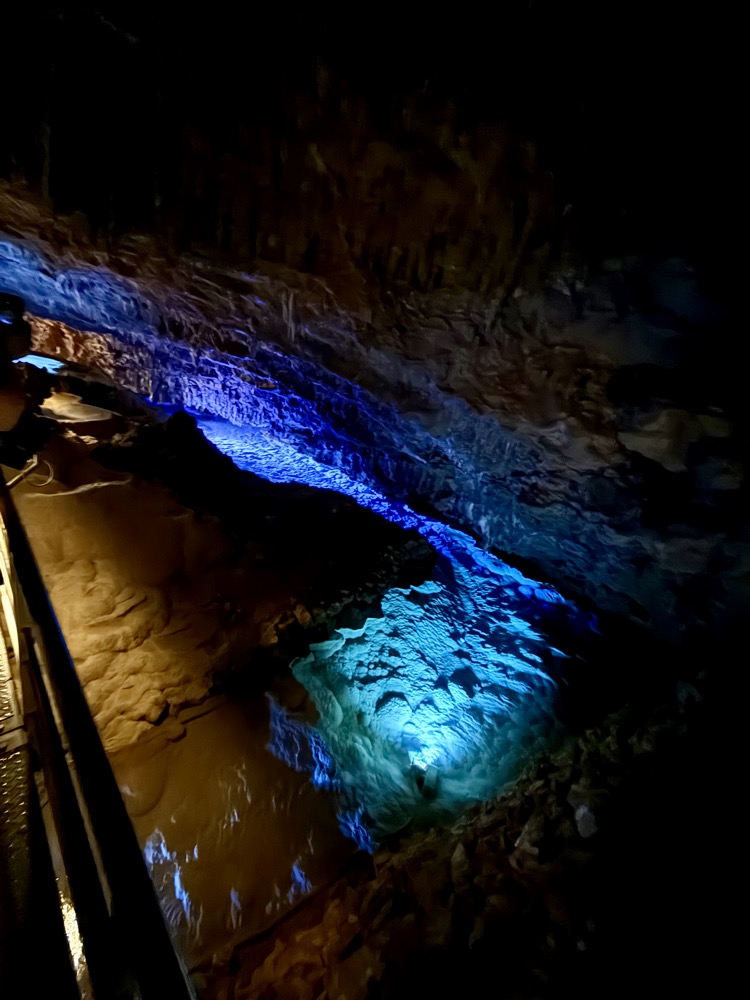
- Sapphire-blue underground pools
- Towering columns and rock formations
- Thousands of stalactites dripping like chandeliers
- Dramatically lit chambers that feel almost cinematic
Our walk through the cave system took around 30 minutes, following raised walkways through vast echoing caverns and narrow passages. The temperature drops noticeably down there, and after the heat above ground it was a welcome change.
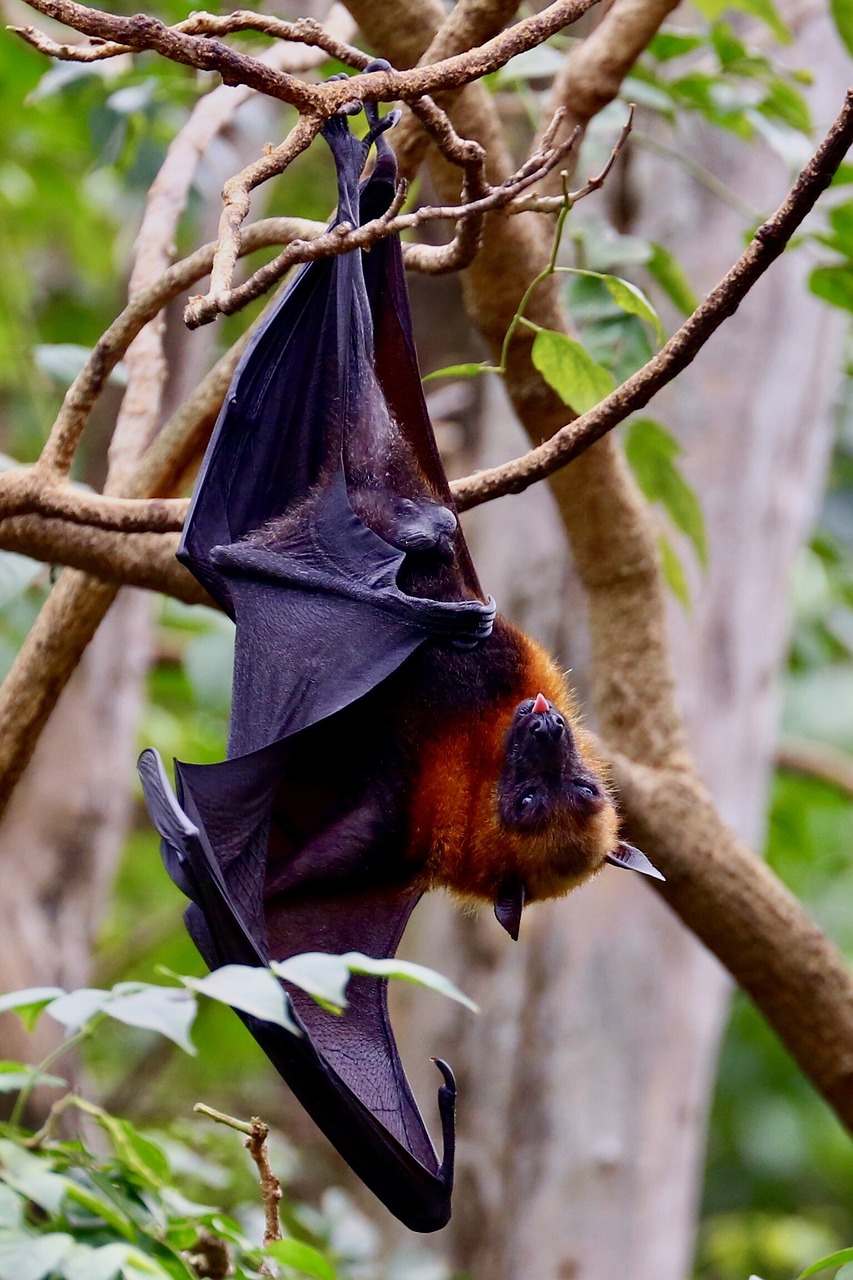
As we walked, Sakura told us about Okinawa’s giant fruit bats, which can reach up to 1.5 metres across when flying. Completely harmless, but enormous. I’m convinced I saw one flutter past in the corner of my eye, though it may have been wishful thinking that it was just a fly by…
Stop 3: A Ryokan-Style Lunch & Sake Tasting
With our morning of history and natural wonders behind us, it was time for something completely different, an immersive ryokan-style lunch experience right in the heart of Naha.
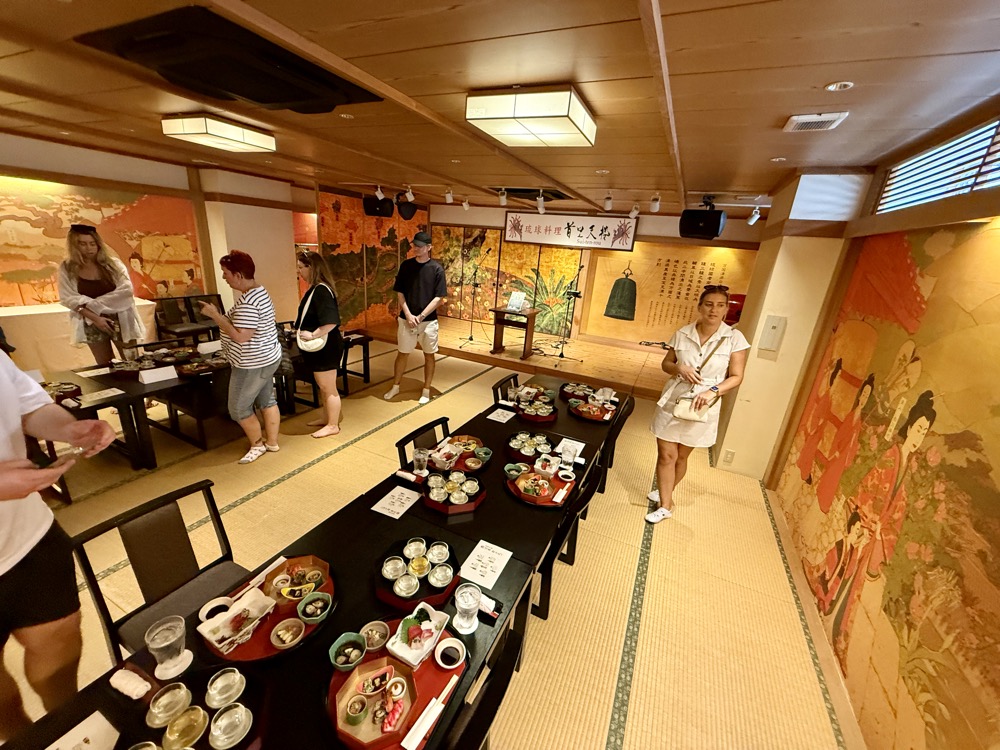
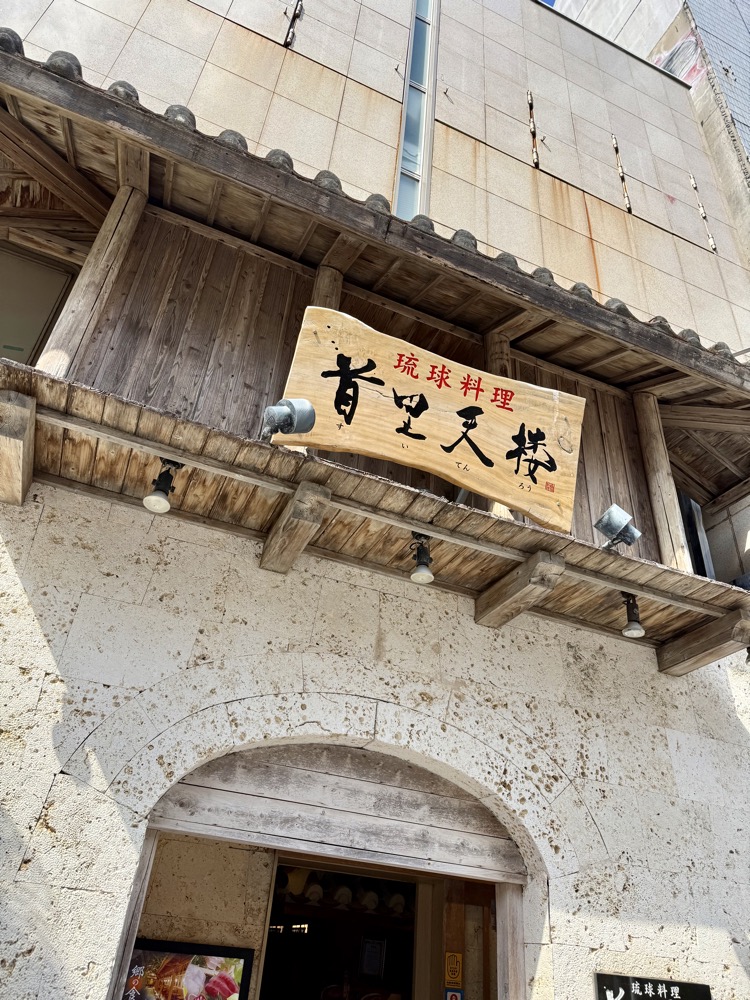
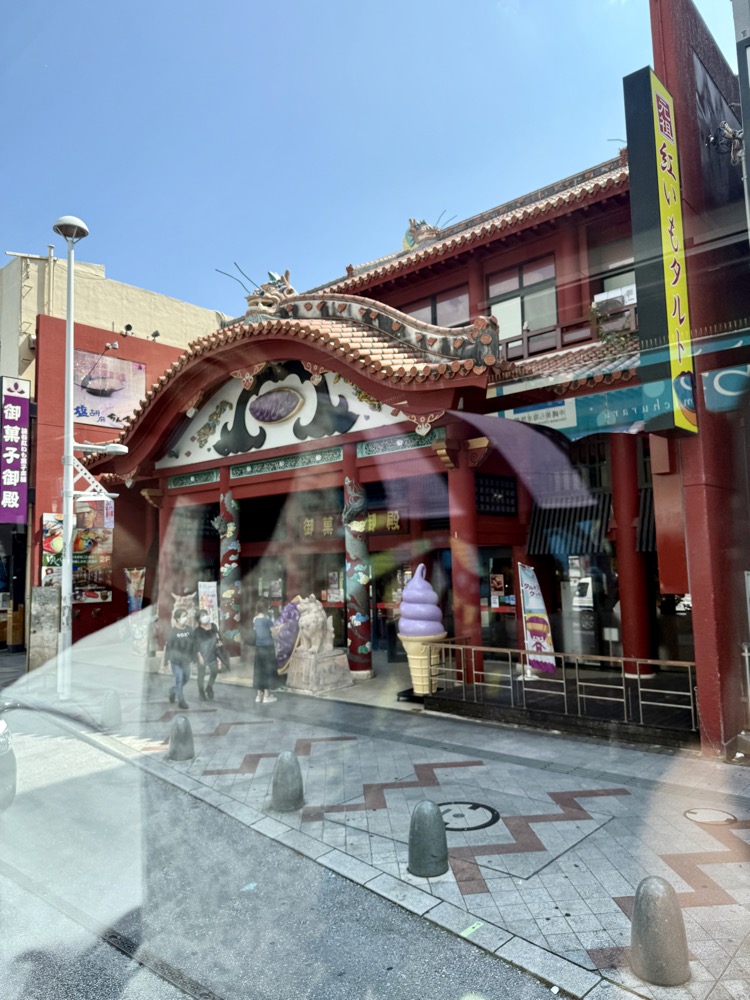
We made our way to Kokusai-dōri, the bustling downtown shopping street where many visitors (particularly Chinese cruise guests) come to stock up on Japanese gifts, medicines, snacks, and the ever-popular Korean skincare brands. But before we were let loose in the shops, we headed downstairs into a private dining room for one of the most memorable meals of the trip.
A Taste of Traditional Japan
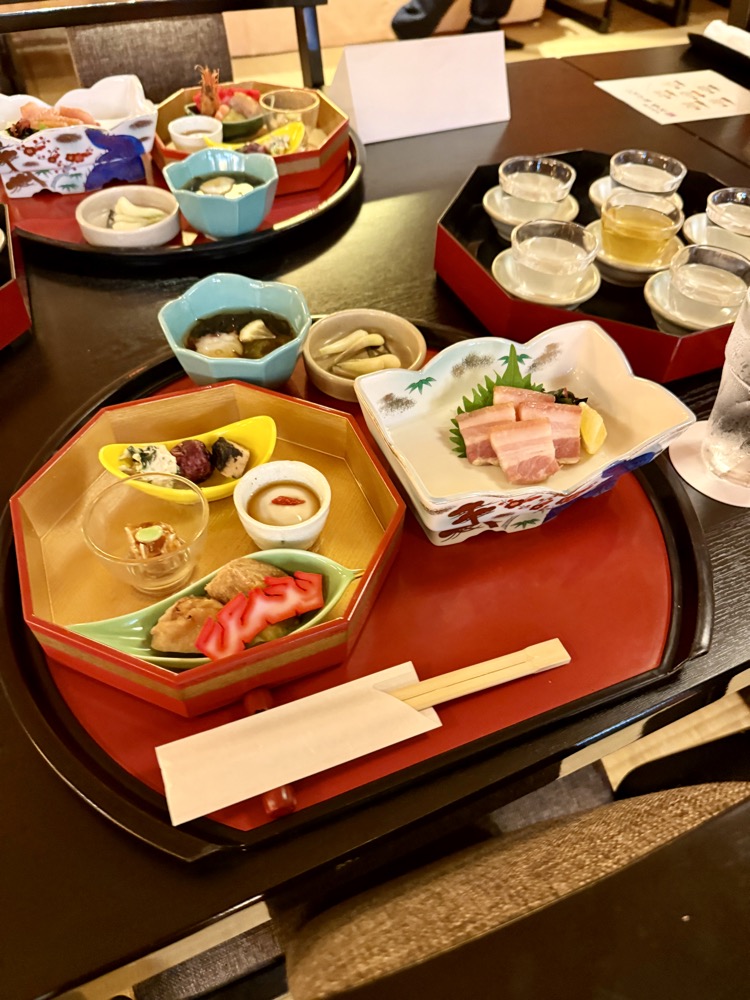
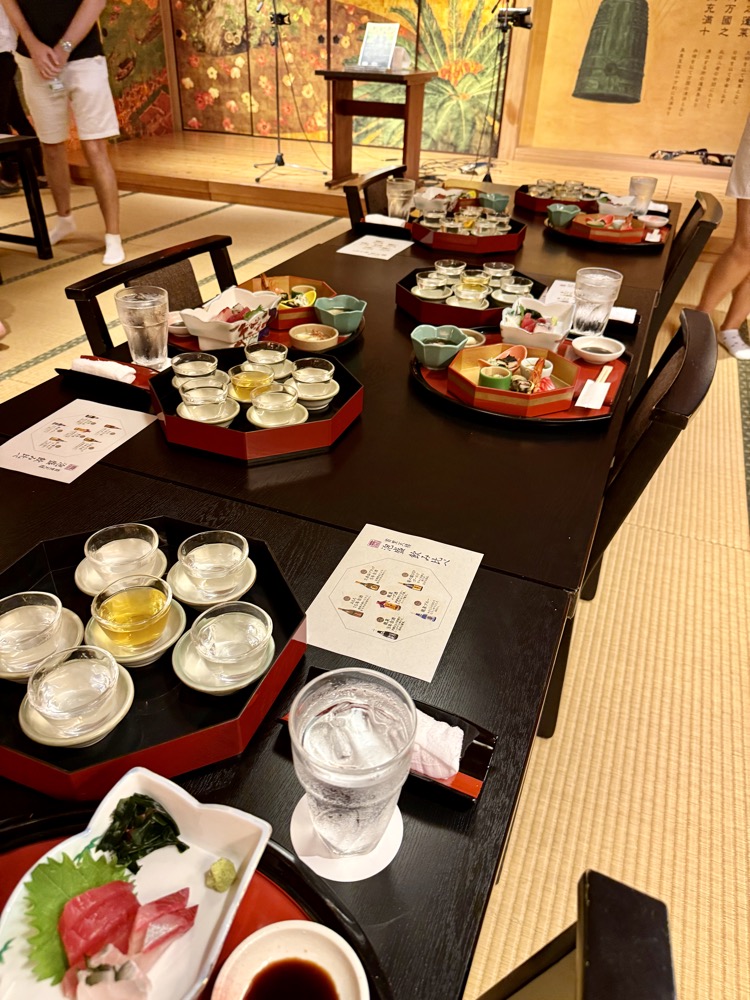
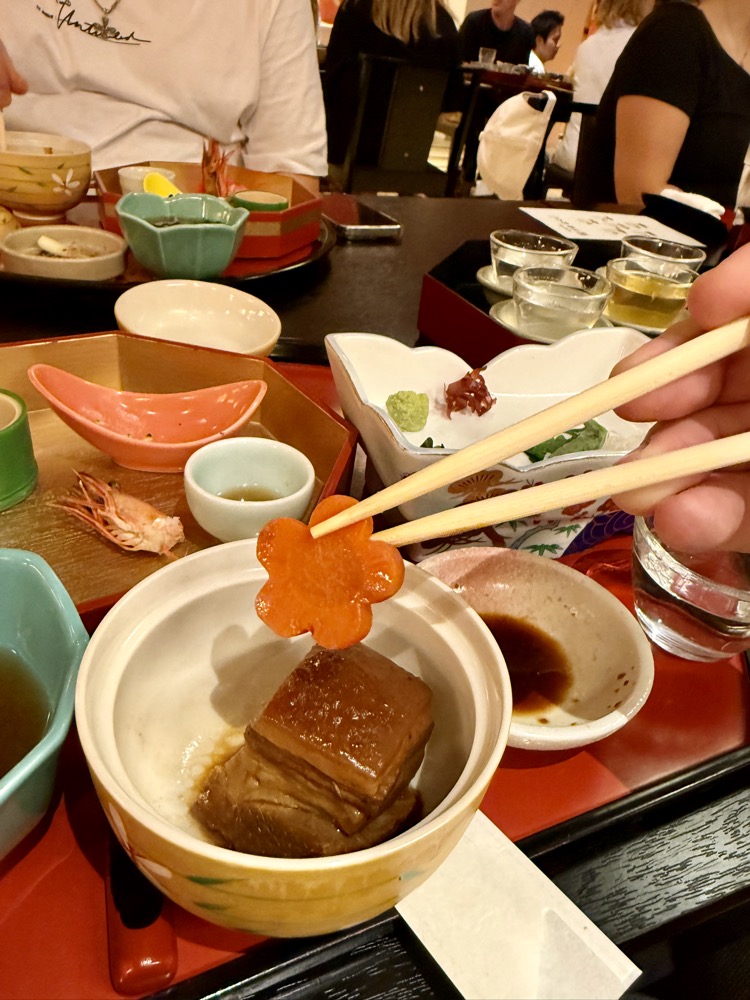
The restaurant offered a ryokan-style dining experience. For anyone unfamiliar, a ryokan is a traditional Japanese inn where meals are lovingly prepared by the hosts and served during your stay. The focus is on hospitality, seasonality and balance, and this lunch was exactly that.
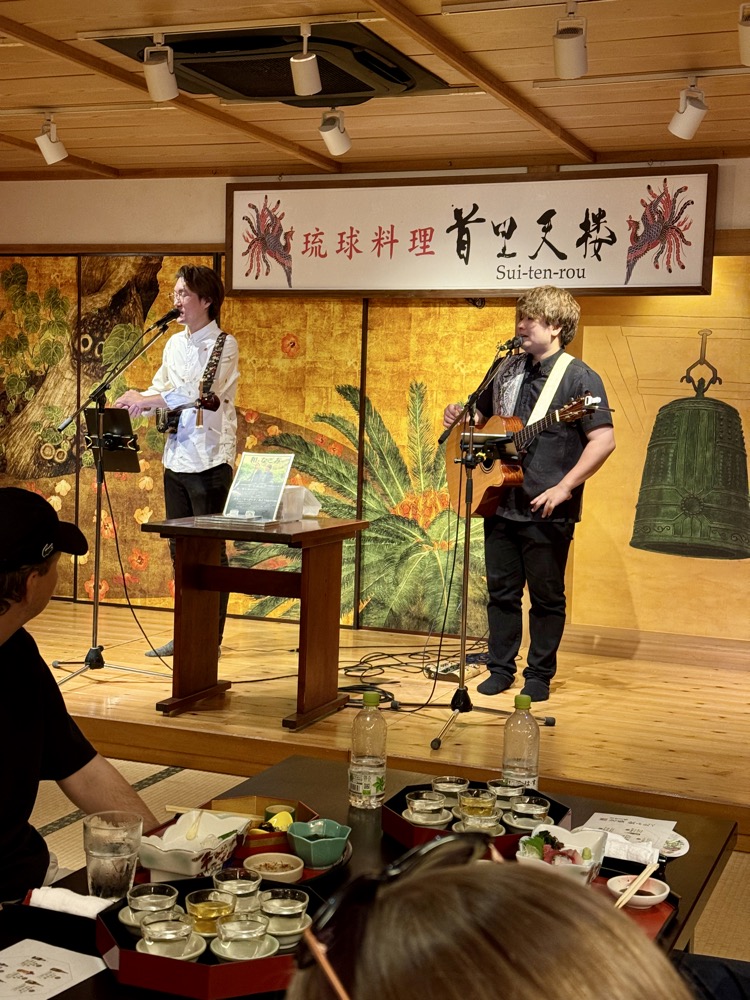
We were seated at low tables, and before long, the quiet clinking of dishes was joined by the soft strum of the sanshin, a traditional Okinawan three-stringed instrument. A local folk duo performed for us throughout the meal, blending traditional Ryukyu melodies with a few modern surprises, including a Beatles classic played as a warm thank-you for our visit from the UK. It was a genuinely touching moment.
The Food
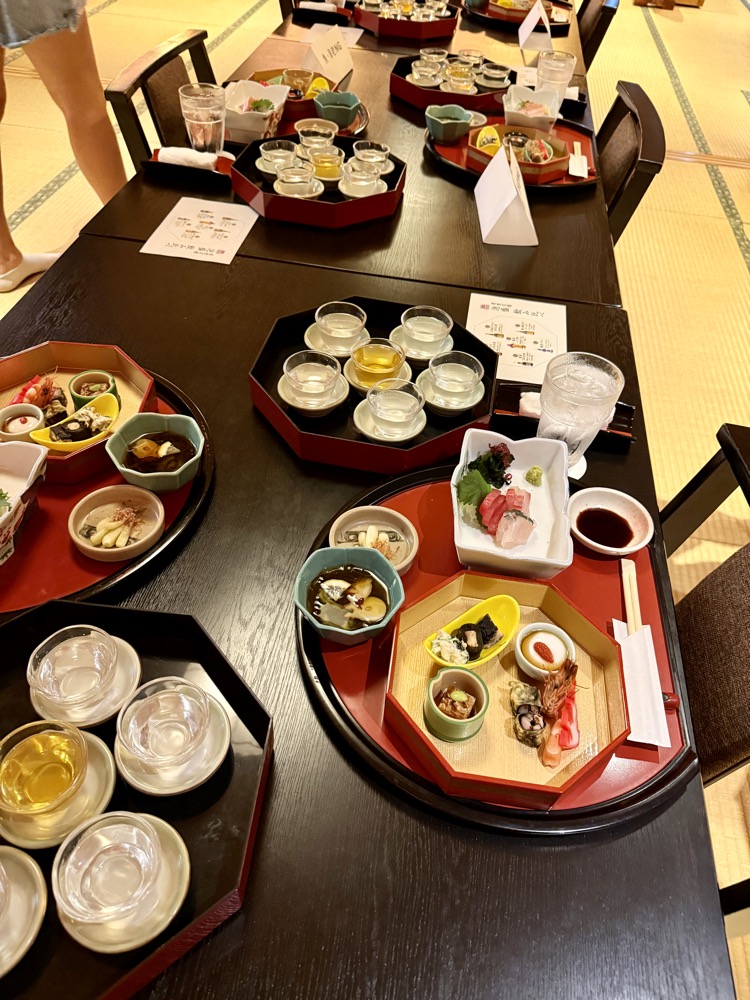
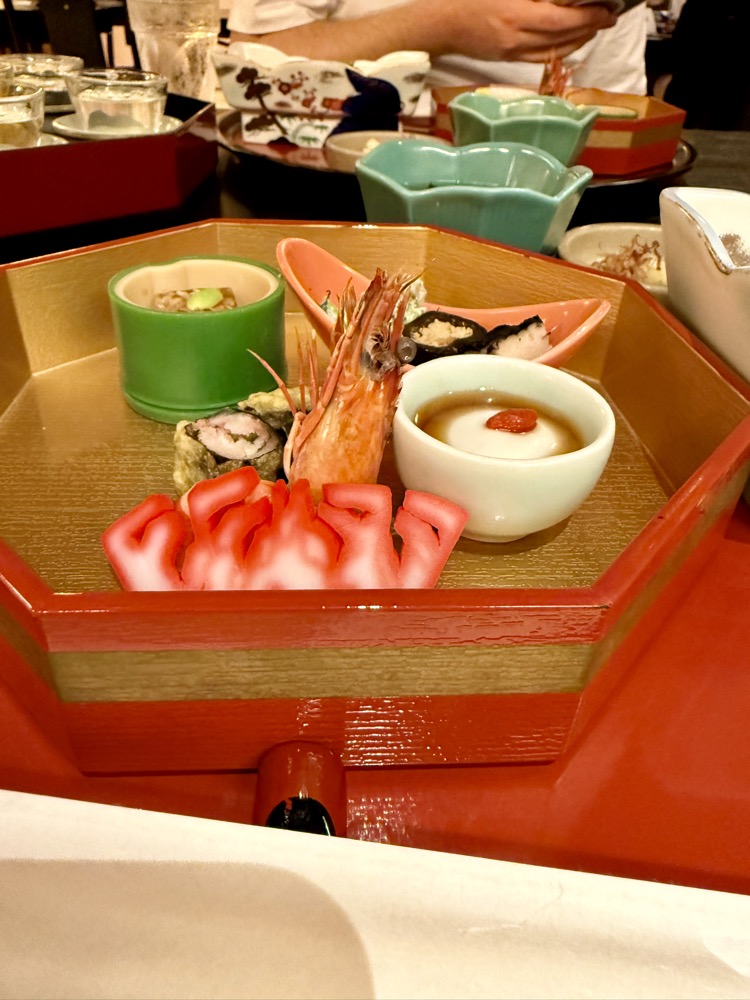
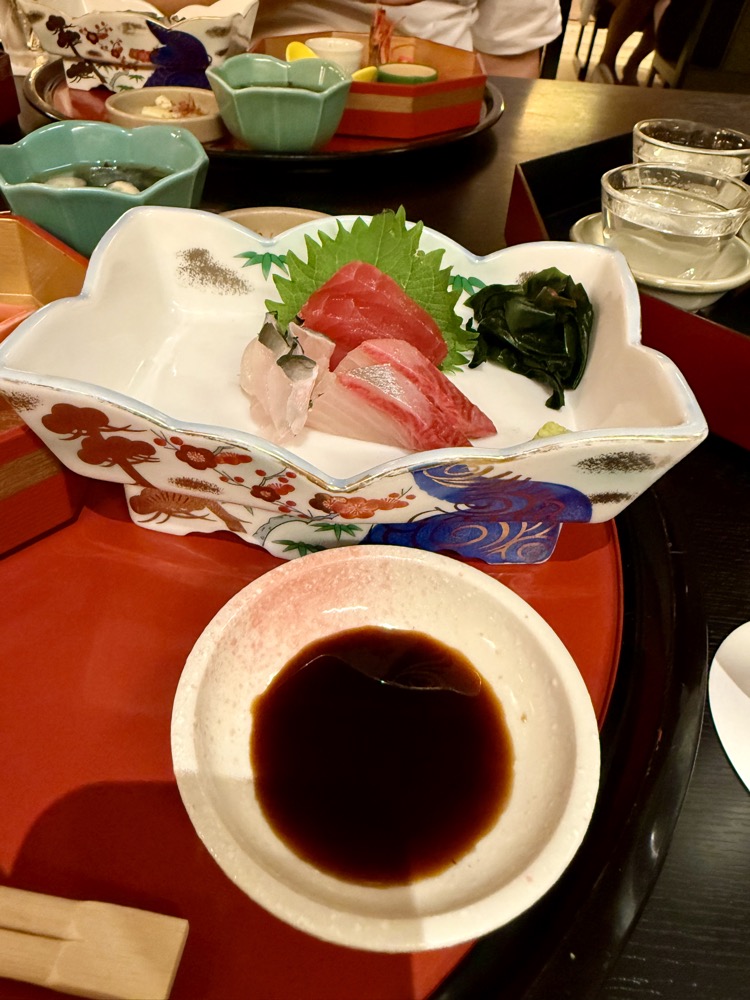
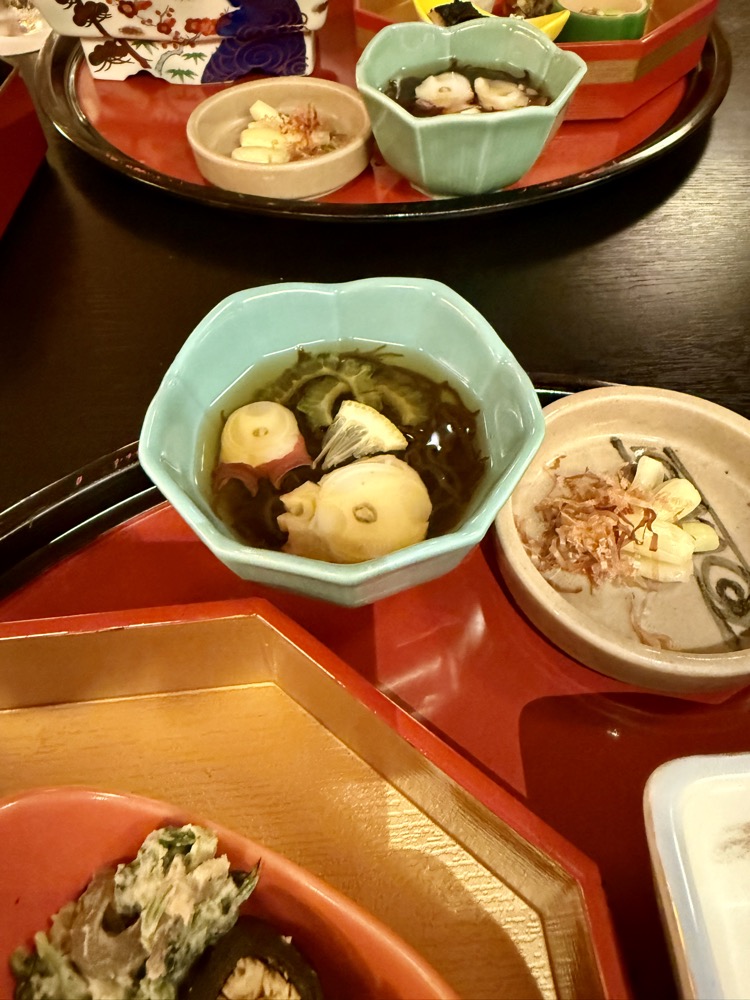
The menu was beautifully authentic. For some in our group, it may have pushed the comfort zone slightly, but as someone who adores Japanese food, I was in heaven. Even then, several dishes were new to me, a reminder of just how regional Japanese cuisine truly is.
Our multi-course meal included:
- Okinawan pork — the island’s iconic speciality, slow-cooked until melt-in-the-mouth tender
- Tofu dishes with delicate seasonings
- Light broths infused with local flavours
- Pickled vegetables offering contrast and crunch
- Fresh sashimi
- A selection of soft-simmered classics, simple yet deeply flavourful
It was humble, elegant and wonderfully restorative, precisely the kind of meal that reflects the heart of Okinawan hospitality.
A Generous Sake Tasting
“Sampling” is probably the wrong word; these were very generous pours, and we all quickly realised we’d be feeling pleasantly warm by the end.
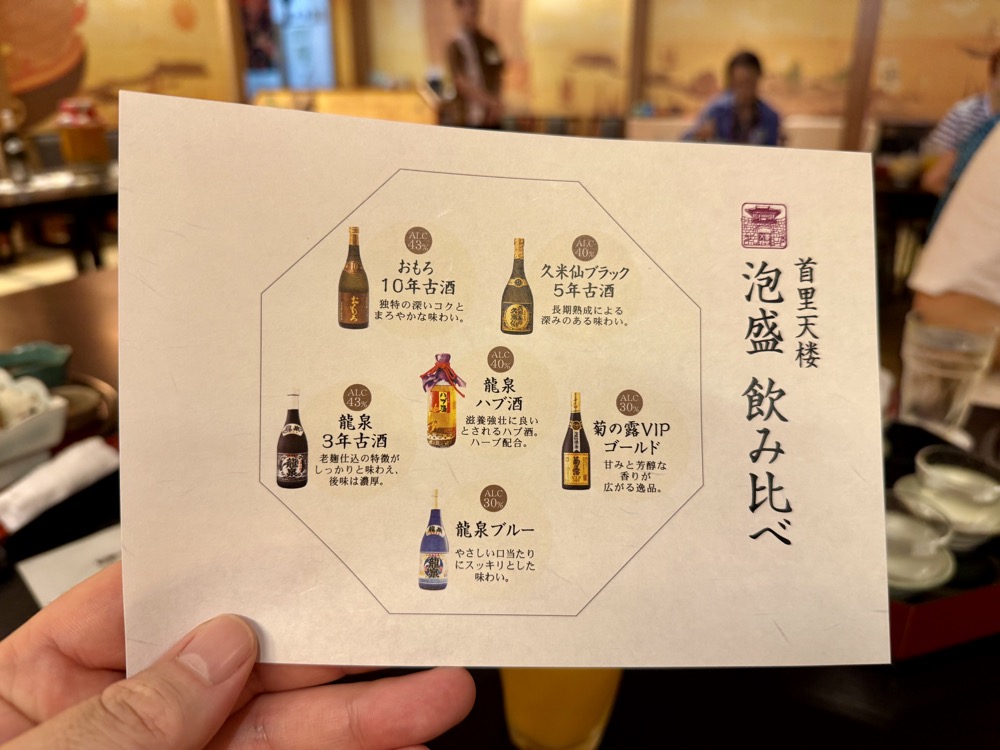
We tasted six varieties, each showcasing a different part of Japan’s sake-making craft:
- A fresh young sake — clean, bright and slightly fruity
- A medium-aged sake — deeper and more rounded
- A 15-year aged sake — rich, smooth and almost caramel-like
- Koji-berry infused sake — with a gentle sweetness
- A medicinal-style sake — earthy and herbal
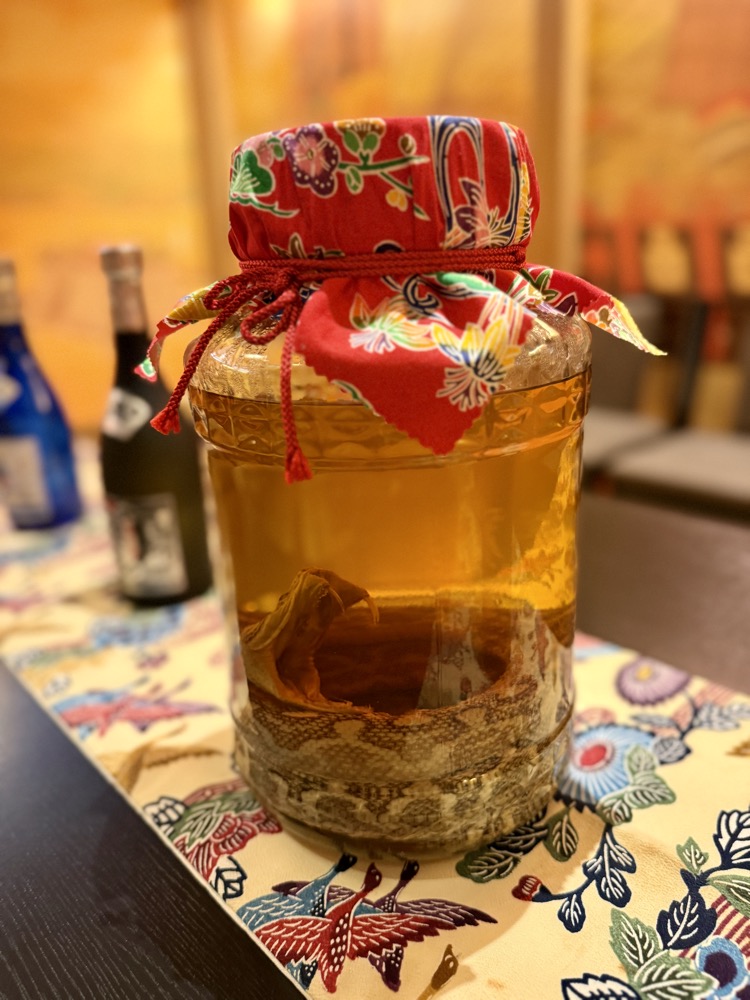
- Habu snake-infused sake — the one we all hesitated over
The habu snake sake, believed to pass on strength and vitality, sounds intimidating, but it was surprisingly the smoothest of the six. Far easier to drink than the koji berry sake, which I had expected to love, but didn’t!
It was all served with such pride, and the team couldn’t do enough for us. It was one of those meals that stays with you, not just for the food, but for the warmth it brought.
Stop 4: Shopping on Kokusai-dōri Street
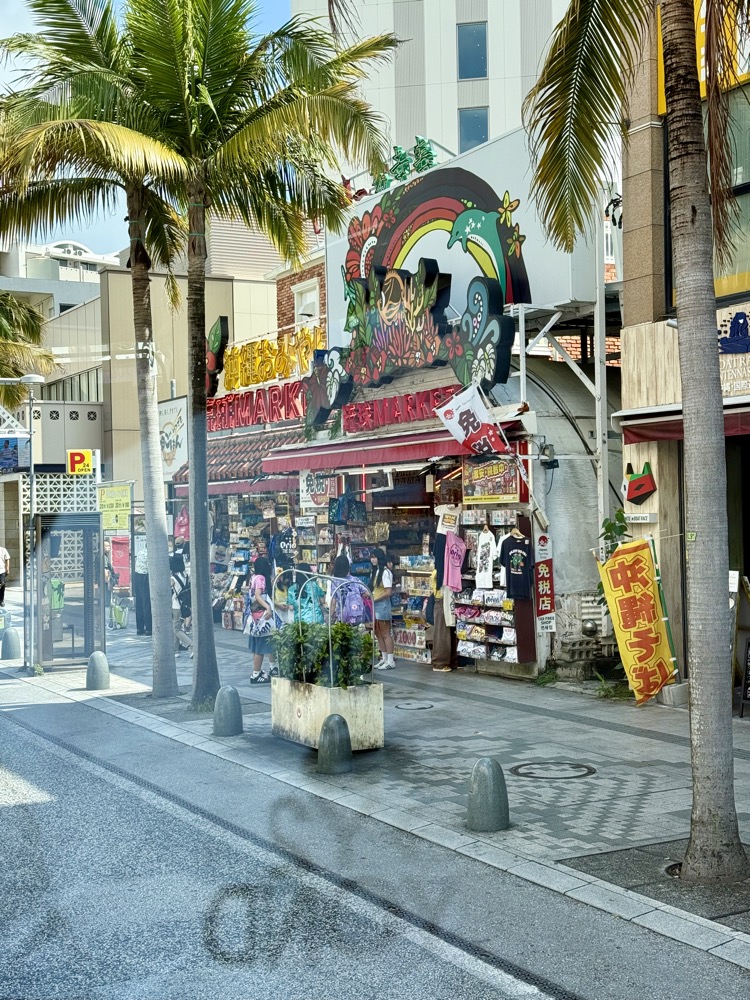
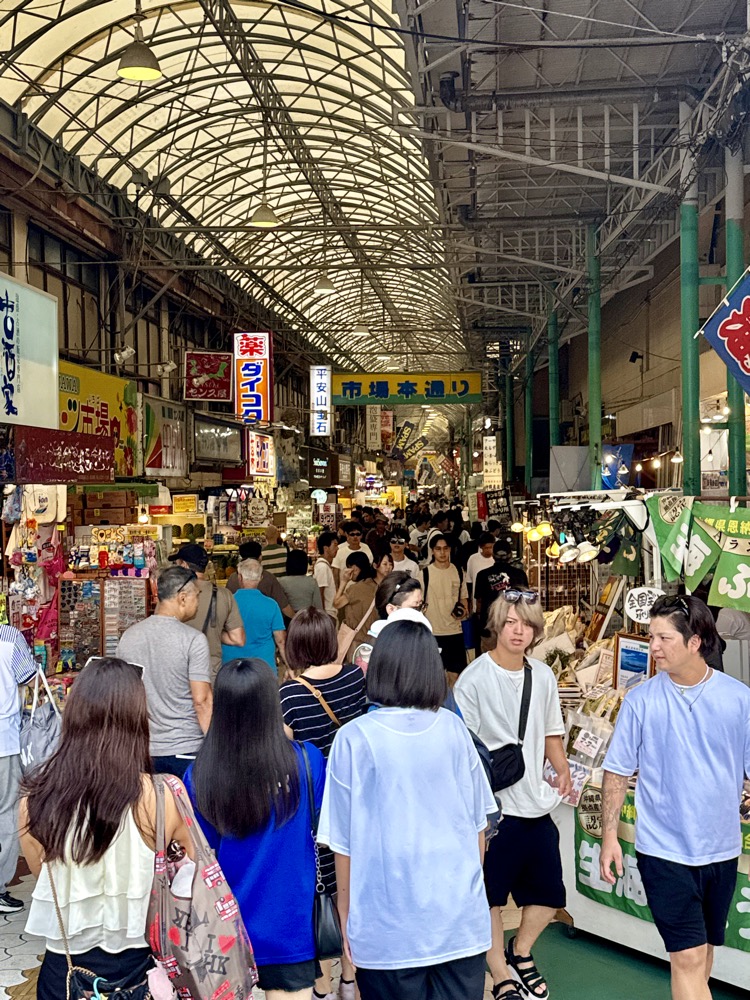
After lunch, we were given around an hour of free time to explore Kokusai-dōri Street, the vibrant heart of Naha and one of Okinawa’s most well-known shopping districts. It’s busy, colourful and full of personality, a blend of cafés, restaurants, arcades, market stalls and modern shops that somehow manage to coexist in one long stretch.
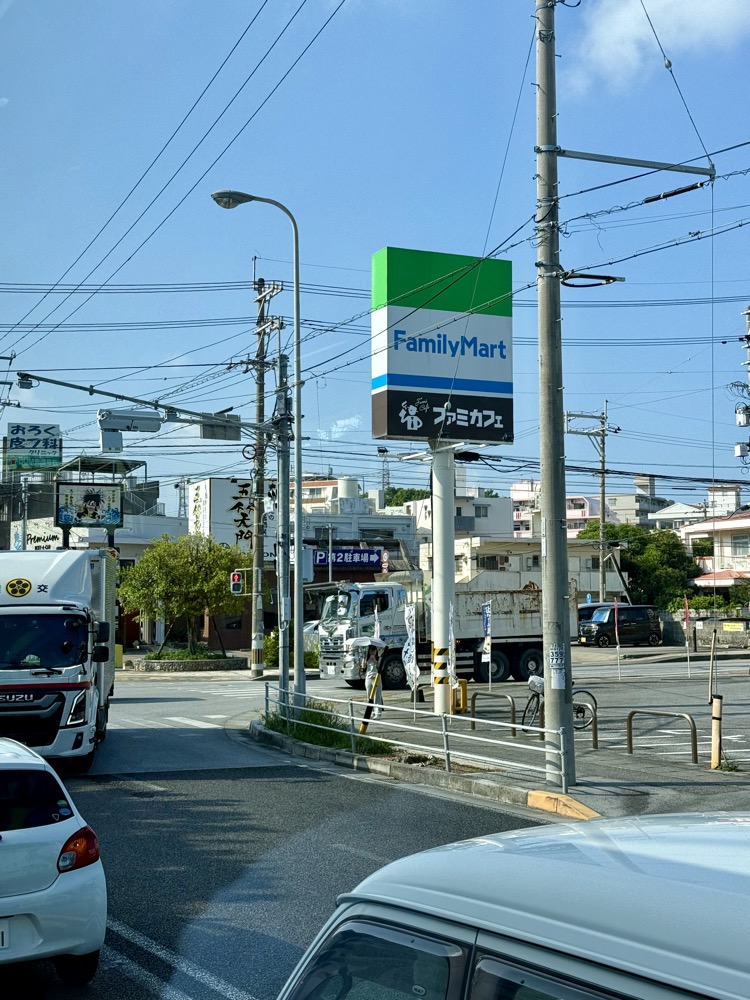
You can genuinely find everything here. Traditional Okinawan crafts sit alongside tourist-friendly souvenir shops selling magnets and Shisa statues. Convenience stores like FamilyMart and 7-Eleven offer classic Japanese konbini snacks, while independent boutiques and bigger brand stores spill out onto the pavement. It’s one of those places where the longer you stay, the more you discover.
For many cruise guests, this is the shopping stop, especially because Okinawa is famous for its tax-free shopping for international travellers. Do note that this system may change (Japan’s Prime Minister has announced plans to review or reduce tax-free shopping), but as of late 2025, most major shops still offer it.
If tax-free shopping is still available when you visit:
- Spend ¥5,000 or more (around £25 / $32 at the time of writing) to qualify
- Look for the Tax-Free checkout line
- Present your passport, or in our case, the stamped photocopy provided by Royal Caribbean
- Expect queues, especially on cruise days
Your purchases are technically sealed in a customs bag and not meant to be opened until you leave Japan. Whether this is strictly enforced varies, but it’s worth knowing the rule in case you’re inspected at the airport/cruise port.
Don Quijote (Donki): The Shopping Experience of Chaos and Joy
One place I had been desperate to visit for years was Don Quijote, affectionately known as Donki. If you’ve never been, imagine if a supermarket, an electronics shop, a toy store, a beauty hall and a novelty shop all collided… and then someone added club music, flashing lights and aisles barely wide enough for two people.
The Okinawa branch did not disappoint.
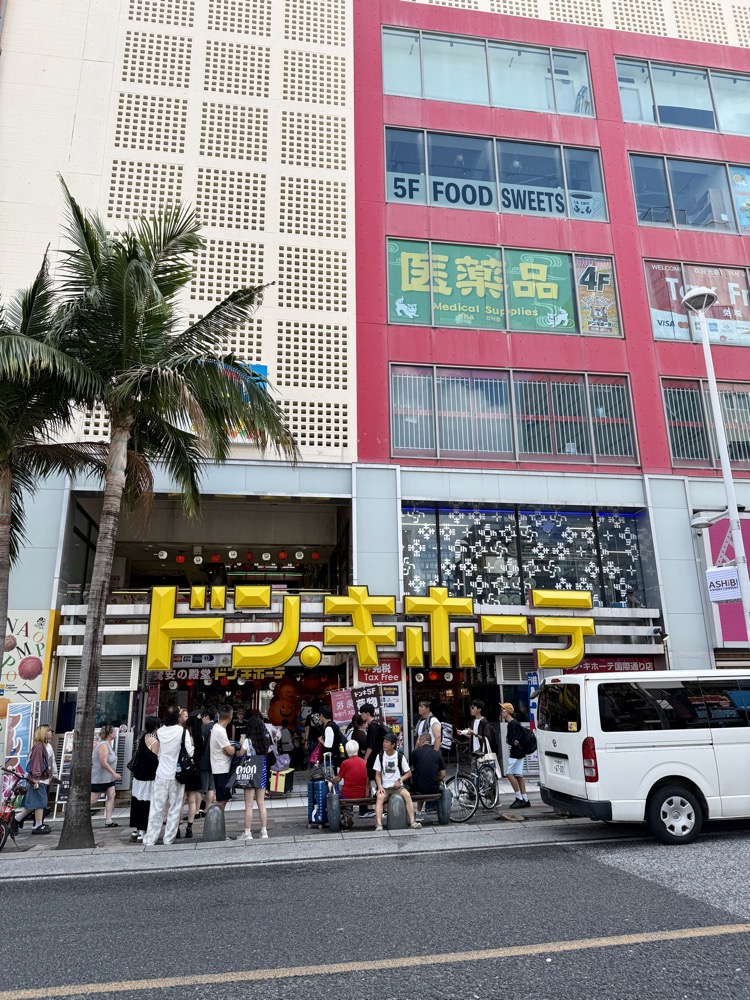
Donki is famous for stocking everything you didn’t know you needed:
- Japanese snacks by the basketload
- Local Okinawan treats
- K-beauty and J-beauty favourites at brilliant prices
- Electronics and quirky gadgets
- Clothing (from the practical to the… unexpected)
- Pokémon merch and anime collectibles
- Toys, plushies, stationery
- And yes — even marital aids, which always come as a surprise to first-timers
People joke about entering a state of “Donki dissociation”, where you simply zone out and wander in a trance, filling your basket with things you’re convinced you absolutely must have. After visiting, I can confirm this is a real phenomenon.
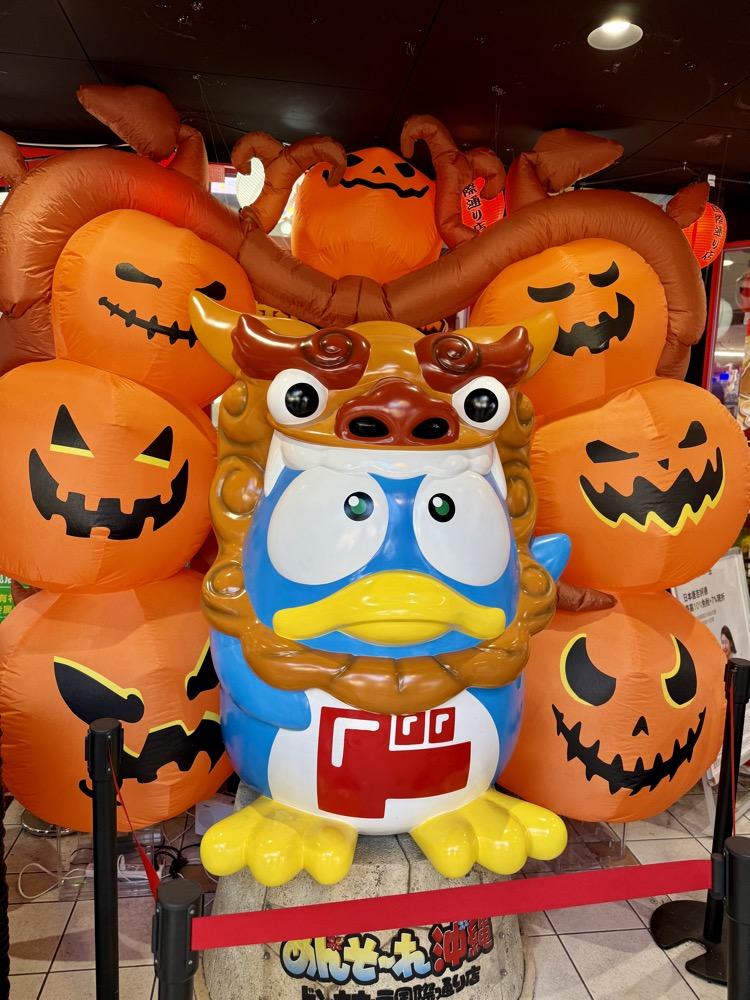
Each floor has its own theme:
- Ground Floor: Snacks, souvenirs, Shisa statues, local food gifts
- Beauty Floor: Japanese skincare, Korean cosmetics, haircare essentials
- Electronics: Headphones, appliances, niche gadgets
- Anime & Toys: Pokémon, Godzilla, plushies, figures, all the fun stuff
- Lifestyle & Homeware: Storage, gifts, home goods, stationery
With only limited time, our experience felt like an episode of Supermarket Sweep. We dashed through aisles, grabbing anything that caught our eye, then hurried to the checkout before it was time to meet the group again. Chaotic? Yes. Fun? Absolutely.
What I Bought in Okinawa
Of course, it wouldn’t be a proper Donki visit without a slightly ridiculous shopping basket. By the time I made it to the till I’d somehow collected:
- Donki’s own mascot plush (Donpen, in a very cute festive hat)
- A bright Shisa lion plush, because when in Okinawa…
- A Mimikyu keychain and a Pokémon blind box, to feed my inner nerd
- A stack of Okinawan treats – Shisa-shaped brown sugar candies, Blue Seal sweets and Okinawa-limited mango Hi-Chew
- A couple of bags of sakura KitKats, because it would be rude not to
- And, in true “Donki dissociation” fashion, some K-beauty skincare I threw in without really reading the label – which ended up being one of my best purchases of the whole trip.
- Our hosts also gifted us a box of Okinawan sweet potato tarts, a local favourite you’ll find in almost every shop on the island. Gift-giving is an important part of Japanese business culture, a way of showing appreciation and respect, so it was a lovely gesture and a meaningful little insight into local customs.
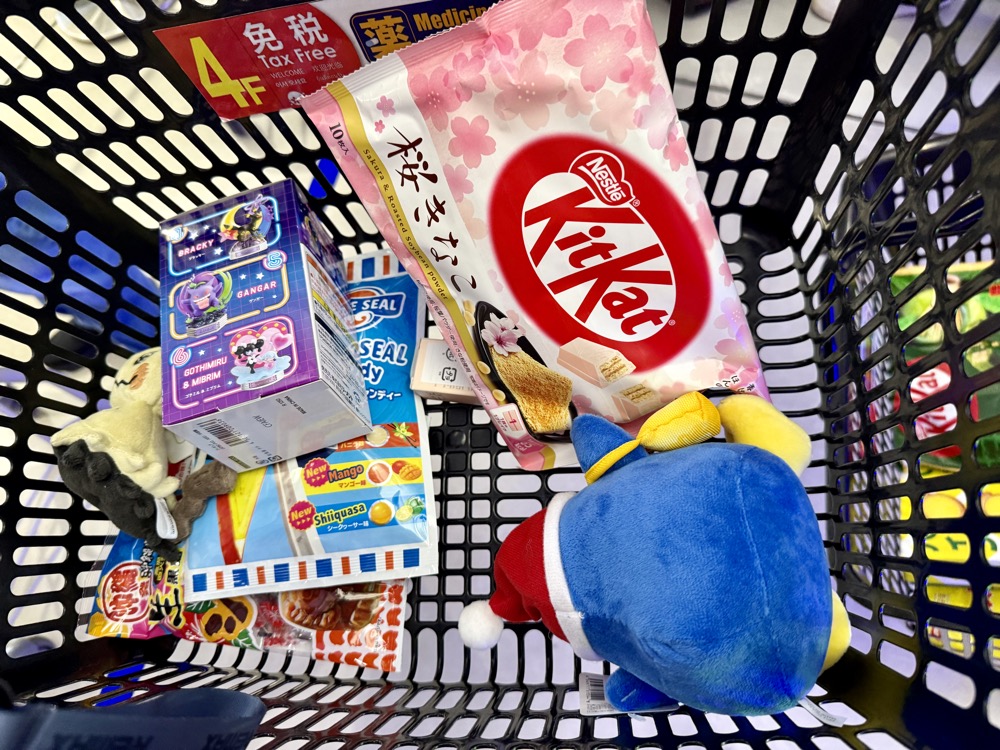
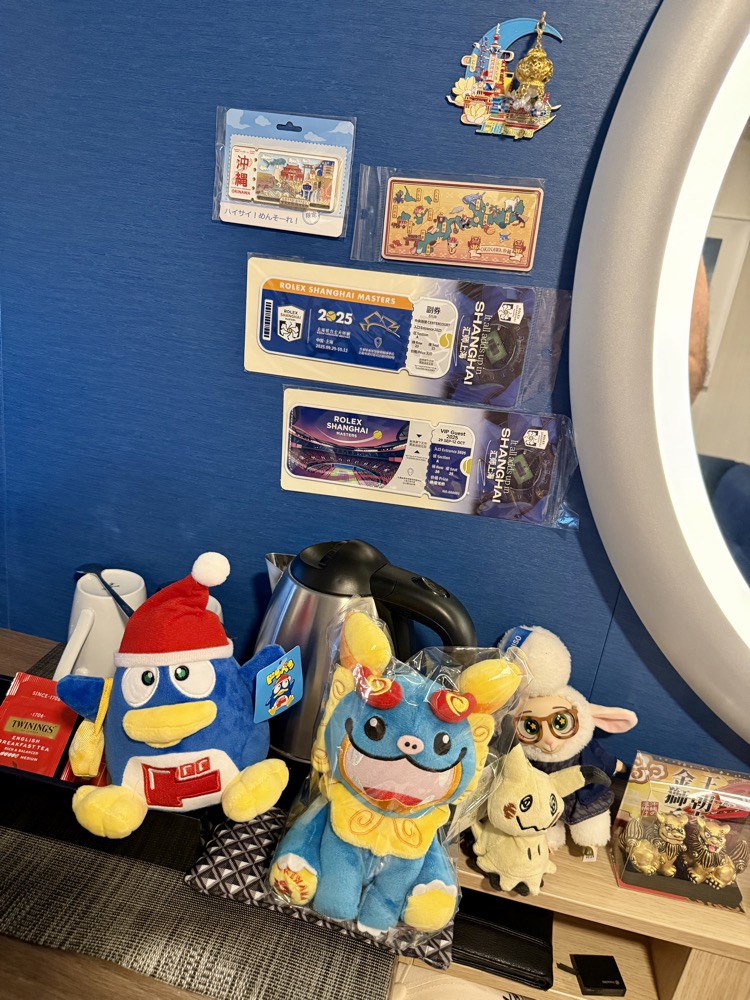
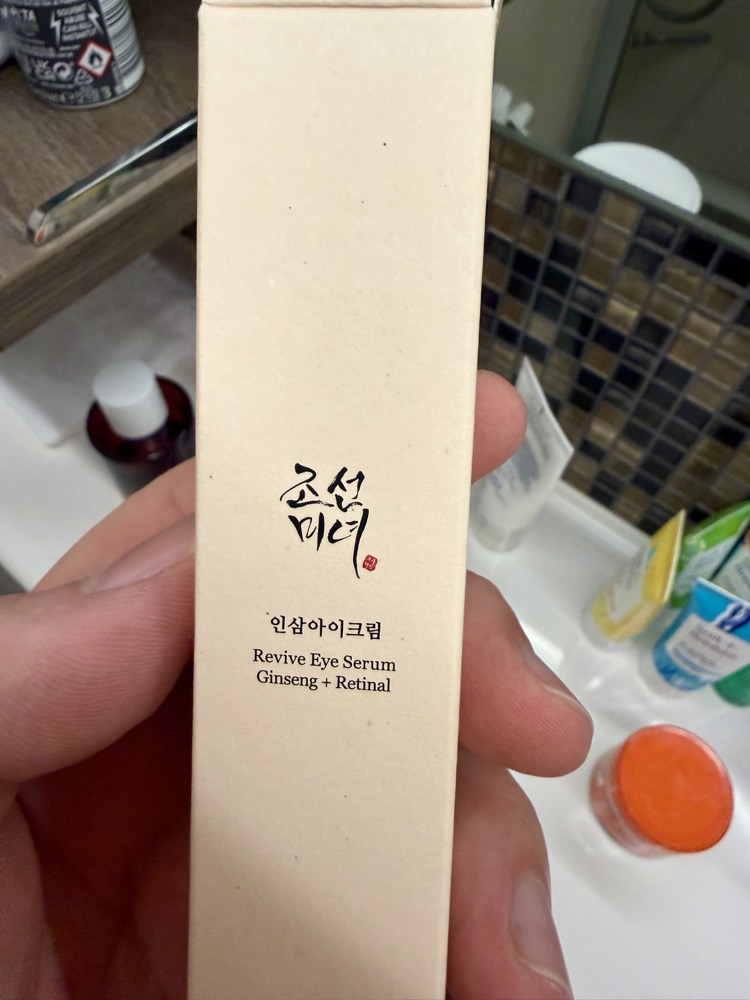
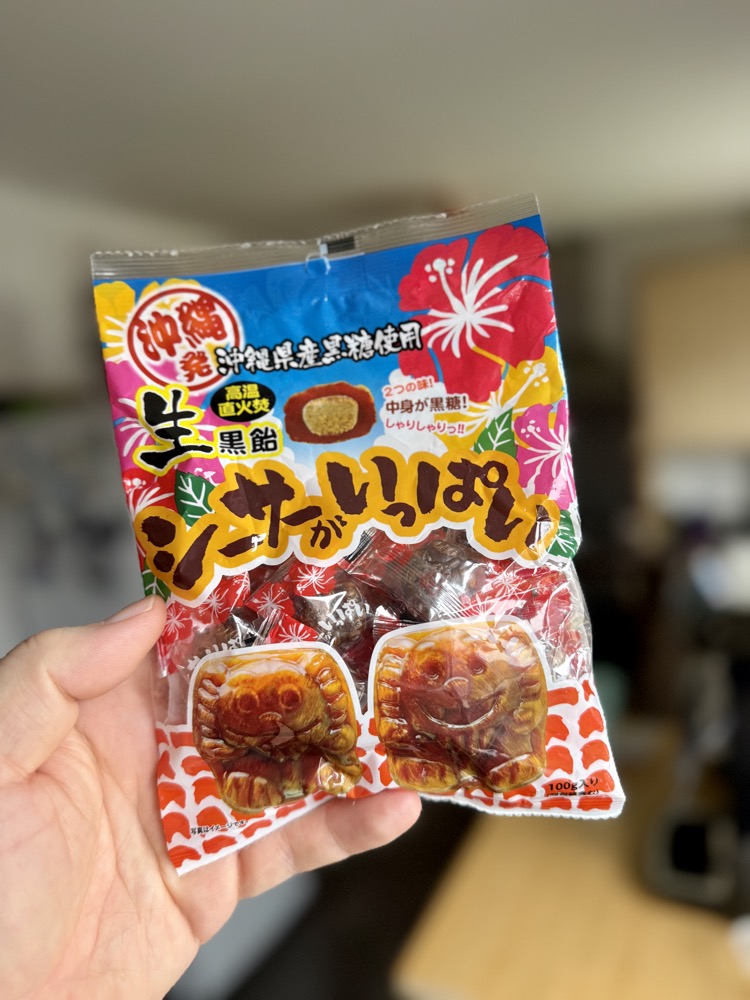
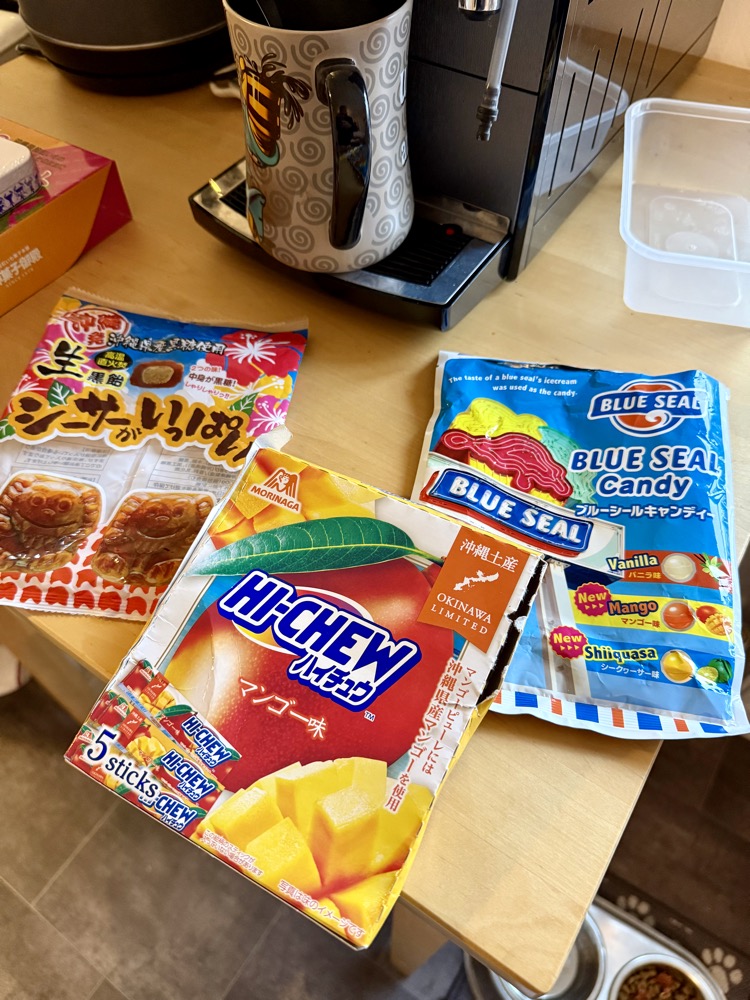
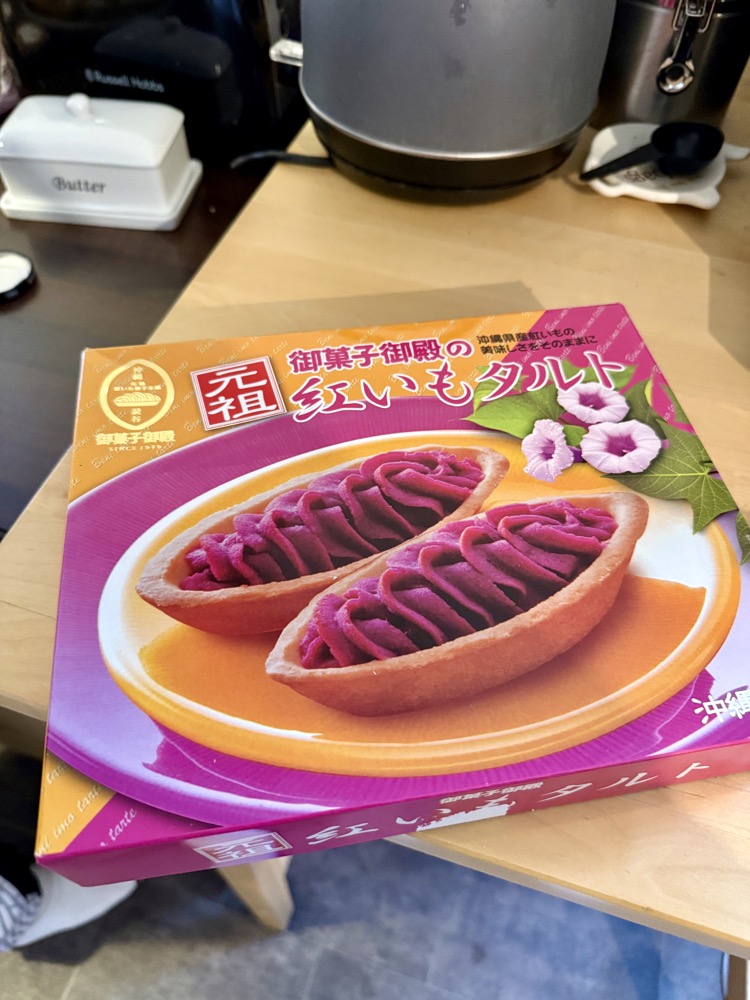
Some of these items were purchased at Okinawa World, but they were also available in Donki.
What I loved most about shopping in both China and Japan wasn’t just the prices (often cheaper than at home) or the sheer variety, but the sense of fun. Half the joy is wandering the aisles, discovering flavours and brands you’ve never seen before.
If you’re worried about not being able to read the packaging, don’t be; Google Translate / Google Lens on your phone camera does a brilliant job of translating labels and signs on the spot, so you can check what you’re buying before it goes in the basket.
Stop 5: Shurijo Castle – Strength Through Adversity
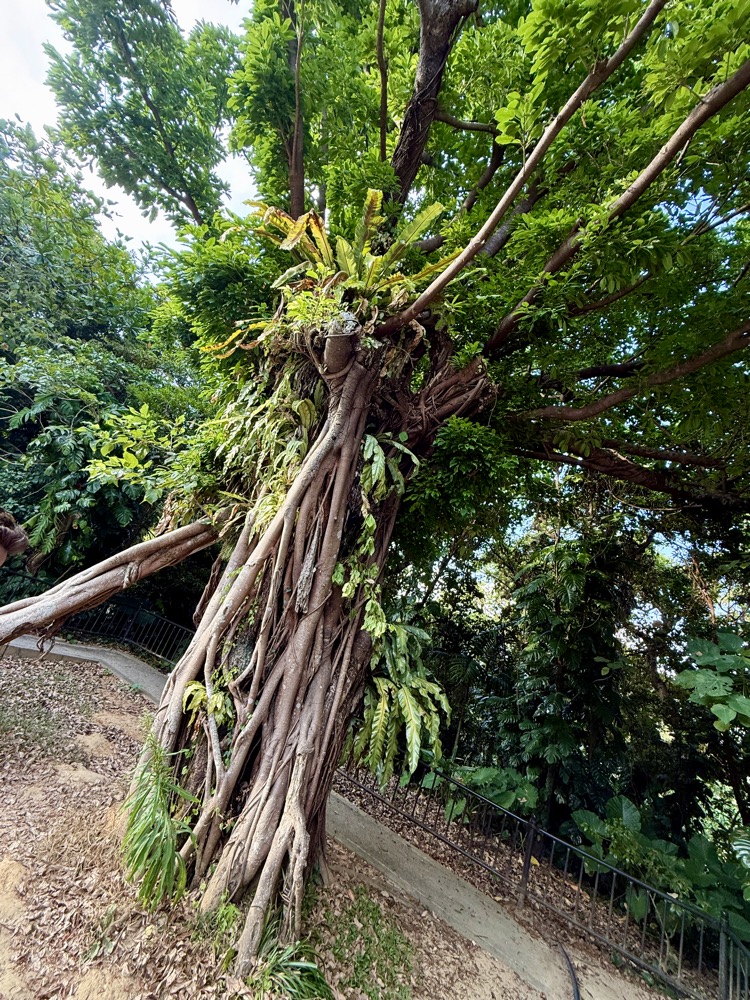
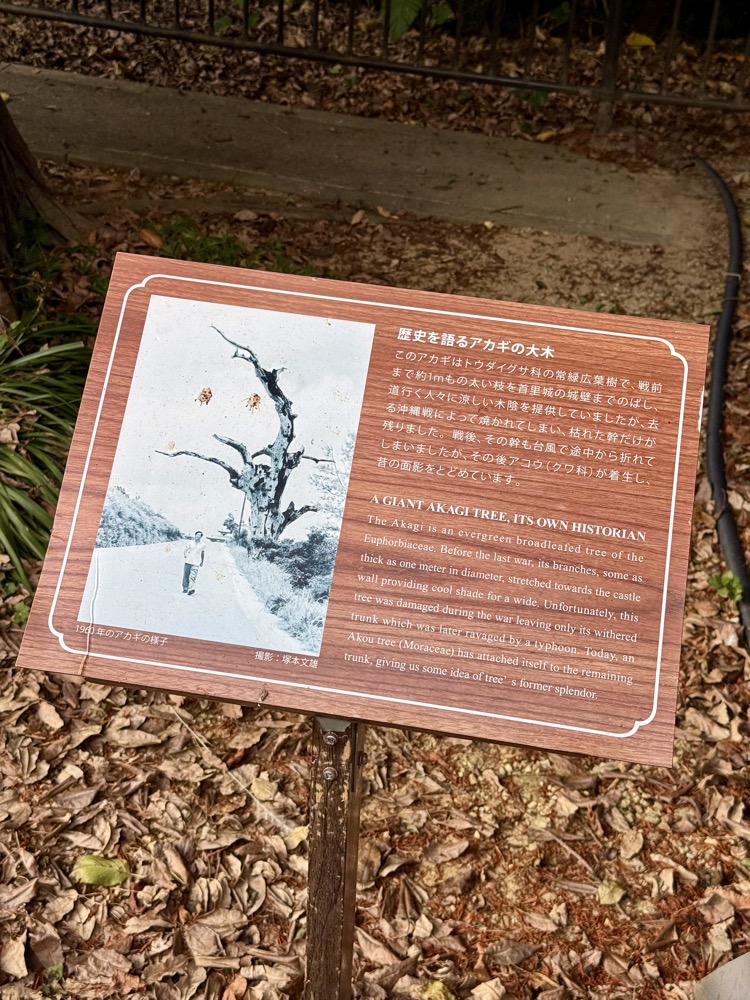
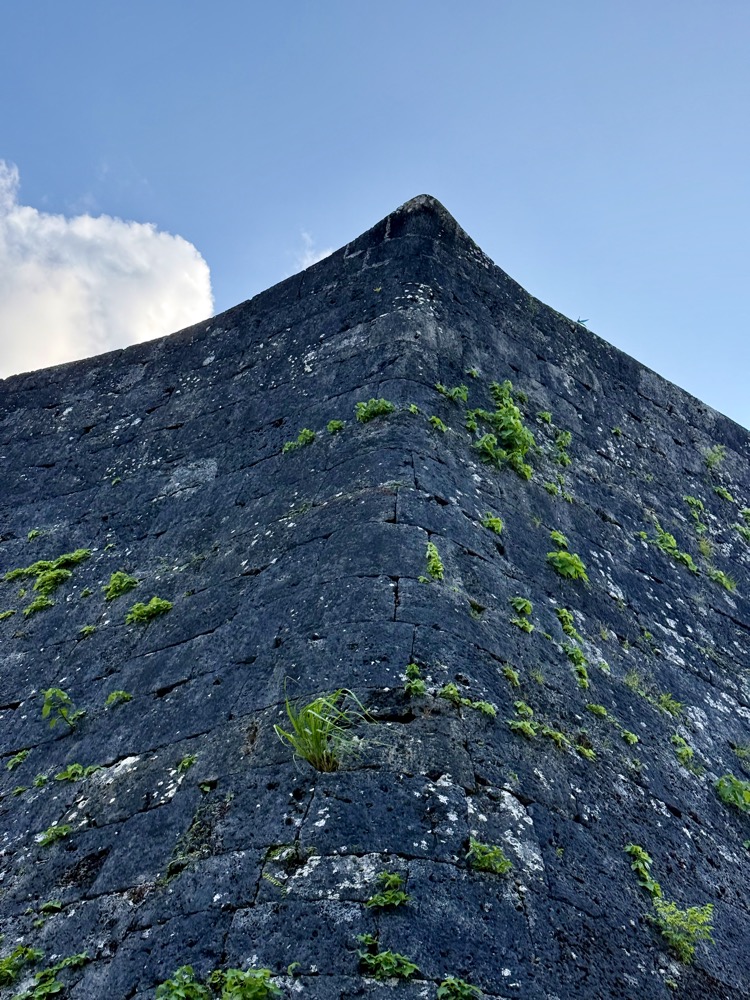
Our final stop of the day was Shurijo Castle, once the royal palace of the Ryukyu Kingdom and one of Okinawa’s most important cultural treasures. The castle is part of a wider UNESCO World Heritage Site, and even before stepping through the gates, you can feel its historical weight.
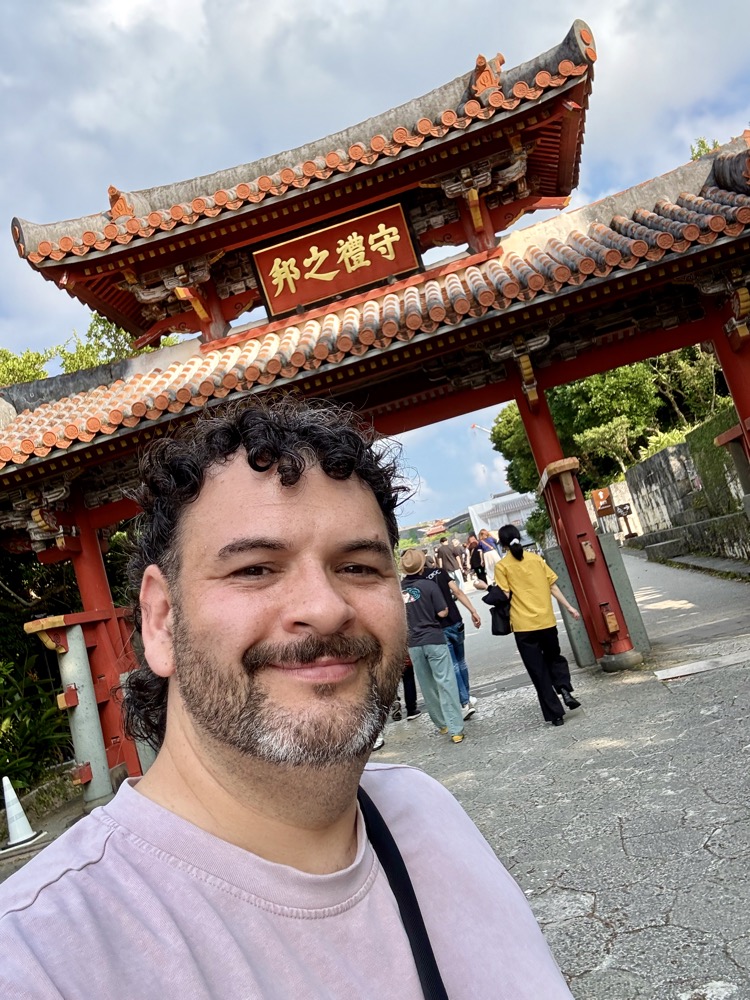
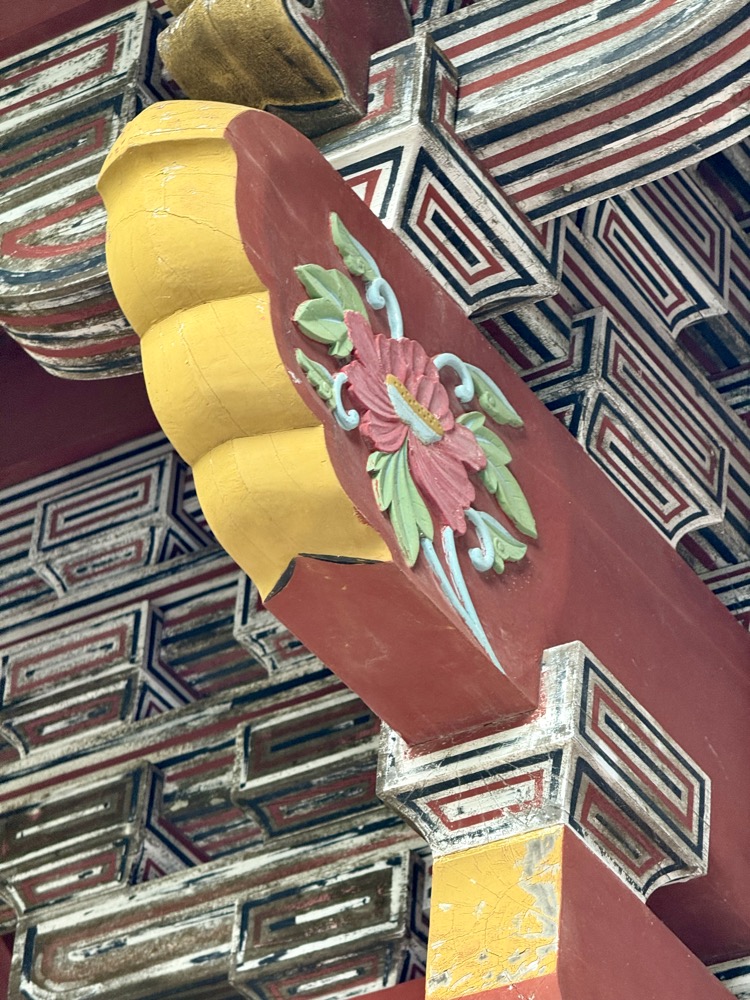
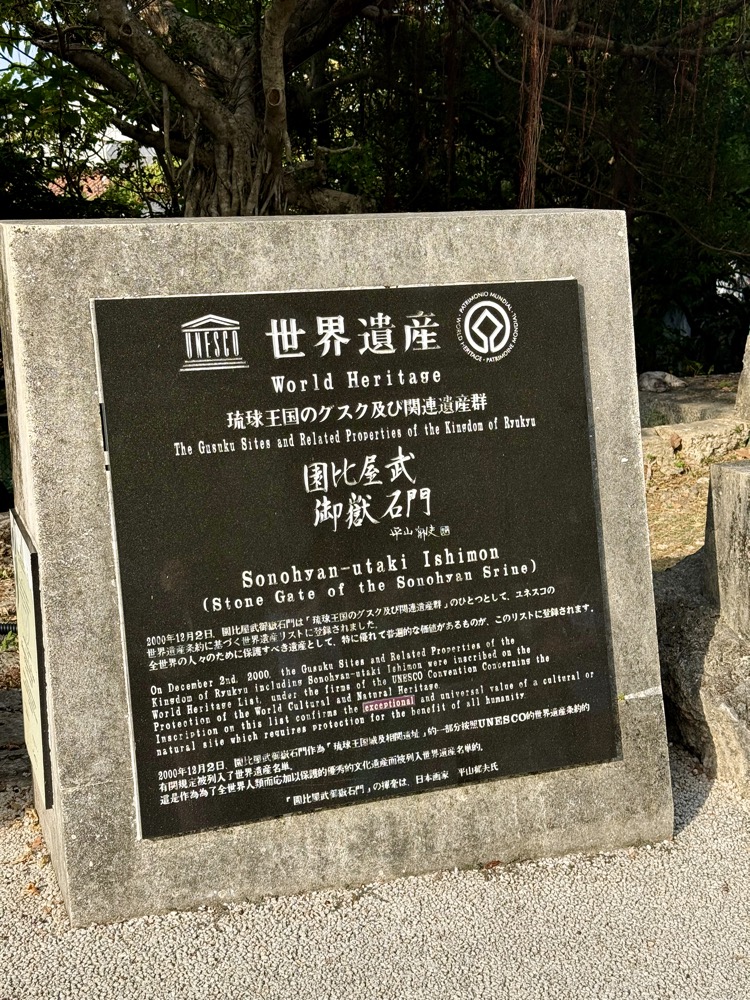
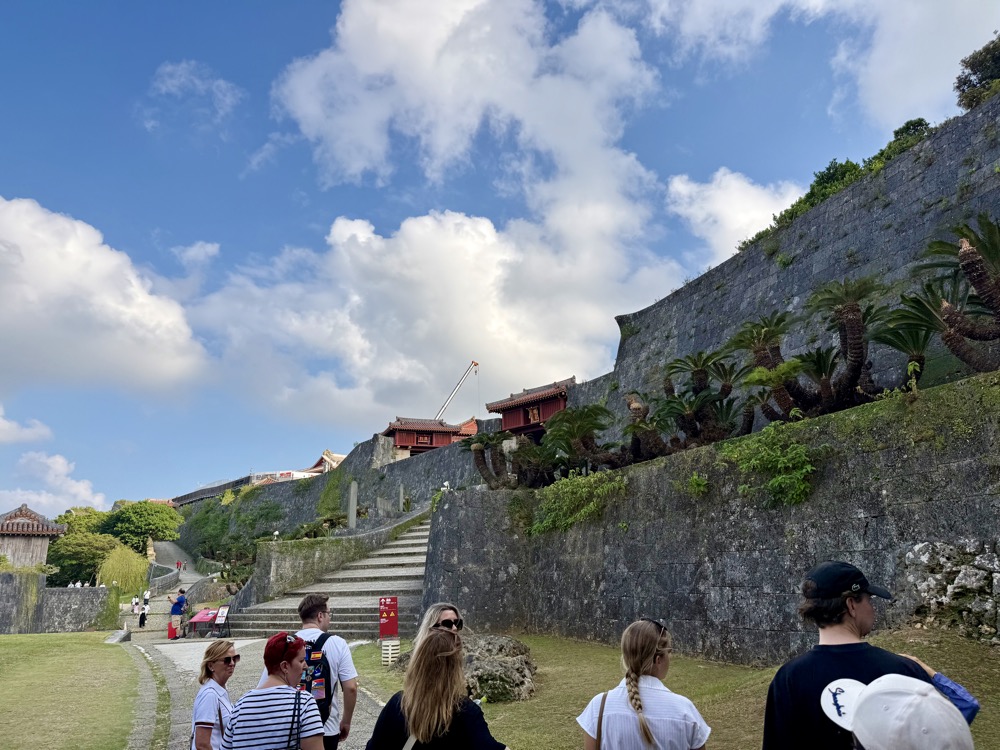
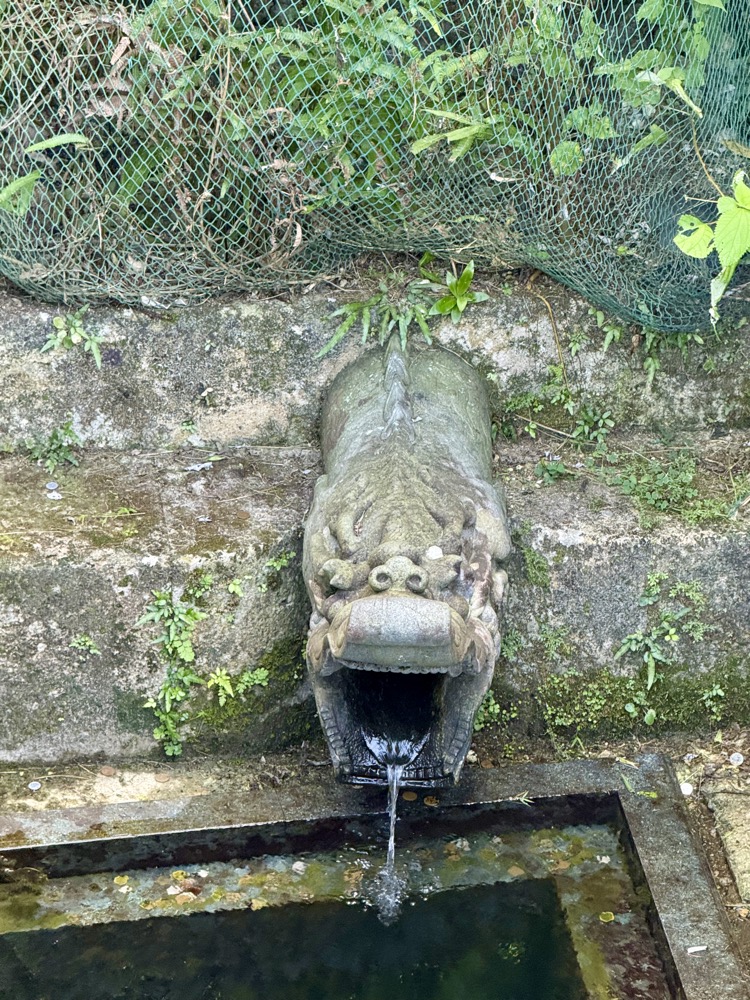
Shurijo has endured more than most landmarks in Japan. It has been destroyed and rebuilt multiple times throughout history, during the Ryukyu period, during the Battle of Okinawa, and most recently in 2019, when a devastating fire tore through the main ceremonial buildings.
Yet, what remains is powerful.
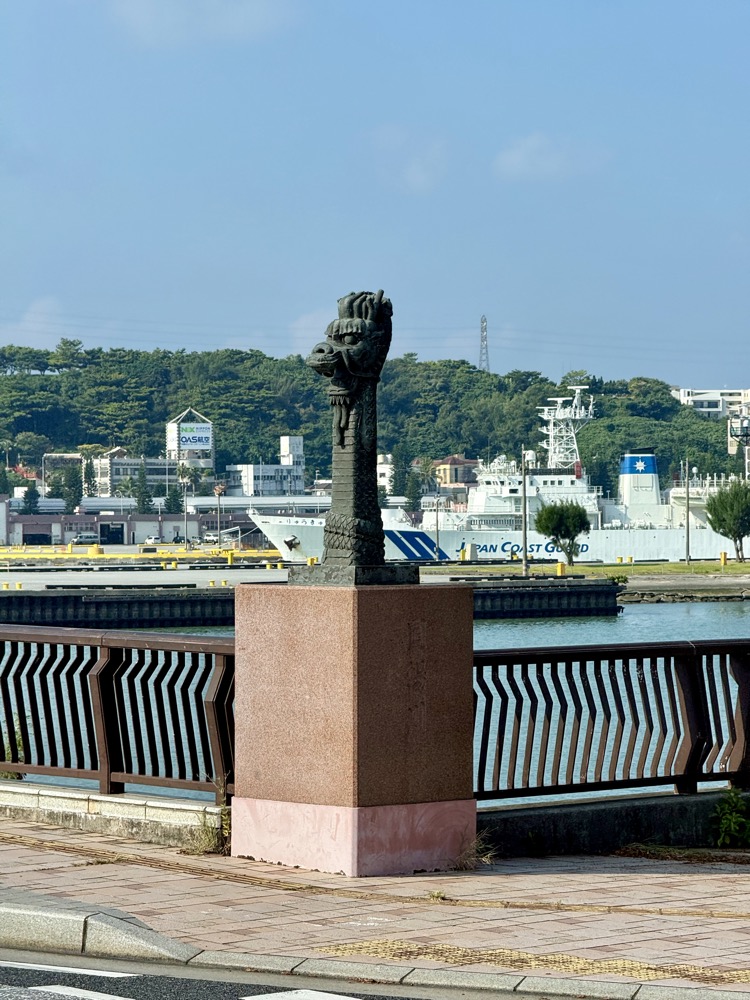
Sui explained that when Okinawans learned the two iconic dragon pillars had survived the fire, many were moved to tears. To them, these pillars symbolise endurance and the unbreakable spirit of Okinawa, a reminder that even in moments of loss, the island’s heritage endures.
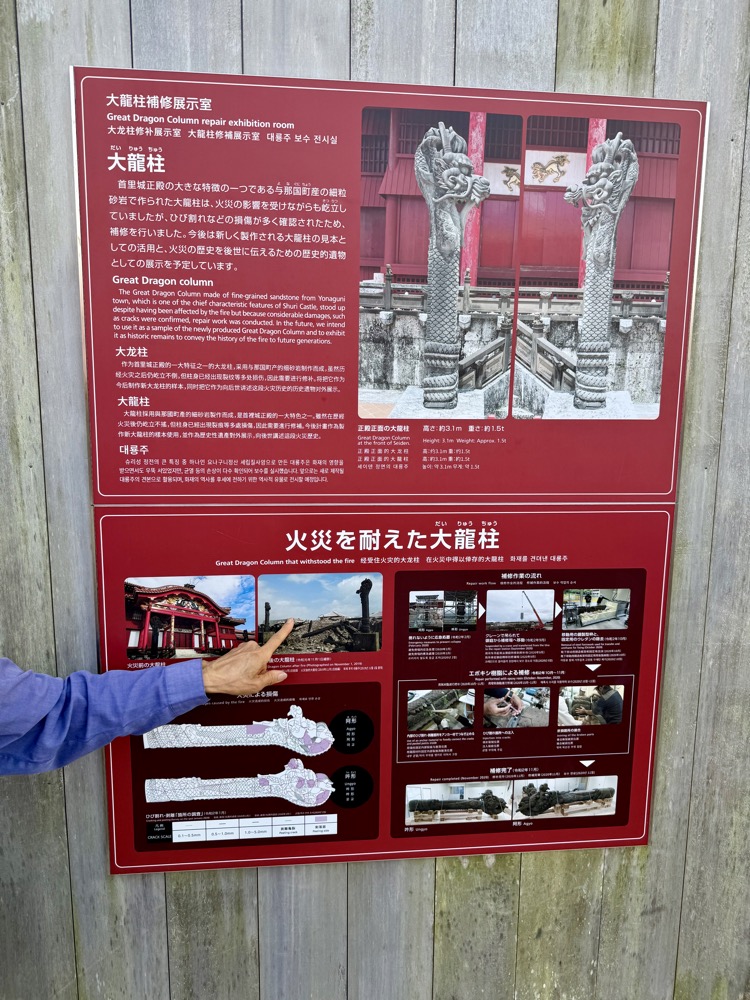
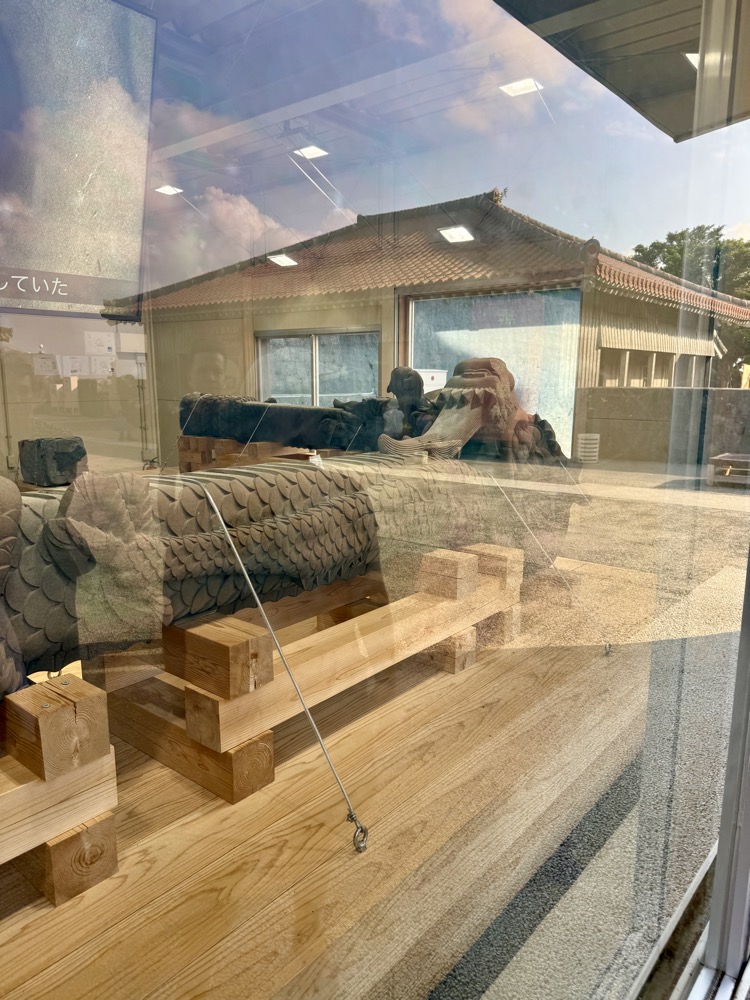
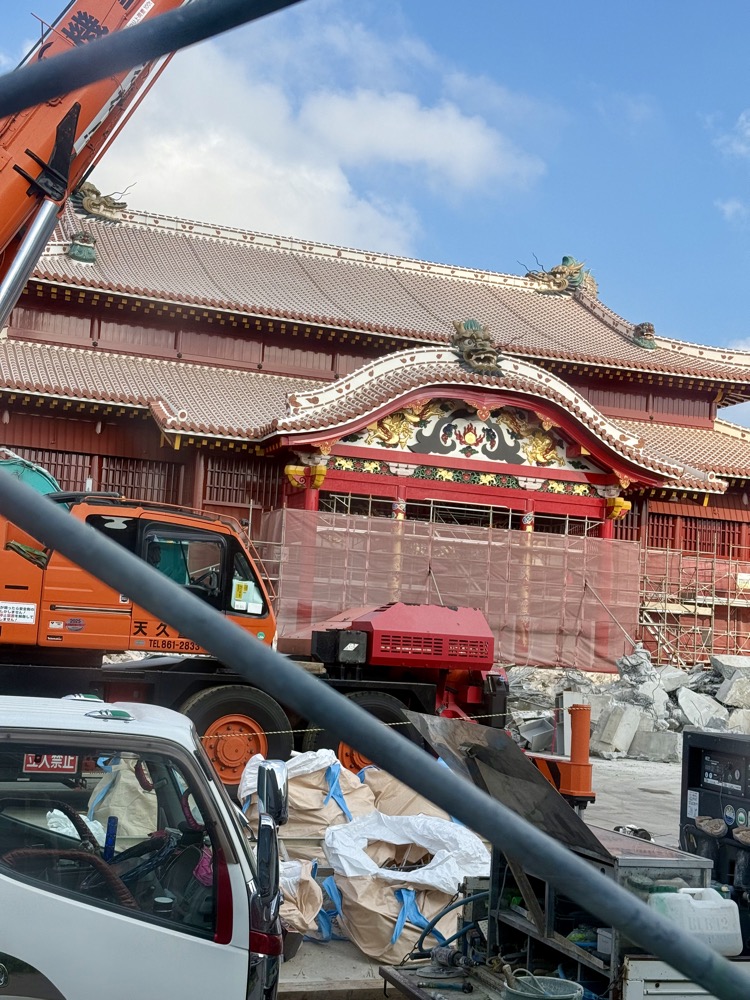
The current reconstruction is scheduled for completion in summer 2026, and even with much of the palace behind scaffolding, you can still appreciate the immense scale of the project. Much of the main castle is close to completion, you can get glimpses of it though construction walls, and its a truly stunning building.
Walking the Castle Grounds
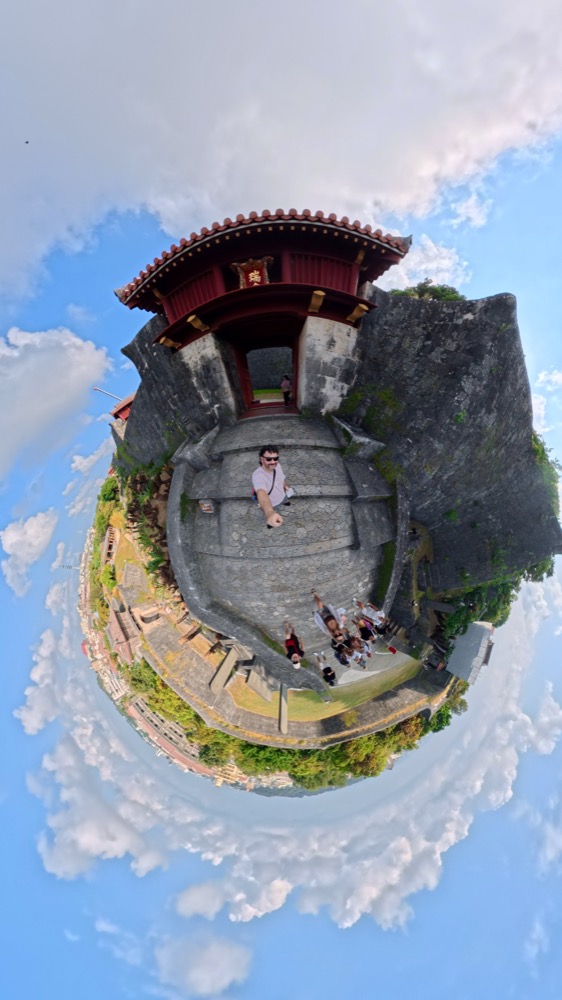
Although we couldn’t enter the main palace due to the ongoing rebuild, the castle grounds themselves offer plenty to explore:
- Stone gates and courtyards
- Historical markers detailing the Ryukyu Kingdom’s unique cultural identity
- Scenic viewpoints overlooking Naha
- Remnants of fortifications used during the war
It’s another place where Okinawa’s layered history is on full display. The Ryukyu Kingdom, Japanese influence and wartime scars all intersect here. Sui also explained that the Japanese military used parts of the castle grounds during the war, yet another reminder of how deeply Okinawa was drawn into global conflict.
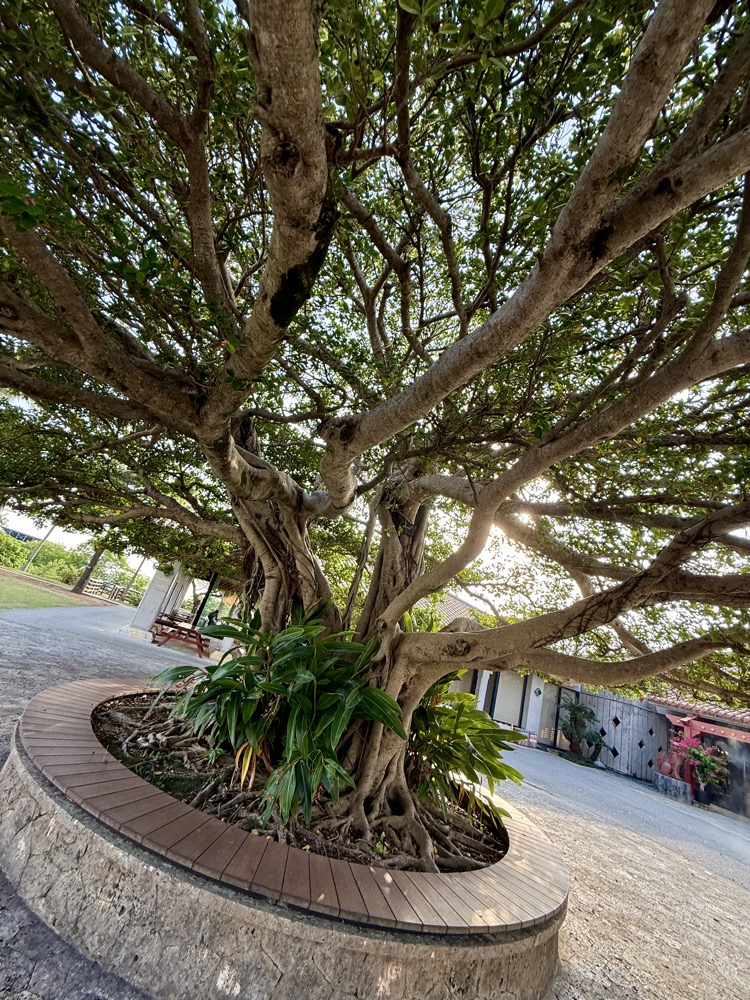
Shisa Lions – Okinawa’s Guardians
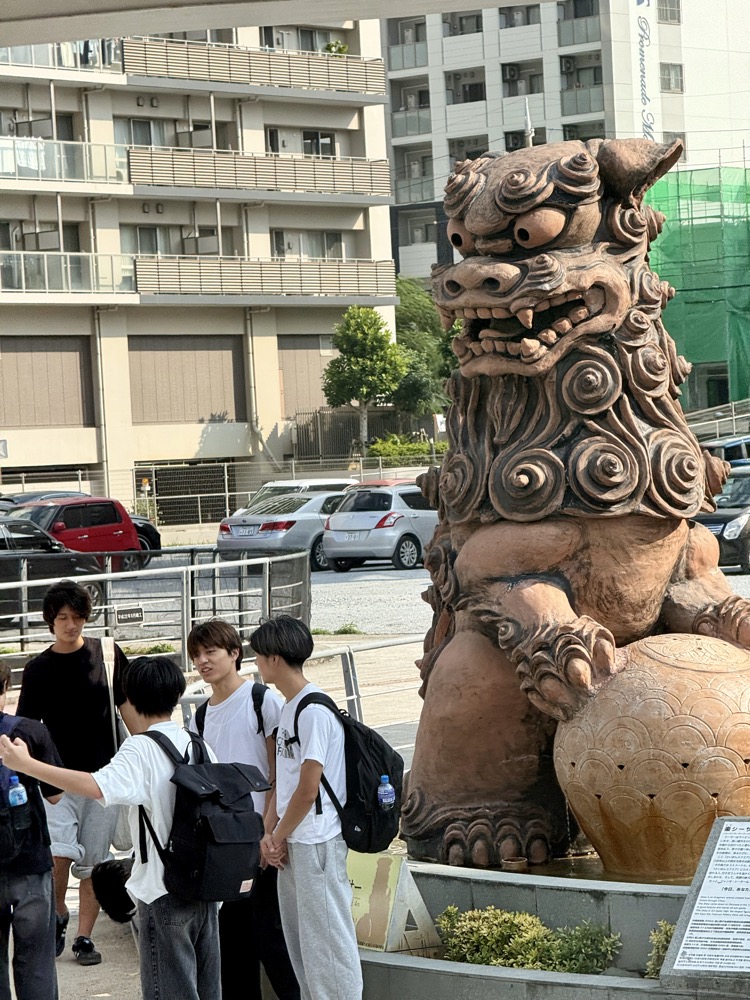
Throughout the day, and especially around Shurijo Castle, we saw countless Shisa lions, the guardian spirits of Okinawa. Always displayed in pairs, each Shisa has a symbolic role:
- One with an open mouth to scare away bad spirits
- One with a closed mouth to keep good fortune in
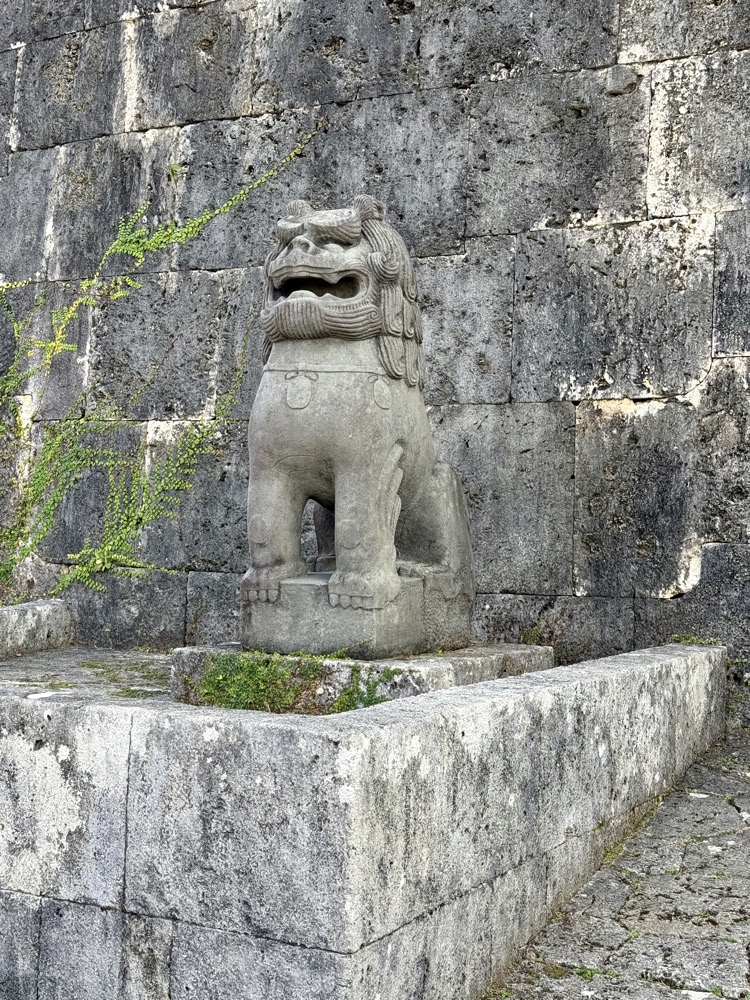
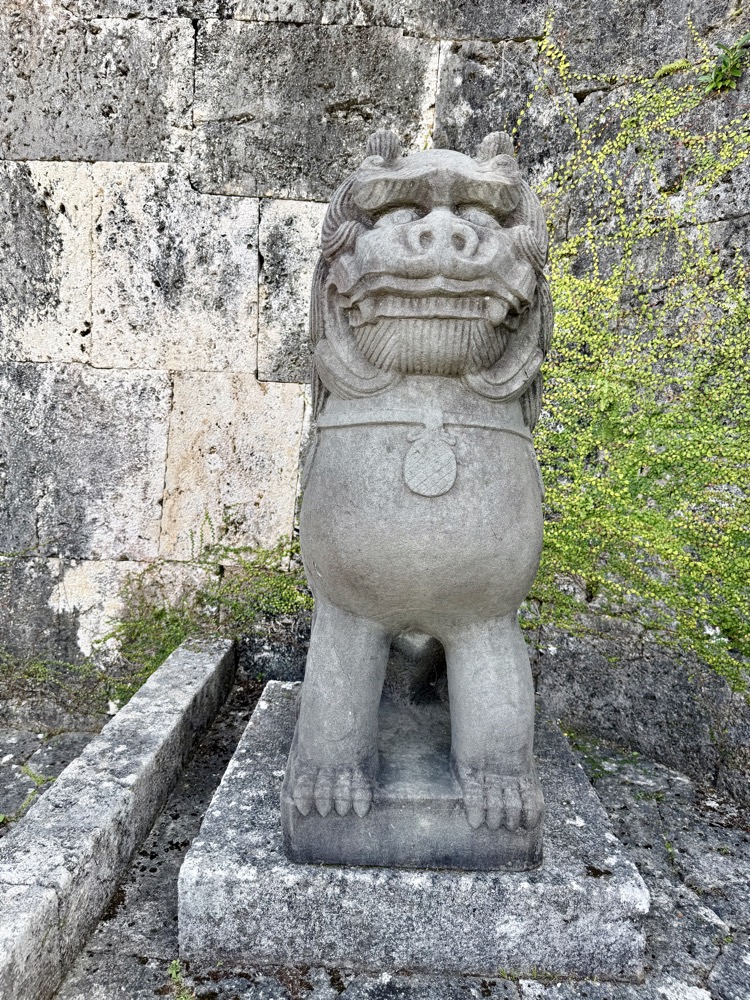
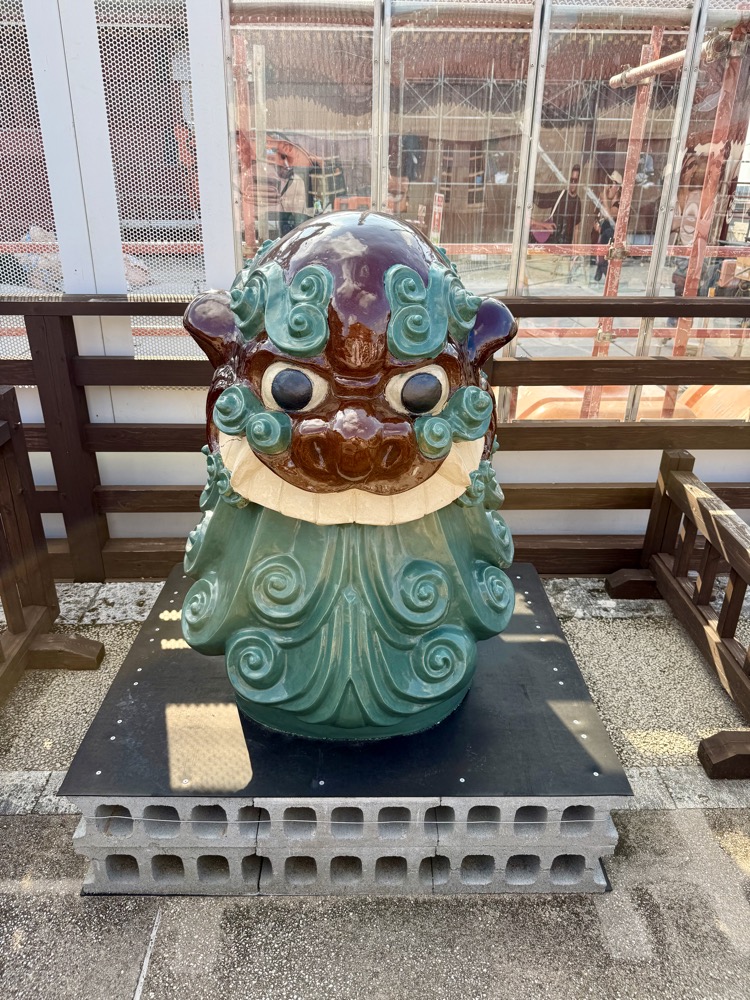
They appear on rooftops, doorways, shop fronts and balconies. Their origins trace back to China’s guardian lions, but Okinawa has made them distinctly its own. Around Shurijo Castle, several historic Shisa statues survived both war and fire, adding yet another layer to the story of resilience that threads through the whole island.
Despite not being able to see the reconstructed palace interior, the visit was still incredibly rewarding. Walking the grounds, seeing glimpses of the emerging structures and hearing Sui’s personal reflections made Shurijo feel alive, not just as a historic site, but as a symbol of Okinawa’s enduring past, present and future.
Excursions in Okinawa: What You Need to Know
During our sailing, we learned that Royal Caribbean is in the process of overhauling all excursions for Asia, with a brand-new line-up of English-speaking tours arriving in 2026.
These will appear in your Pre-Cruise Planner, so keep checking back.
For now, many guests choose to book independently, and it’s very easy to do so.
Here are three trusted platforms we recommend:
Viator – Okinawa Tours
Great for caves, culture and sightseeing: Book via Viator
GetYourGuide – Okinawa Activities
Klook – Okinawa Experiences
A leading platform in Asia, with excellent Okinawa options: Book Via Klook
Klook.comThese give you flexibility and a chance to explore at your own pace. Please be careful to check the activity times against the ship’s all-aboard time.
Ending the Day in Style: Review of Chef’s Table on Spectrum of the Seas
After such a full and emotionally rich day exploring Okinawa, we returned to the ship with just enough time to freshen up before one of the highlights of the entire voyage — Chef’s Table.
I’d been looking forward to this evening from the moment our itinerary arrived, but I hadn’t realised quite how memorable, meaningful and genuinely special it would turn out to be.
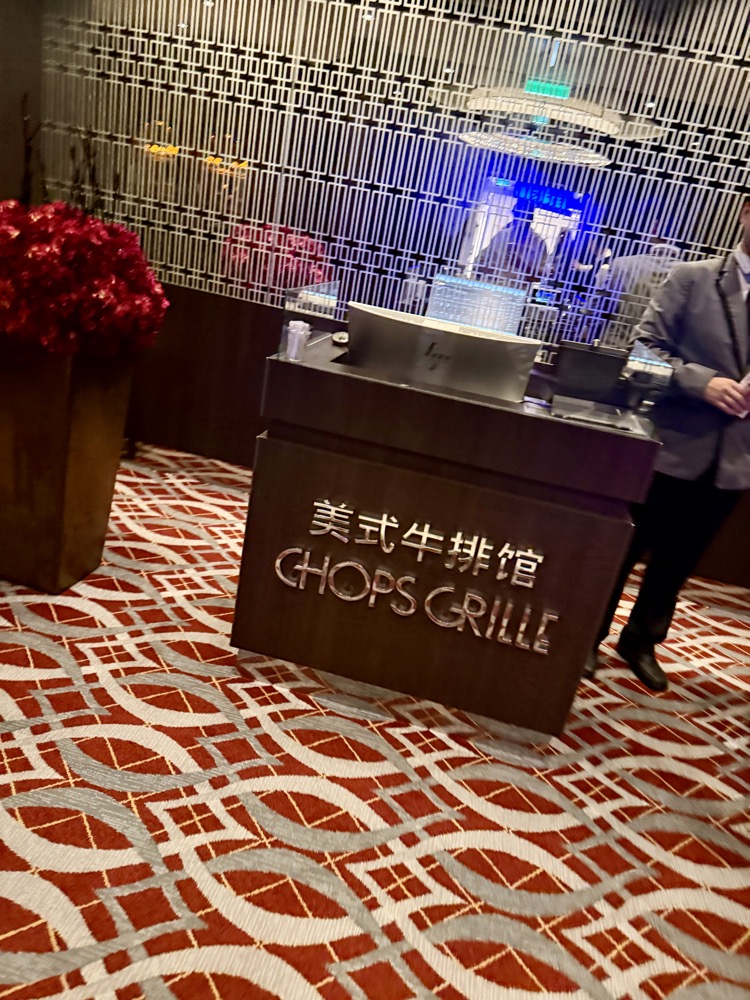
A Special Setting for a Special Evening
The dinner took place in the elegant private dining room beside Chops Grille, a glass-fronted space reserved for intimate dining experiences. Chef’s Table is available to book via the Royal Caribbean Pre-Cruise Planner, and menus can vary by sailing. If you have dietary needs, the dining team are brilliant at tailoring the experience, something we saw firsthand that evening.
A Menu Tailored Personally to Each Guest
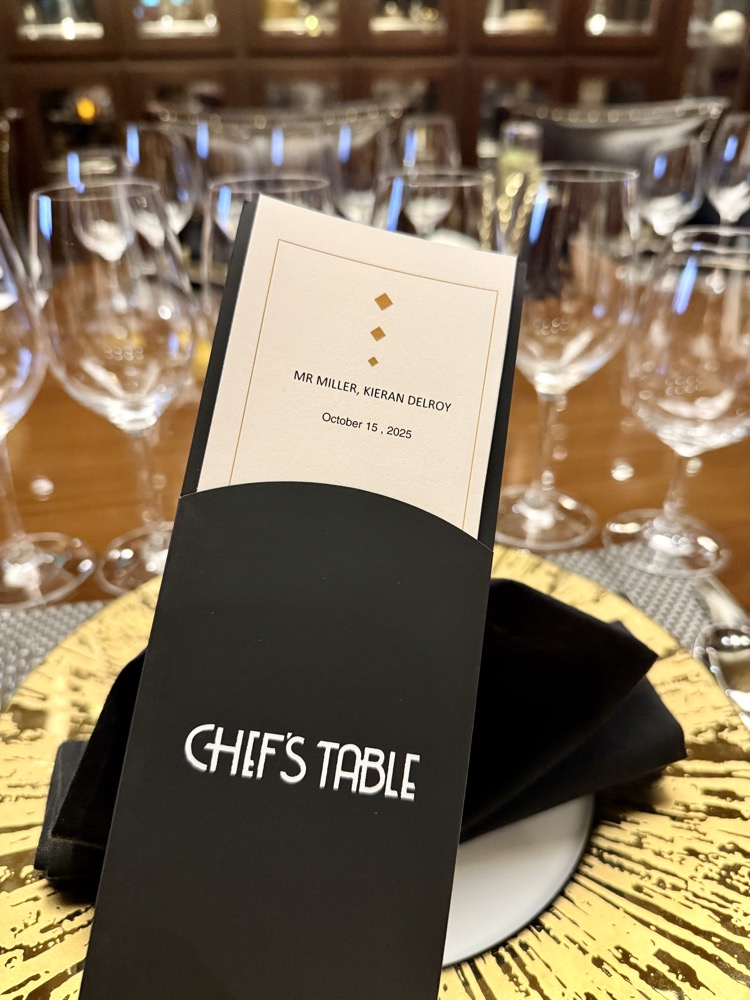
One of the small details that impressed me most was the personalised menu waiting at each place setting. Mine had my name beautifully printed at the top, and each guest’s menu had been subtly adapted based on dietary notes gathered earlier in the cruise, a thoughtful touch that set the tone for the evening ahead.
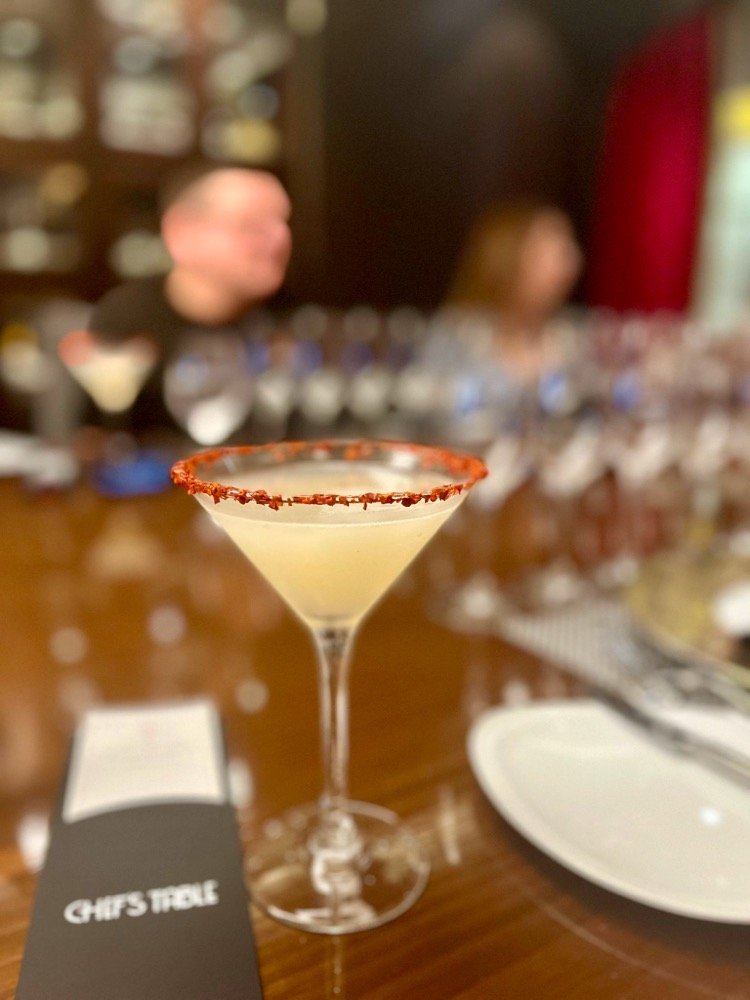
Before our first course was served, Ben Bouldin, President of Royal Caribbean China and our host for the week, asked the team to bring out a cocktail they’re currently testing onboard:
The Szechuan Martini
A bright, citrus-forward martini with a warming Szechuan chilli-salt rim.
Unexpected.
A little fiery.
Absolutely delicious.
It was fun to see how Royal Caribbean is weaving Chinese influences into onboard offerings like this, a reminder that Spectrum of the Seas is genuinely designed for the Asian market, while still being wonderfully familiar for international guests, merging the two seamlessly.
Course by Course: The Experience
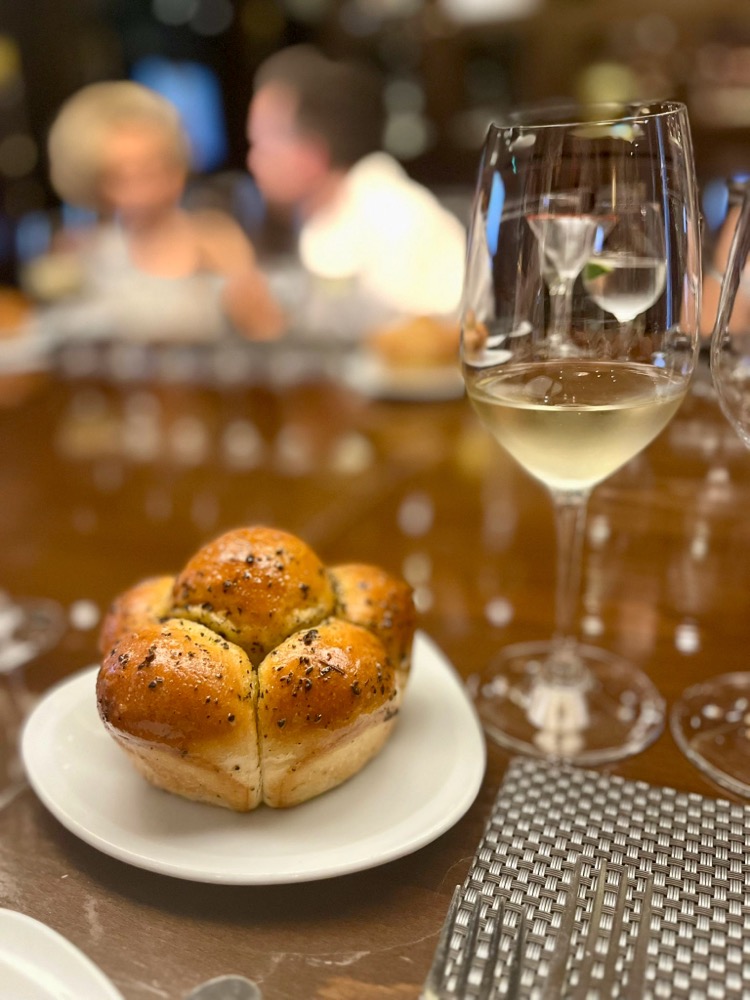
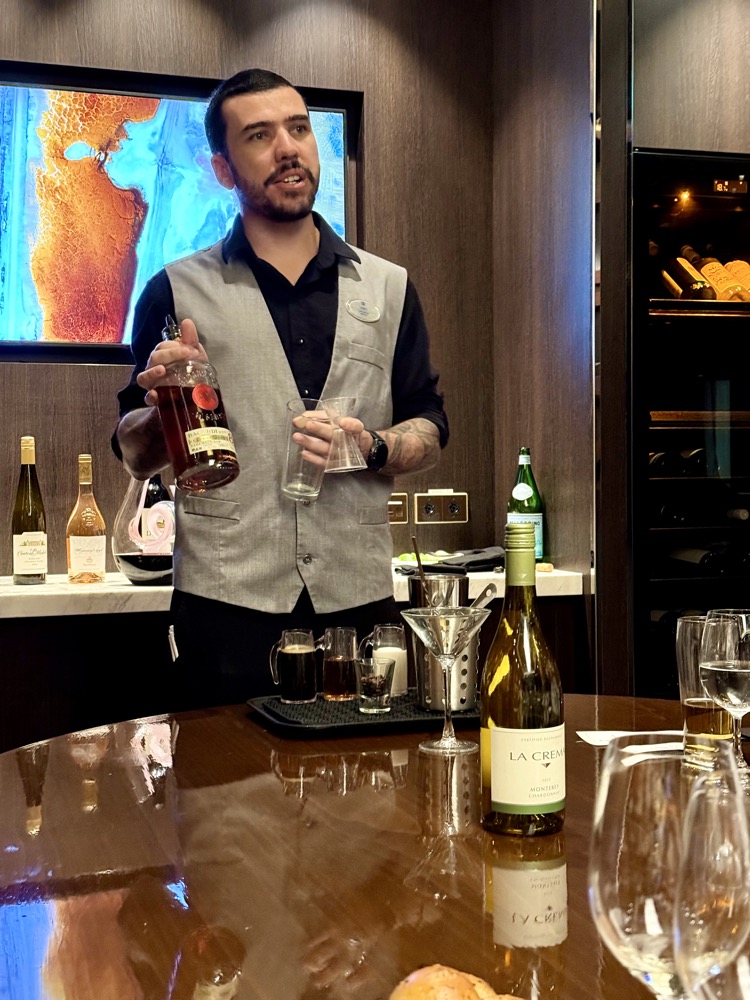
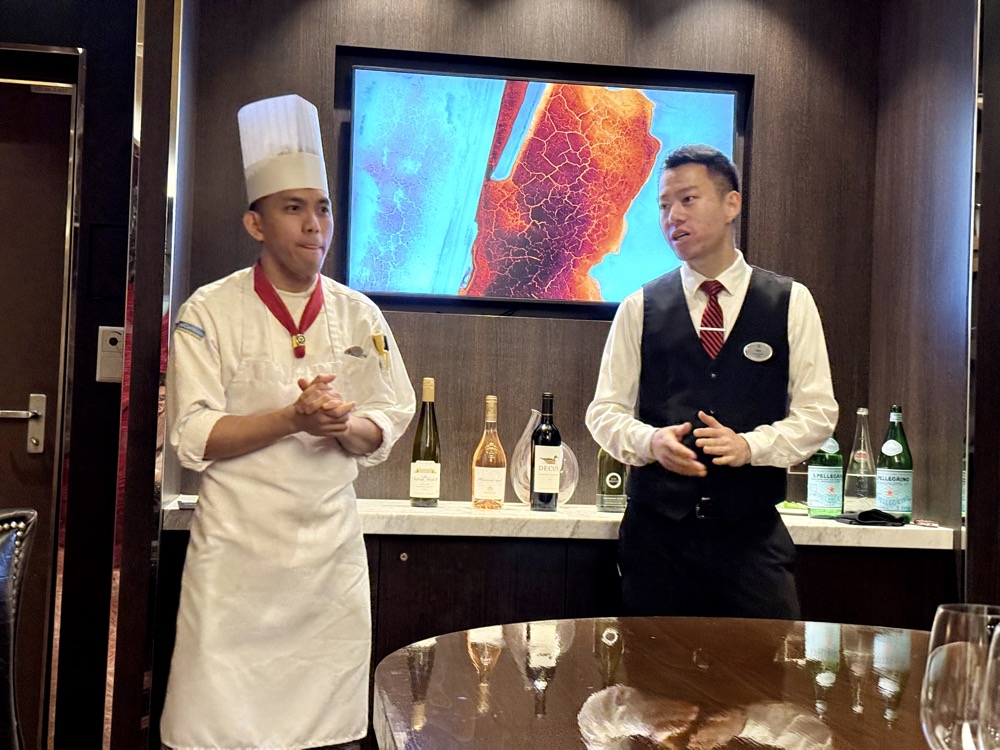
Each dish was introduced by the head chef and his team, who talked us through the flavours, the techniques and the story behind each course. The sommelier then followed with the wine pairing, explaining how each glass complemented the plate in front of us.
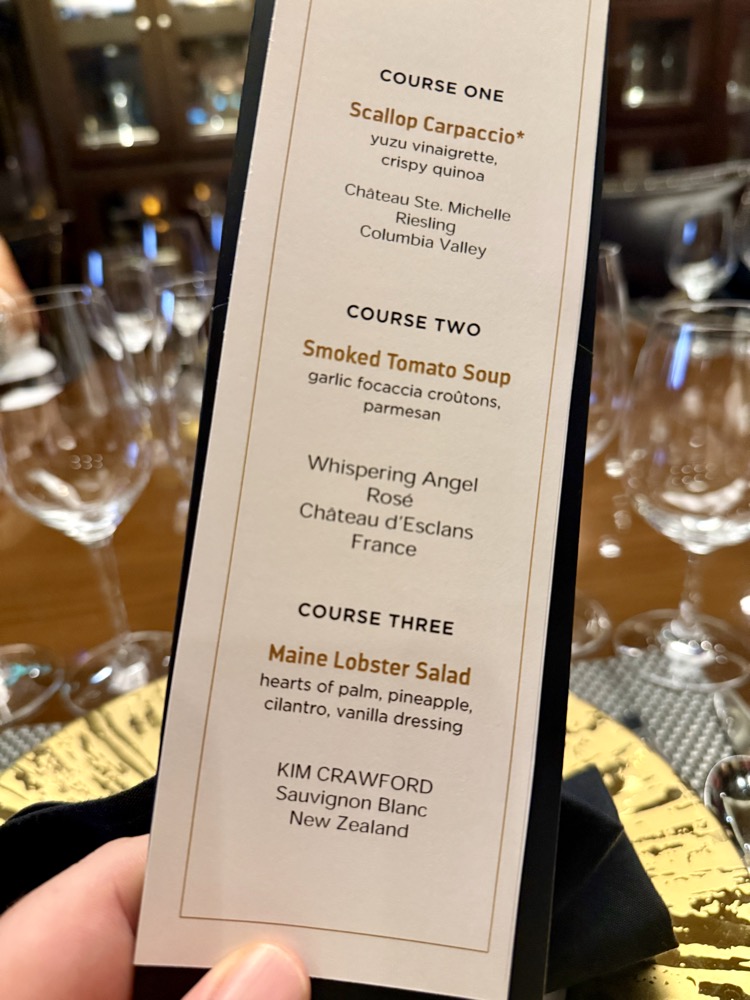
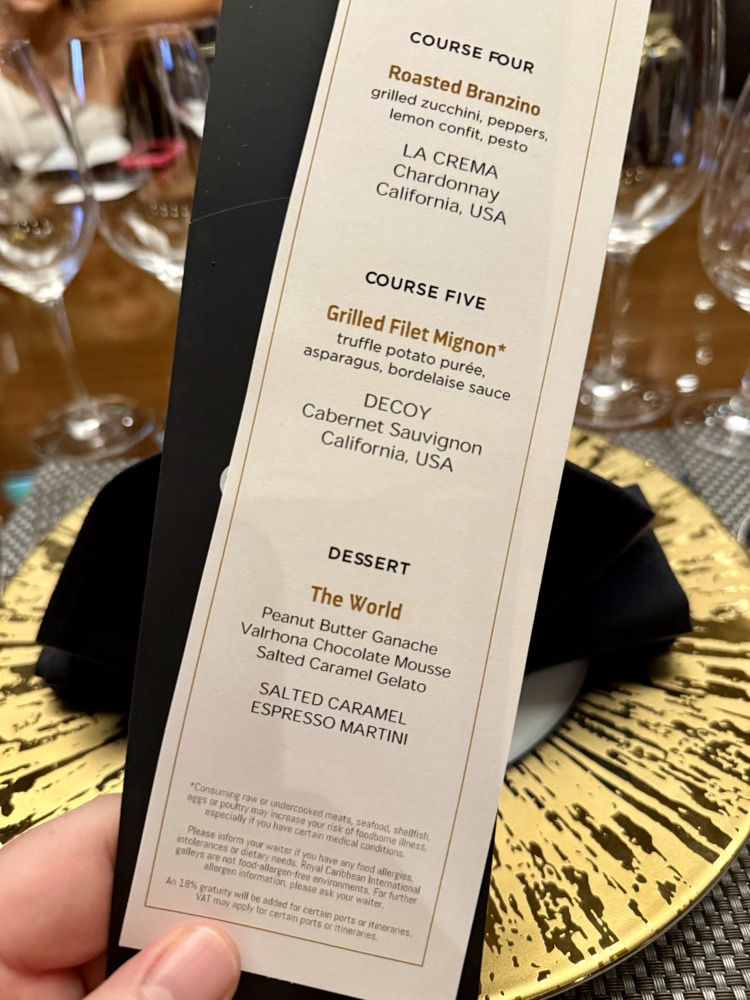
Our menu for the evening included:
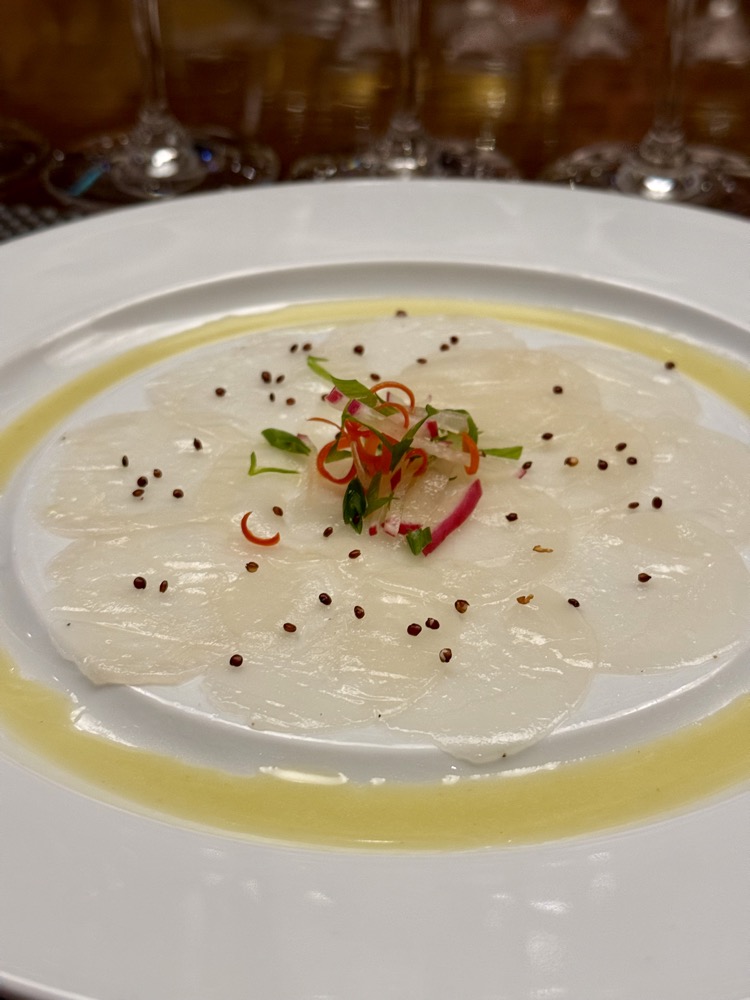
- Scallop carpaccio paired with Château Ste. Michelle Riesling
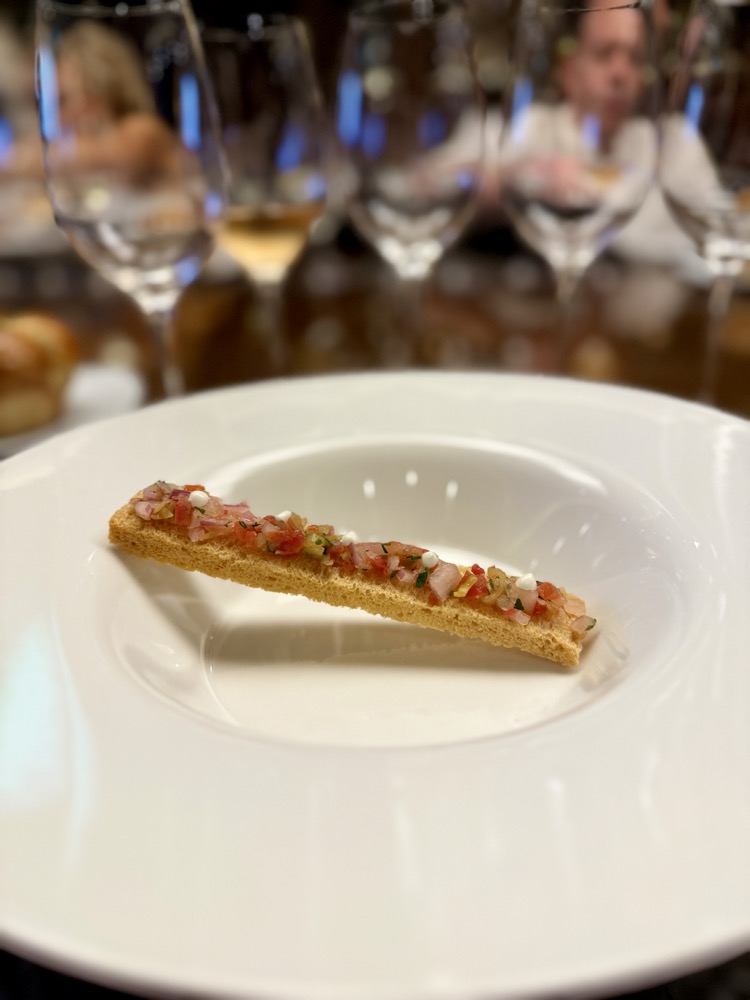
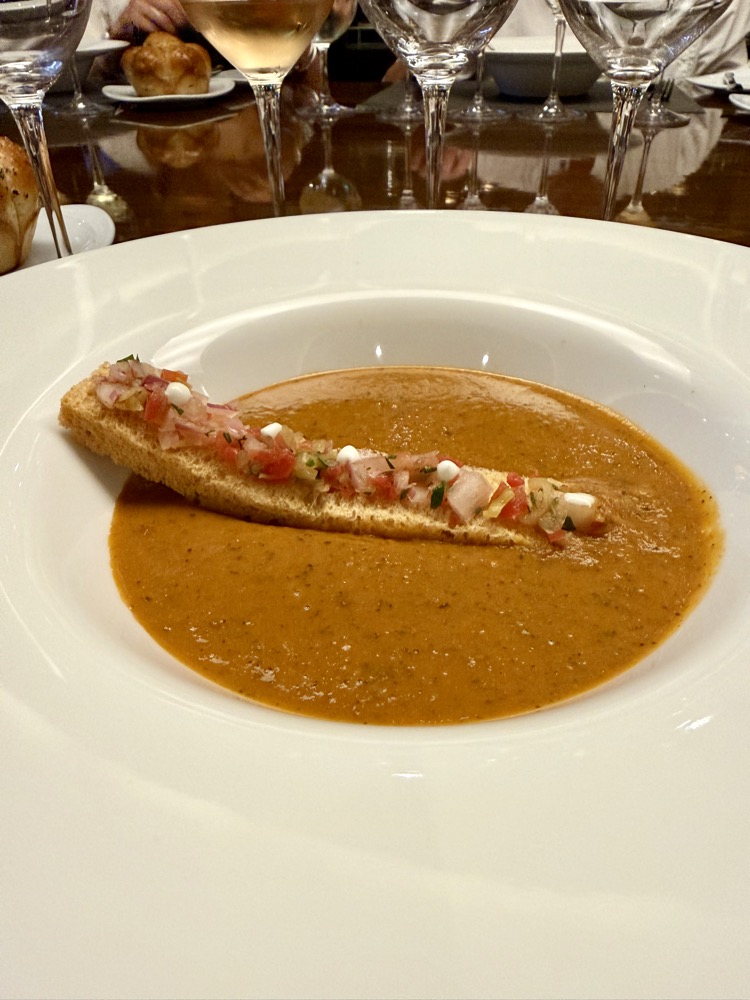
- Smoked tomato soup paired with Whispering Angel Rosé
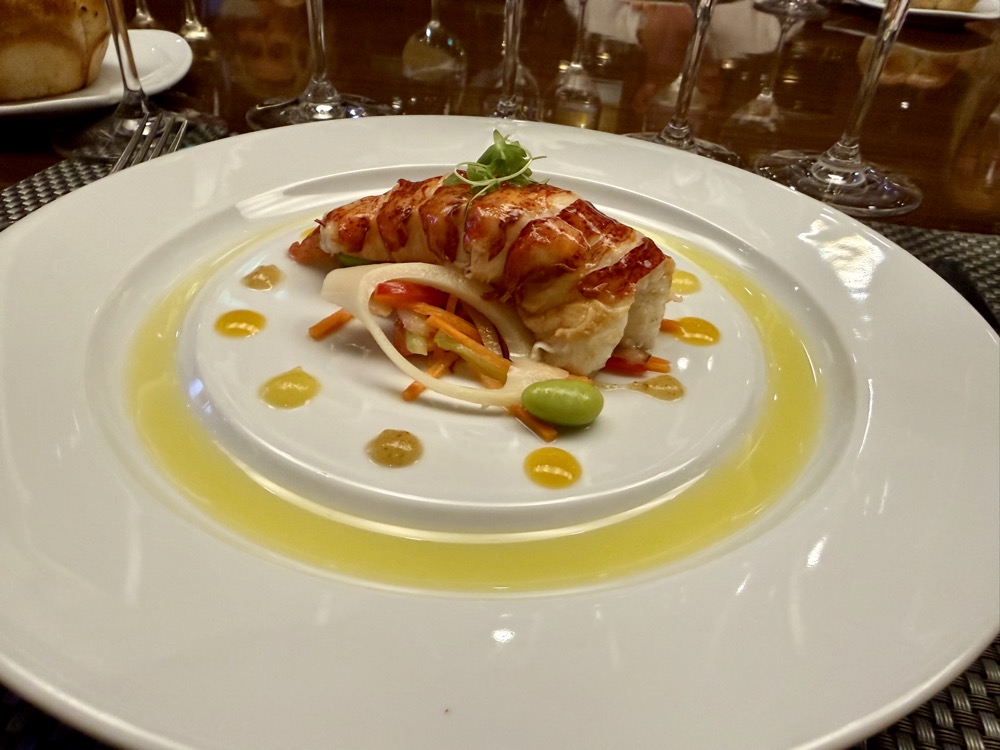
- Maine lobster salad paired with Kim Crawford Sauvignon Blanc
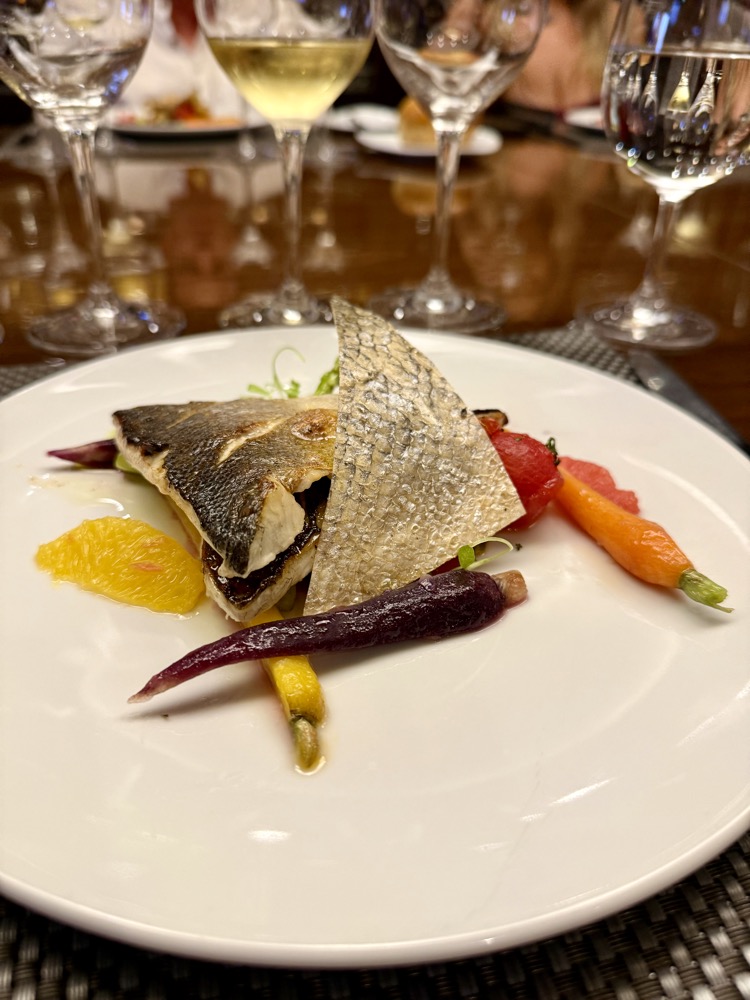
- Roasted branzino paired with La Crema Chardonnay
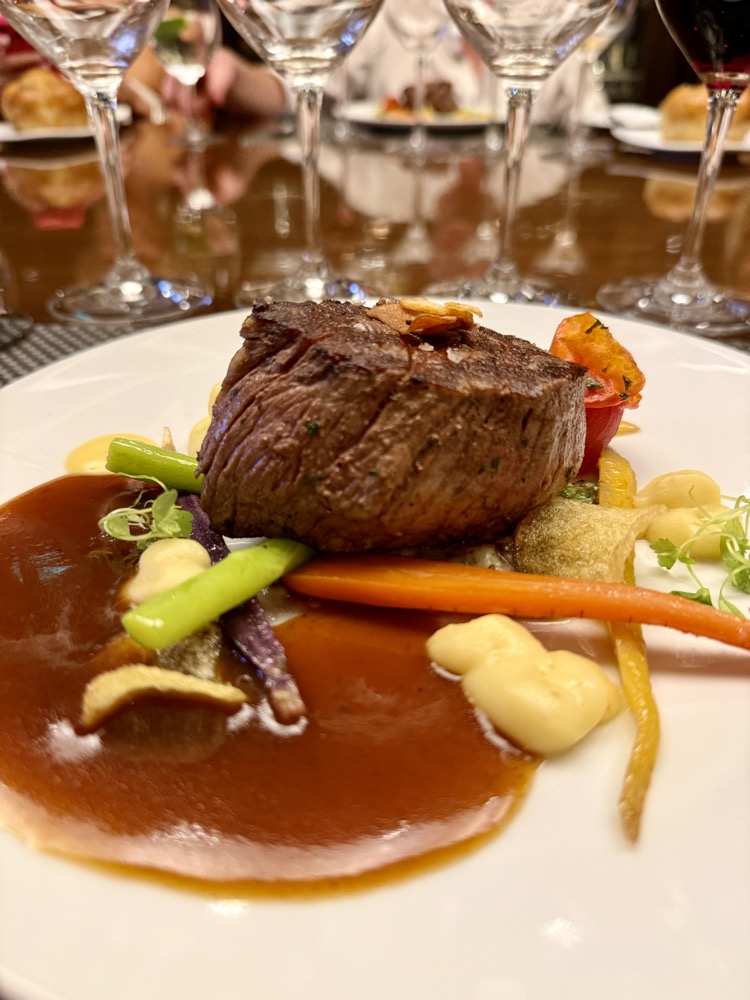
- Filet mignon paired with Decoy Cabernet Sauvignon
Every course was beautifully paced, elegantly presented, and delivered with genuine passion by the chef. The conversation around the table flowed easily.
Dessert: “The World”
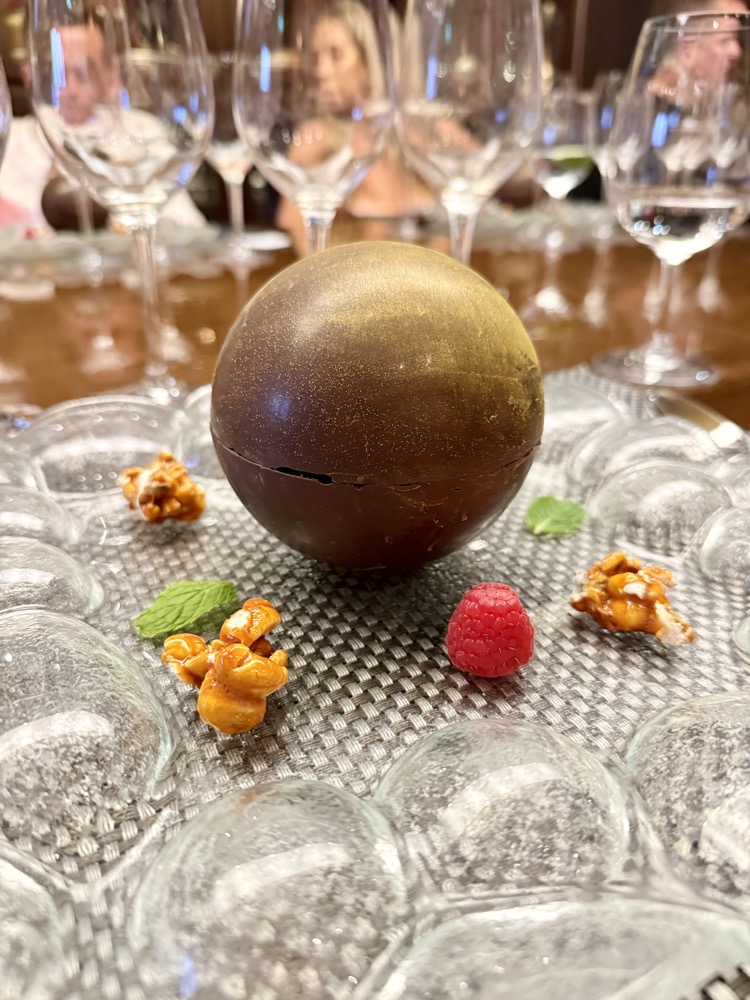
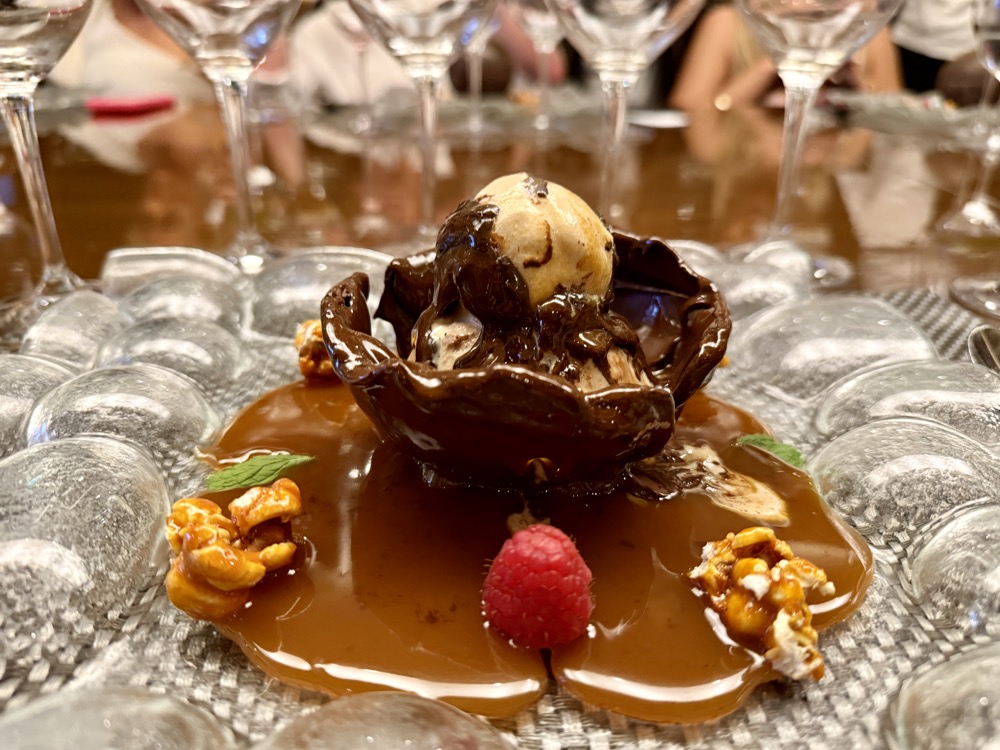
We ended with Royal Caribbean’s iconic signature dessert, The World.
We were initially meant to have this during our first-night meal in Wonderland, but had to leave early to catch Silk Road, so it felt like a lovely surprise to enjoy it here at Chef’s Table instead.
Inside the dramatic chocolate sphere was:
- Peanut butter ganache
- Valrhona chocolate mousse
- Salted caramel gelato
For anyone who loves peanut butter or salted caramel (like me), it’s pure heaven. The chocolate itself was unbelievably smooth, some of the best I’ve ever had at sea.
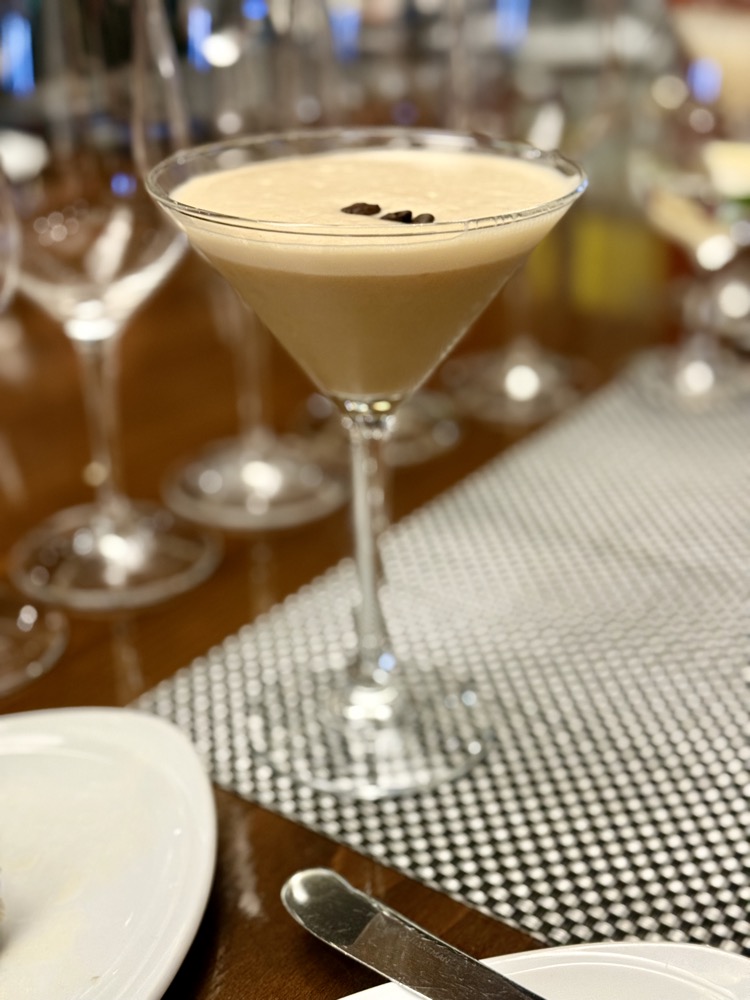
And just when we thought the evening couldn’t end on a better note, we were served a Salted Caramel Espresso Martini, rich, indulgent and the perfect final flourish.
Why Cruising to Okinawa with Royal Caribbean Works So Well
Okinawa is not the easiest destination to include in a traditional Japan itinerary. It sits far south of the main islands and usually requires either:
- a domestic flight, or
- a lengthy ferry journey
Because of this, many first-time visitors skip it altogether, which is a shame, because Okinawa has an entirely distinct culture, cuisine and history that you won’t find elsewhere in Japan.
By contrast, cruising to Okinawa Japan with Royal Caribbean from China offers a far smoother and more accessible experience. It gives you:
- Easy immigration, handled almost entirely by Royal Caribbean
- A full day ashore, without needing internal transfers
- Zero domestic flights or logistics to worry about
- A curated introduction to Okinawa’s culture and heritage
- A gentle, confidence-building entry point into Japan for first-time visitors
For me, it was the perfect way to begin my long-awaited Japanese adventure. Cruising removes the pressure to “plan the perfect itinerary” and instead lets you enjoy Japan as it comes, one port, one culture, one moment at a time.
And if you’re travelling from Shanghai, adding a 4-night Royal Caribbean sailing from China to Japan is also one of the easiest ways to navigate the China Transit Visa system. Because your cruise counts as your “third country,” it allows many UK travellers to visit China visa-free, making the combined Shanghai + Okinawa itinerary not only exciting but also remarkably practical.
Okinawa may be far from Japan’s main islands, but by cruise it becomes wonderfully accessible, and an unforgettable highlight of any Royal Caribbean sailing in Asia.
Final Reflections: The Day My Dream of Visiting Japan Finally Began
Cruising to Okinawa Japan with Royal Caribbean gave me something I didn’t expect: permission to let go of the impossible “perfect Japan trip” and simply experience Japan as it came. It’s such a vast, beautiful and culturally rich country, and visiting Okinawa helped me realise that I don’t need to wait for the mythical “one perfect trip.”
I can visit again — and again — exploring a different region each time.
Now that the seal has been broken, I already know I will.
Okinawa was the ideal beginning:
- Deeply cultural
- Historically complex
- Warm, welcoming, and full of life
- Distinct from mainland Japan, yet undeniably Japanese
- Beautiful in ways that photos never fully capture
From limestone caves and wartime tunnels, to Shisa guardians, Don Quijote chaos, and a meal I’ll never forget, this day was everything I’d hoped for — and so much more.
If you’re considering a sailing on Spectrum of the Seas from Shanghai, Okinawa is a port that truly elevates the entire experience. And for anyone who has ever dreamed of Japan but felt overwhelmed by where to start, this itinerary offers the perfect first step: immersive, gentle, meaningful, and wonderfully achievable.
Okinawa wasn’t just a port of call for me — it was the beginning of a journey I’ve spent my whole life imagining. And I can’t wait to return.
📖 Follow the Rest of Our Asia Cruise Series
If you’re enjoying this trip report, why not catch up on the earlier days of our journey?
- Pre-Cruise in Shanghai — Our first 24 hours exploring Shanghai before boarding the ship.
👉 https://magical-traveller.com/pre-cruise-in-shanghai-before-royal-caribbean - Rolex Shanghai Masters Final — A spectacular hosted experience at the Men’s Final.
👉 https://magical-traveller.com/rolex-shanghai-masters-final-trip-report - Boarding Spectrum of the Seas — What it’s really like to embark in Shanghai, including visa info.
👉 https://magical-traveller.com/boarding-spectrum-of-the-seas-from-shanghai - Day Two: How Chinese Is Spectrum of the Seas? — A full sea-day report and cultural insights.
👉 https://magical-traveller.com/day-two-how-chinese-is-spectrum-of-the-seas
👍 Join the Facebook Group Now
Use this link to Join Our Royal Caribbean Facebook Group
Or sign up below to get our latest cruise offers and news straight to your inbox.