


Quick answer Book a cabin low down and in the middle of the ship, where movement is smallest. Choose a sheltered itinerary such as the Caribbean or Alaska’s Inside Passage if you’re nervous, and be aware that transatlantic crossings and open-water days can be bumpier. Virgin’s ships have stabilisers, so most sailings feel smooth, but speak to a pharmacist or your GP before you travel about remedies that suit you.
Seasickness is one of the most common worries we hear from first-time cruisers. The good news: most Sailors never feel more than a gentle sway, and if you are prone to motion sickness, a few smart choices make a big difference.
How rough has it been for us?
Out of 16 sailings and 100+ nights on Virgin Voyages, we can recall maybe three bumpy days, a couple of them in the English Channel. We’ve never had a really bad day.
There are good reasons for that. Virgin sails slowly, which reduces motion, and the ships are modern and designed for the destinations they sail most. The sailings that tend to be bumpier are repositioning voyages such as transatlantics, where the waters are less sheltered and there are more cross currents.
Why some cabins move less than others
A ship moves in two main ways at sea: rolling (side to side) and pitching (front to back). The point that moves least is low down and in the middle. Think of a see-saw: the ends travel furthest, the centre barely moves.
So for the smoothest ride:
- Low deck. The lower you are, the less sway you feel.
- Midship. Halfway between front (forward) and back (aft).
- Avoid the very front. Forward cabins feel pitching most in a head sea.
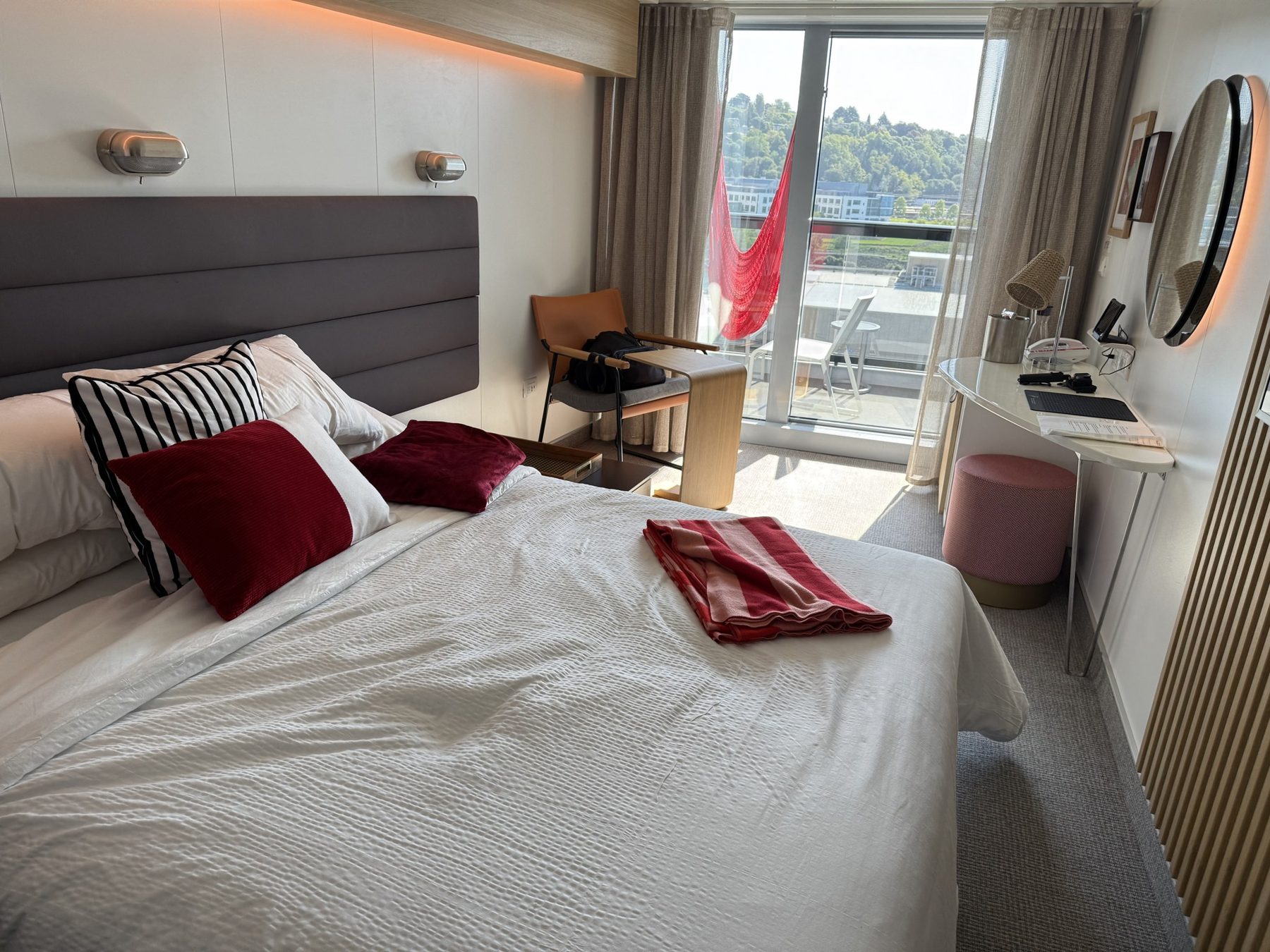
That’s worth knowing if you’re eyeing an XL Sea Terrace, as they sit at the very front of the ship. We’ve stayed in one and loved the bigger bathroom, but if motion worries you, a standard Sea Terrace midship is the safer choice. A standard Sea Terrace is the cabin we recommend nine times out of ten anyway. We book ours aft on decks 10 to 13 for quick access to The Galley, as motion has rarely bothered us, but if you’re nervous, go midship.
The best Virgin Voyages cabins for seasickness
| Choice | Why it helps | Trade-off |
|---|---|---|
| Low, midship Sea Terrace | Least motion, plus fresh air and a horizon to look at | Lower decks can mean more walking to the top-deck pools |
| Low, midship Insider | Least motion and lowest price | No window, and some people feel worse without a horizon |
| Central Sea Terrace | Sold as a central location within the Sea Terrace category; our pick if you’re worried about motion | Check the exact deck on the deck plan; on Deck 8 you can hear The Roundabout late at night |
| High-deck suite | Space and luxury | Suites sit high, so you may feel more movement |
A balcony helps many people because looking at the horizon settles the balance system. Our Sea Terrace cabin guide and Insider cabin guide explain both, our which Virgin Voyages cabin should you choose guide compares every category, and our Virgin Voyages cabins to avoid guide flags the spots we’d skip.
Use the deck plan for your ship to find the lowest midship cabins: Scarlet Lady, Valiant Lady, Resilient Lady or Brilliant Lady. All four are in our Virgin Voyages deck plan hub.
Remember that on some fares Virgin assigns your exact cabin, so if location matters for seasickness, book a fare that lets you choose and change. Our VoyageFair Choices guide explains which.
Which itineraries are calmer?
Weather is never guaranteed, but in general terms:
Caribbean from Miami: usually calm
Short hops between islands, warm water and plenty of port days. The Caribbean is generally the gentlest choice for nervous sailors. Atlantic hurricane season officially runs from 1 June to 30 November, and during it the captain may change the route to avoid storms. Our hurricane season guide explains what that means for your sailing.
Mediterranean: mostly calm, with exceptions
Summer in the Med is usually settled, but some stretches, and certain winds, can whip up choppier days.
Alaska: sheltered and open water
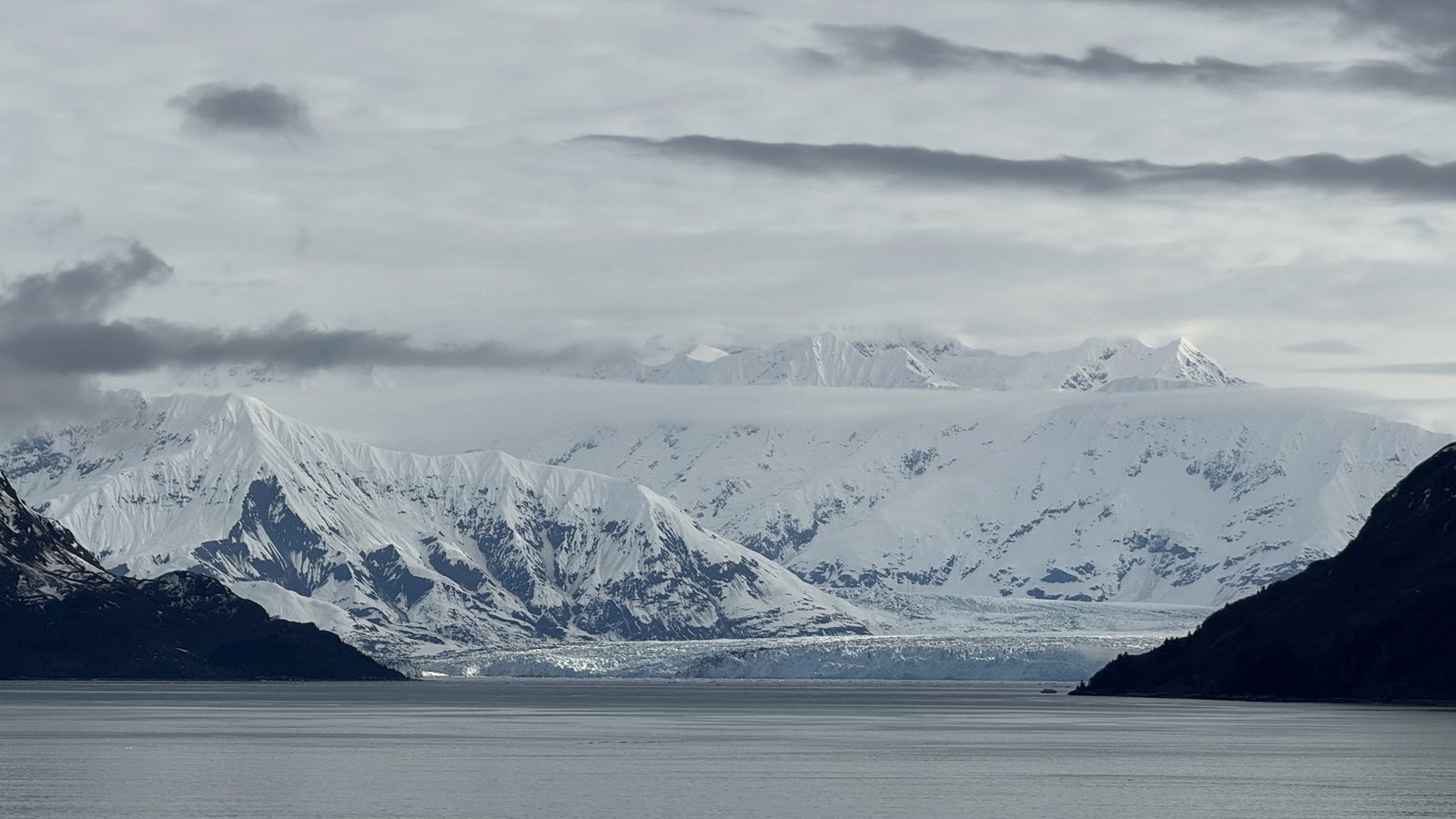
Much of an Alaska cruise is in the Inside Passage, a network of channels between islands that’s usually very sheltered. Some itineraries also include stretches that are open to the Pacific, such as the approach to Hubbard Glacier in the Gulf of Alaska, and these can bring more swell. Check your day-by-day itinerary with us if you’re nervous. On our May 2026 Alaska sailing on Brilliant Lady, the scenic days felt beautifully smooth.
Pacific Coast: occasional swell
One-way sailings between Vancouver and Los Angeles spend time on the open Pacific. Expect the odd day with a longer, rolling swell.
Transatlantic and repositioning: the most variable
Crossings have many sea days in a row on open ocean, with less sheltered waters and more cross currents. In our experience these are the sailings most likely to be bumpy. If you’re very prone to seasickness, start with a shorter itinerary.
Do Virgin Voyages ships have stabilisers?
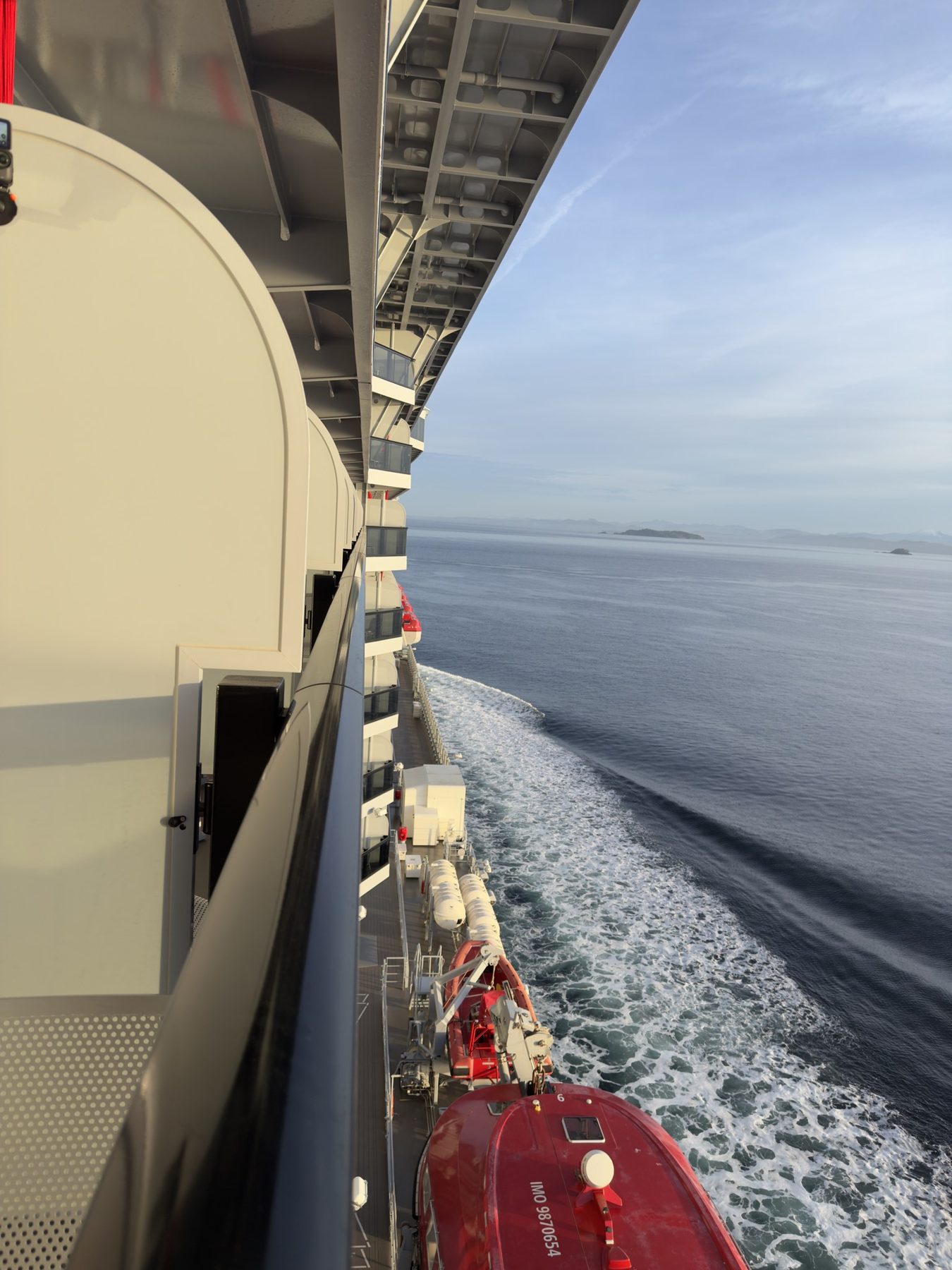
Yes. Virgin says its ships use stabiliser systems, fin-like devices below the waterline that counteract rolling and adjust automatically to sea conditions. They don’t remove motion completely, and they’re less effective at reducing pitching, but they make a real difference.
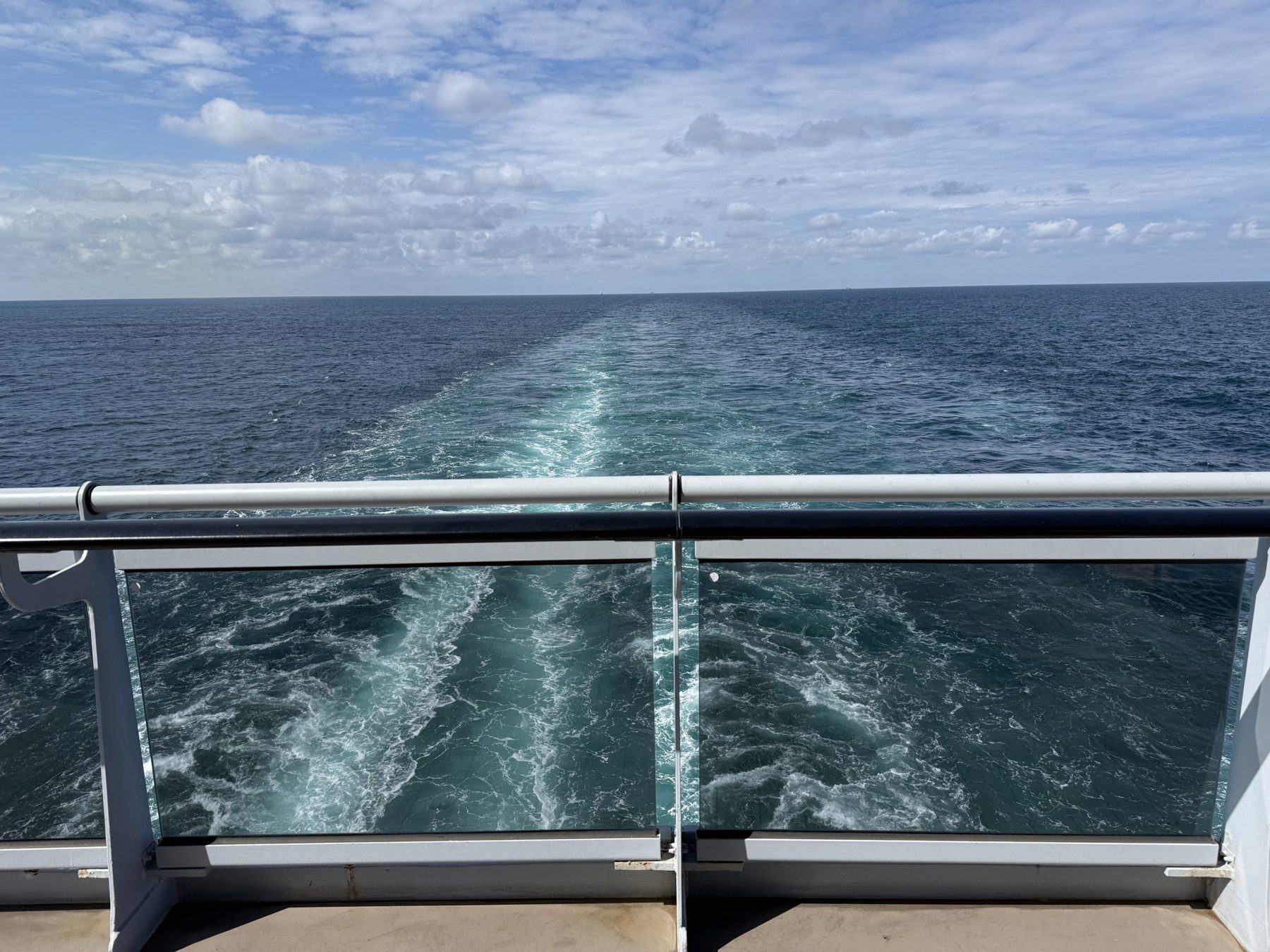
Practical tips to feel better on board
- Get fresh air. Head outside and look at the horizon.
- Stay midship and low when the sea is up. Lounges on lower decks feel steadier.
- Eat little and often. Plain crackers, bread and apples help some people. An empty stomach can make things worse.
- Go easy on alcohol the night before a sea day.
- Stay hydrated. Soft drinks and water are included on Virgin.
- Rest. Tiredness makes motion sickness worse.
- Ask on board. The Medical Services team on Deck 4 of every Virgin ship can help if you’re struggling. Make sure your travel insurance covers cruising.
Medication and remedies
Remedies range from tablets to patches and acupressure bands. What’s right depends on your health and any other medicines you take, so speak to a pharmacist or your GP before you travel, and pack what you need. We don’t give medical advice.
FAQs
What is the best cabin on Virgin Voyages for seasickness? A low-deck cabin in the middle of the ship. A Sea Terrace lets you see the horizon, which helps many people.
Are Virgin Voyages ships stable? Yes. They’re modern ships with stabilisers, and Virgin sails slowly to reduce motion. In 16 sailings and 100+ nights, we can recall maybe three bumpy days and never a really bad one.
Which Virgin Voyages itinerary is least likely to cause seasickness? In general, Caribbean sailings from Miami, with lots of port days and sheltered waters.
Is Alaska rough on a cruise? Much of the route through the Inside Passage is sheltered, though open-water stretches can bring more swell.
Are transatlantic crossings rough? They can be. Many consecutive sea days on open ocean make conditions more variable.
What should I take for seasickness? Ask a pharmacist or your GP which remedy suits you before you travel.
Plan it with us
Nervous about the sea? We’ll help you choose a calmer itinerary and the right cabin location. We’re Virgin Voyages Gold Tier First Mates with 100+ nights on board across all four ships. Call 07307 602030, email hello@magical-traveller.com or contact us.